After striking prey, what cues does the Western Rattlesnake use to track the animal?
Answer
Thermal and chemosensory cues
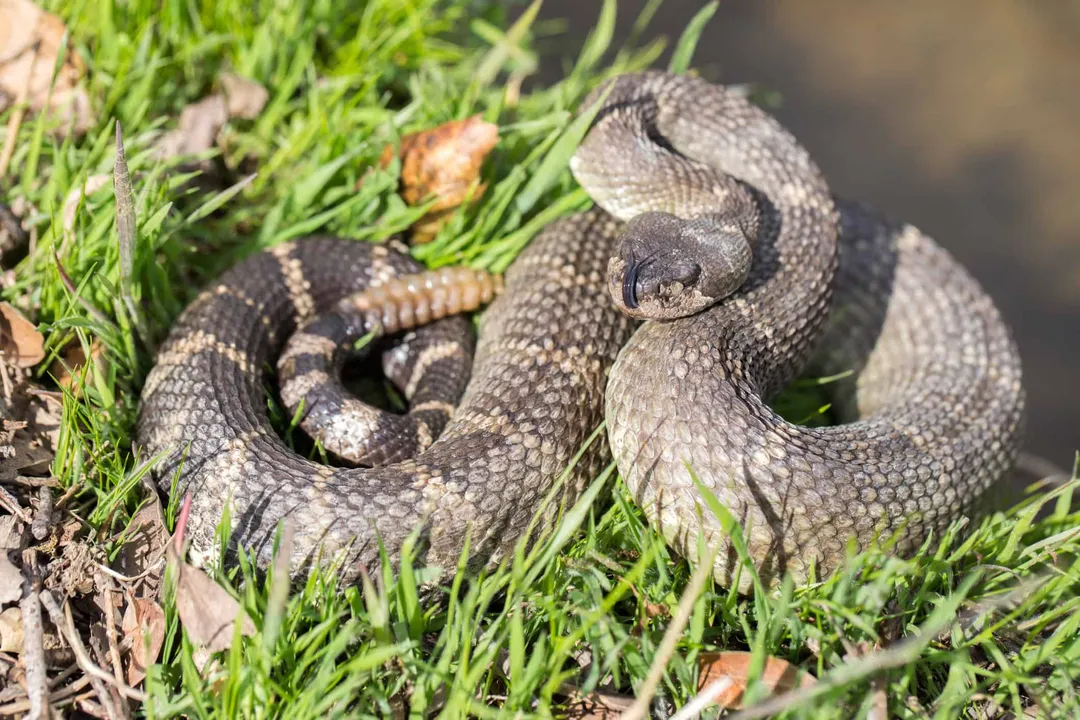
Following a successful strike where venom is administered, the typical hunting strategy involves the Western Rattlesnake releasing the prey item immediately. Rather than engaging in a risky, prolonged struggle, the snake then tracks the incapacitated animal using specialized sensory inputs. These cues include thermal information, sensing the diminishing body heat of the venomized victim, combined with chemosensory information, likely derived from the tongue flicking to analyze airborne chemical signatures. Once the prey succumbs to the venom, the snake locates it and proceeds to swallow the animal whole, a process often followed by extended inactivity due to slow ectothermic metabolism.
Related Questions
What prey forms the foundation of the adult Western Rattlesnake's diet across most distribution?Which prey item is juvenile *C. oreganus* disproportionately likely to consume?What primary method does the Western Rattlesnake use to secure prey?After striking prey, what cues does the Western Rattlesnake use to track the animal?What significant ecological service does the Western Rattlesnake provide by consuming small mammals?Which prey item heavily features in drier, inland California diets versus cooler British Columbia diets?What physical state follows the consumption of a substantial meal for *Crotalus oreganus*?Why are juvenile Western Rattlesnakes initially concentrated on smaller ectotherms?Which groups of prey are generally considered opportunistic rather than a dietary cornerstone for *Crotalus oreganus*?What consequence is noted when *Crotalus oreganus* populations are removed from a local area?