Which tree species are frequently targeted by Yellow-bellied Sapsuckers in the eastern and central United States?
Answer
Birches, maples (especially sugar maple), and beech trees.
The selection of host trees by the Yellow-bellied Sapsucker is heavily influenced by the palatability and flow rate of the sap, rather than strictly the hardness of the wood. Observers in the eastern and central portions of the bird's range frequently note distinct preferences for certain hardwood species. Specifically listed as common targets in these regions are birches, various maples—with the sugar maple being particularly favored—and beech trees. This regional preference shifts in other areas; for instance, in southern ranges, observers might note favoritism toward pines or oaks depending on seasonal availability.
#Videos
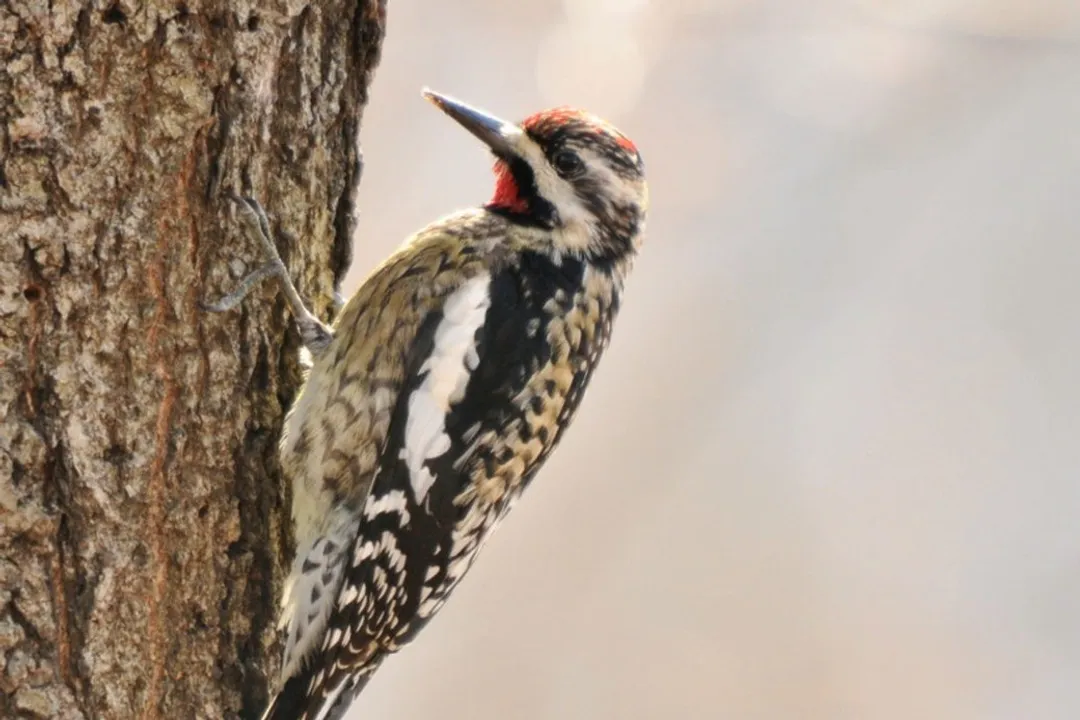
Yellow-bellied Sapsucker. A real bird! Exciting Facts for You!
Related Questions
What highly specialized method distinguishes the Yellow-bellied Sapsucker's sustenance procurement?How do the structures left by the Yellow-bellied Sapsucker contrast with ragged excavations from a pileated woodpecker?Beyond providing carbohydrates and moisture from the tree's circulatory fluid, what is the secondary function of the sap wells?Which tree species are frequently targeted by Yellow-bellied Sapsuckers in the eastern and central United States?What plumage feature reliably distinguishes an adult male Yellow-bellied Sapsucker from a female?What specific action related to extensive drilling can cause a branch or trunk section of a tree to die back?What environmental condition triggers the migration of Yellow-bellied Sapsuckers from their northern breeding grounds?What is the distinct, often melancholy, vocalization that frequently alerts an observer to a nearby Yellow-bellied Sapsucker?How is the unique drumming pattern of the Yellow-bellied Sapsucker often described, contrasting with the persistent drumming of other woodpeckers?In a temperate climate during mid-January, why might consuming sap offer a more energy-efficient feeding strategy than seeking insect larvae?