What are some interesting facts about red bellied snakes?
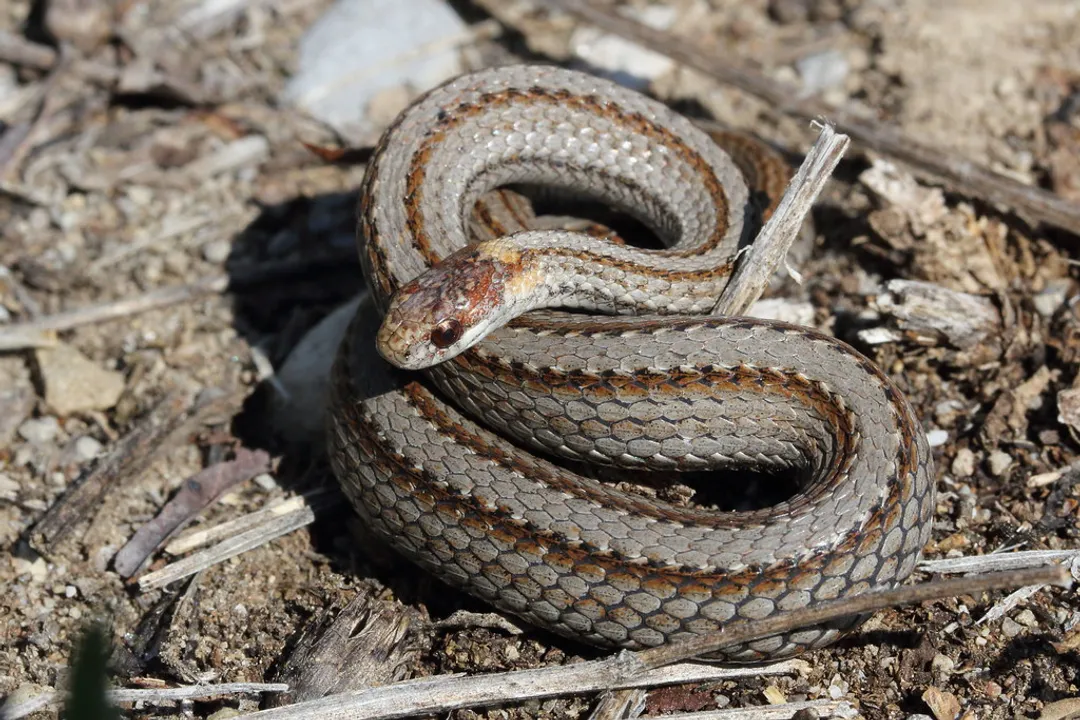
The name "red-bellied snake" often causes immediate confusion, and for good reason: it refers to at least two entirely different species separated by oceans, vastly different in size, danger level, and ecology. One is a tiny, non-venomous resident of North American gardens, while the other is a much larger, venomous predator native to the waterways of Eastern Australia. Understanding which snake one is discussing requires looking past the common name and into the details of its geography and appearance.
# North American Dweller
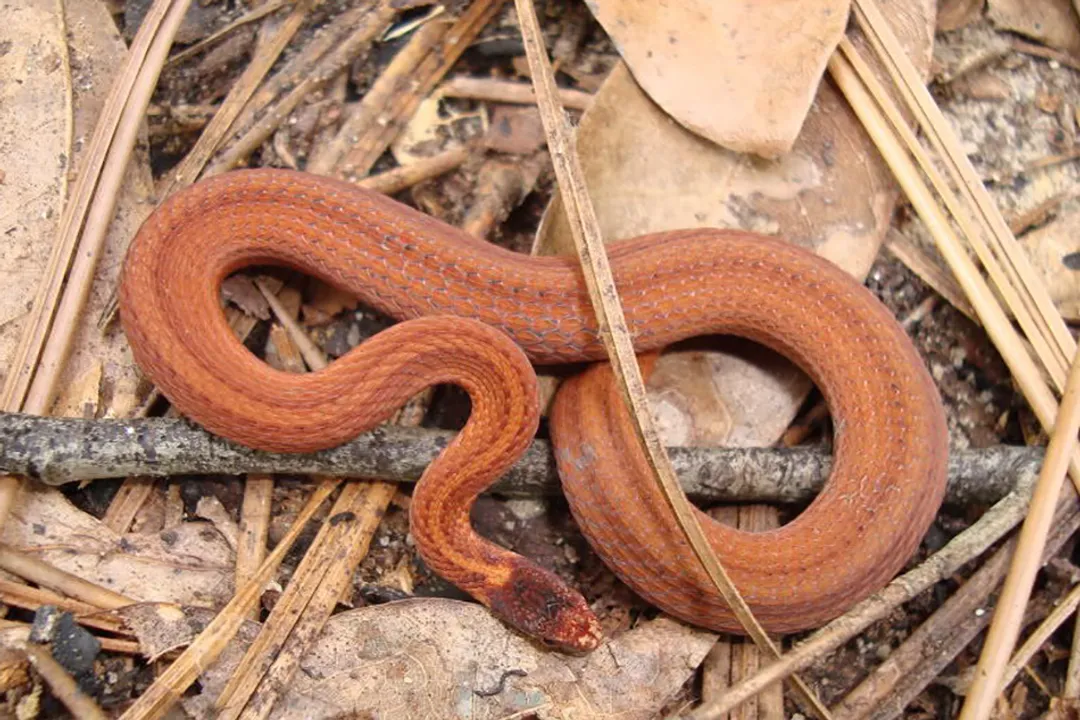
The snake most often referred to as the Red-bellied Snake in the United States and Canada is Storeria occipitomaculata. This creature is decidedly small, usually measuring between 8 to 10 inches in total length as an adult, with rare individuals reaching up to about 16.6 inches. It poses absolutely no threat to humans or pets, being entirely non-venomous.
Visually, the North American species is defined by its relatively plain back—often gray to reddish-brown—which typically features one broad stripe or up to four narrow stripes running down its length. The head is usually black or dark brown, and a distinguishing feature is the presence of light spots on the back of the neck that often merge to form a faint, light-colored collar. The namesake feature, however, is its underside: the belly is usually a bright red, though variations can include orange, yellow, or even a bluish-gray. Its body scales are characteristically keeled, meaning each scale has a small ridge down the center.
These snakes are quite secretive, often remaining hidden away beneath leaf litter, logs, rocks, or other surface cover. Their preferred habitats include woodlands, marshes, and fields, particularly where ample ground cover exists. This preference for cover means that while they can be locally abundant, especially in suburban areas bordering suitable habitat, they are rarely seen unless disturbed during yard work or heavy rain. Their activity cycles shift with the temperature; they are nocturnal during the heat of the summer months but become more active during the day in the cooler spring and fall seasons, reflecting their need to thermoregulate as cold-blooded reptiles.
# Garden Allies
For those lucky enough to have Storeria occipitomaculata in their landscape, they are quiet, beneficial neighbors. Their diet is specialized, focusing heavily on soft-bodied invertebrates like slugs and earthworms, supplemented occasionally by snails or insect larvae. When one considers the damage slugs can inflict on garden vegetables and ornamentals, this small reptile acts as a natural pest control agent right under the mulch layer. Their small size and specialized diet mean they rarely interact with humans or larger pets, making their defensive behavior reserved for actual threats. When captured or handled, they tend to squirm vigorously, flatten their bodies, release a foul-smelling musk, and may even play dead. If severely agitated, they might raise their upper lip to expose their very tiny, ineffective teeth. They give birth to a small litter of live young, typically between two and ten babies, in the early summer.
# The Australian Elapid
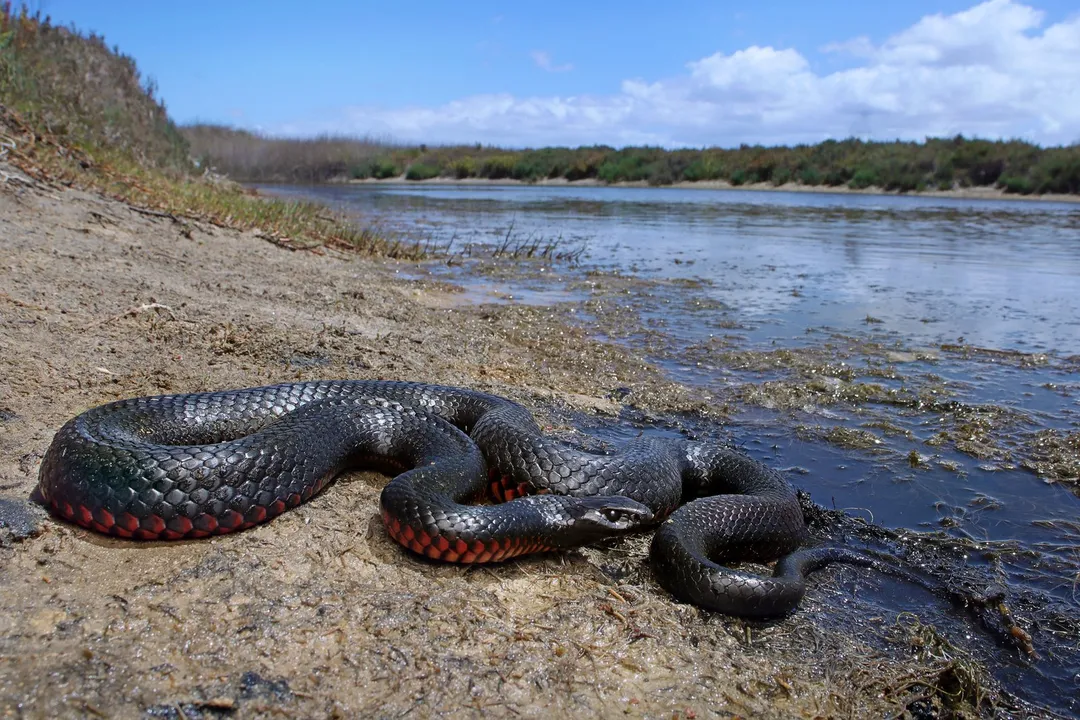
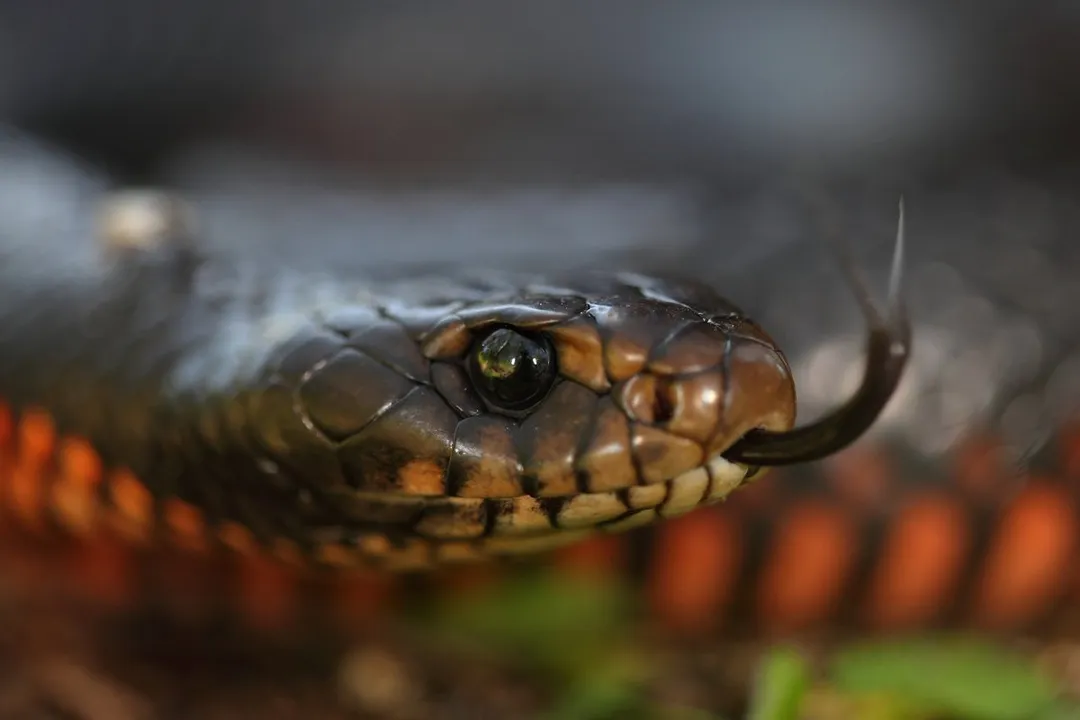
On the other side of the world exists the Red-bellied Black Snake (Pseudechis porphyriacus), an Australian elapid that commands a completely different level of respect. This species is significantly larger and is indeed venomous, though it is often characterized as being the least dangerous of the Australian elapids.
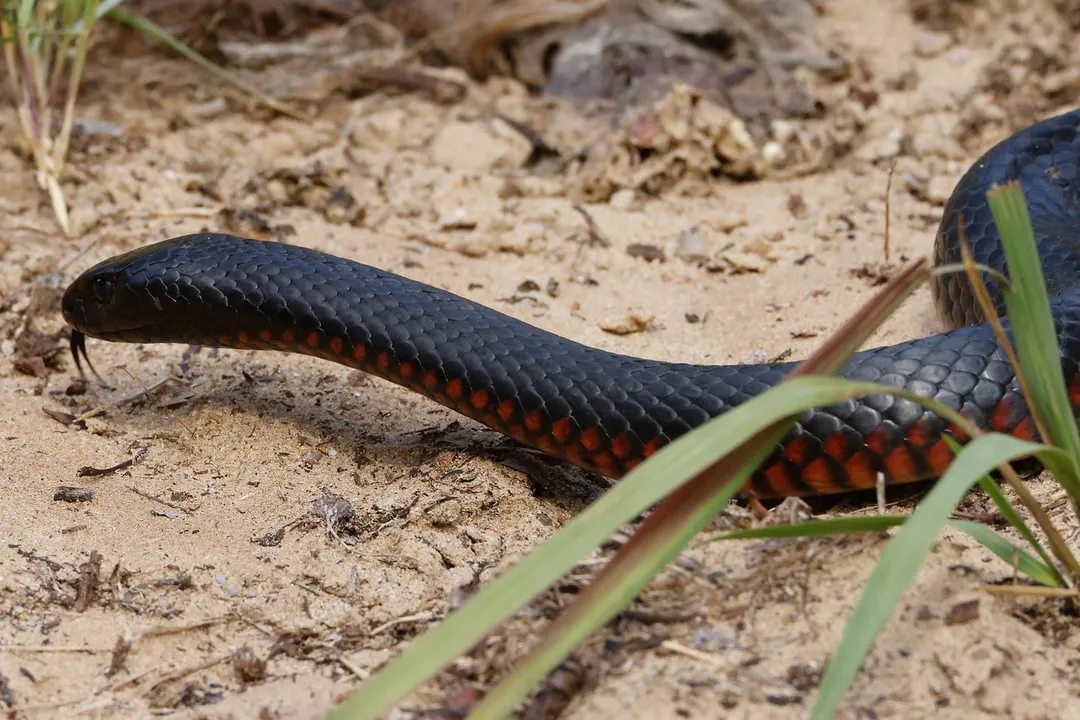
Adults generally reach about 1.25 meters (around 4 feet) in length, though documented specimens have exceeded 2.5 meters. The appearance is striking: a glossy black dorsal side, with the lower rows of scales and the edges of the belly displaying bright crimson or orange, which fades toward the center of the belly to pink or dull red. Unlike the North American counterpart, the head of P. porphyriacus is not distinct from the neck; it merges smoothly into a moderate to robust body build.
This species is strongly associated with moist environments like swamps, streams, and billabongs, though they can venture into drier woodlands or even urban areas. They are skilled hunters both on land and in shallow water, preying heavily on frogs, but also consuming fish, lizards, small mammals, and even other snakes, including their own species.
# Venom and Defense
The venom of the Red-bellied Black Snake contains a cocktail of toxins, including neurotoxins, myotoxins, and coagulants, giving it haemolytic properties. While bites can be very painful, leading to localized bleeding, swelling, and potentially muscle damage, no human deaths have been definitively recorded from this species. Many victims experience systemic symptoms like nausea and diarrhea, and they commonly develop an anticoagulant coagulopathy, a condition that fortunately resolves quickly with antivenom, often the Tiger Snake antivenom.
When confronted, this snake is generally shy and prefers to flee towards retreat sites or into the water, where it can remain submerged for substantial periods. If provoked or cornered, it adopts a threat posture: rearing up, flattening and spreading its neck, and hissing loudly. Males also engage in ritualized combat during the spring mating season, wrestling and pushing each other's heads in contests that can last for many minutes. Like the small American species, the Australian snake also gives birth to live young after a gestation period of about 14 weeks.
# Comparing Defensive Strategies
The defensive mechanisms employed by these two species illustrate a fascinating divergence based on threat level. The North American S. occipitomaculata relies on chemical defense (musk) and startling displays (playing dead or flattening) because its primary threat, from raccoons to hawks, requires immediate, non-confrontational evasion. Its tiny teeth offer no real deterrent.
Conversely, the Australian P. porphyriacus possesses a potent defense, yet it prioritizes evasion over confrontation. The fact that it is one of the most frequently encountered snakes on the East Coast means that many people get close enough to observe its threat display. Its relatively low fatality rate compared to other local elapids suggests that while it can inflict severe local injury and systemic issues like blood clotting problems, its venom is less efficiently delivered or less systemically toxic to humans than, say, that of the Brown Snake.
# A Note on Sightings
For observers in regions like Maine or Ontario, finding a Storeria occipitomaculata under a log is a sign of a healthy local ecosystem, as they depend on cover and specific invertebrate populations. If you are an amateur naturalist documenting this species for an atlas—perhaps in Eastern North America—remember that reporting sightings helps track population health, as they are listed as "Least Concern" globally, but local pressures like road mortality still exist. Meanwhile, an observer in Sydney or Melbourne encountering a much larger, black snake with brilliant red flashing on its sides should maintain distance and retreat slowly, recognizing the potential for a serious, though rarely fatal, envenomation. It is worthwhile for any general reader to note that the presence of the Australian species is often tied to the presence of frogs; thus, habitat fragmentation and the decline of amphibian populations pose a significant, indirect threat to P. porphyriacus survival, even if its IUCN status remains Least Concern.
Related Questions
#Citations
Red-bellied Black Snake - The Australian Museum
The Red-Bellied Snake - Peggy Notebaert Nature Museum
Red-bellied black snake Facts for Kids
Red-bellied Snake | Reptiles & Amphibians in Ontario
Red-bellied black snake - Wikipedia
Red-bellied Snake - Florida Museum of Natural History