Yellow-Bellied Sea Snake Facts
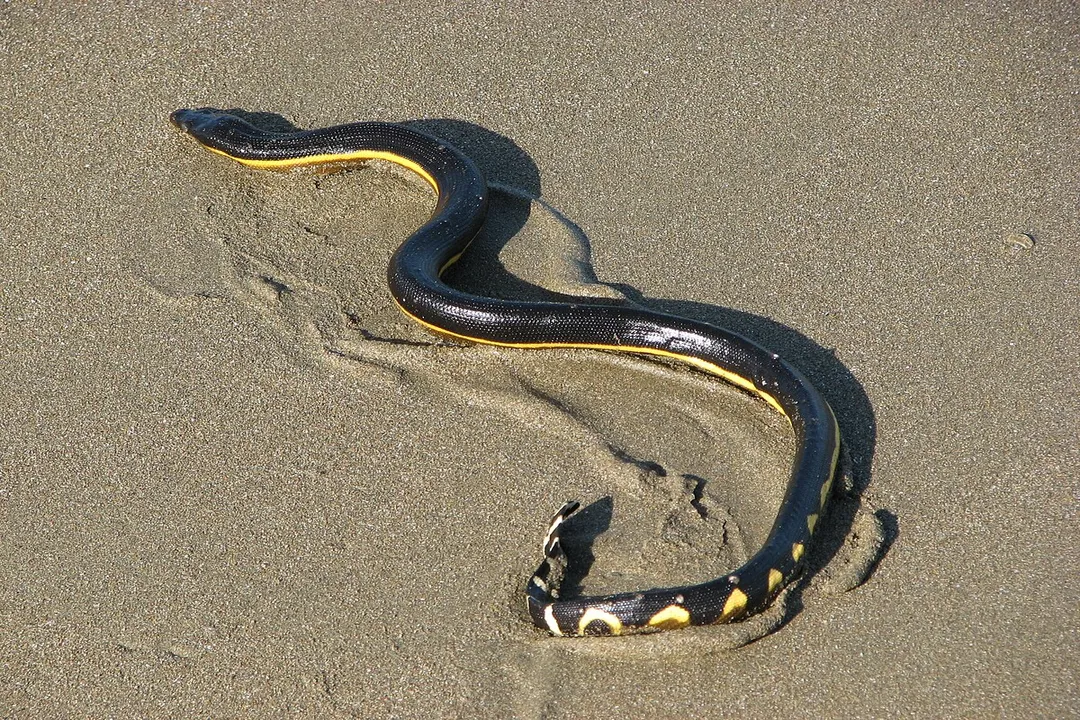
The yellow-bellied sea snake, scientifically known now as Hydrophis platurus, commands the open ocean in a way few other reptiles can claim, holding the title of the most widely distributed snake on Earth. This creature is not merely a visitor to the sea; it is entirely committed to the marine environment, never needing to touch land or the sea floor after birth for its entire adult existence. Unlike many other sea snake species that favor coastal regions or estuaries, this snake is truly pelagic, traversing the warm, tropical waters of the vast Indo-Pacific basin. Its extraordinary range, from the eastern coast of Africa across to Central America, sets it apart from nearly every other snake species globally.
# Naming History
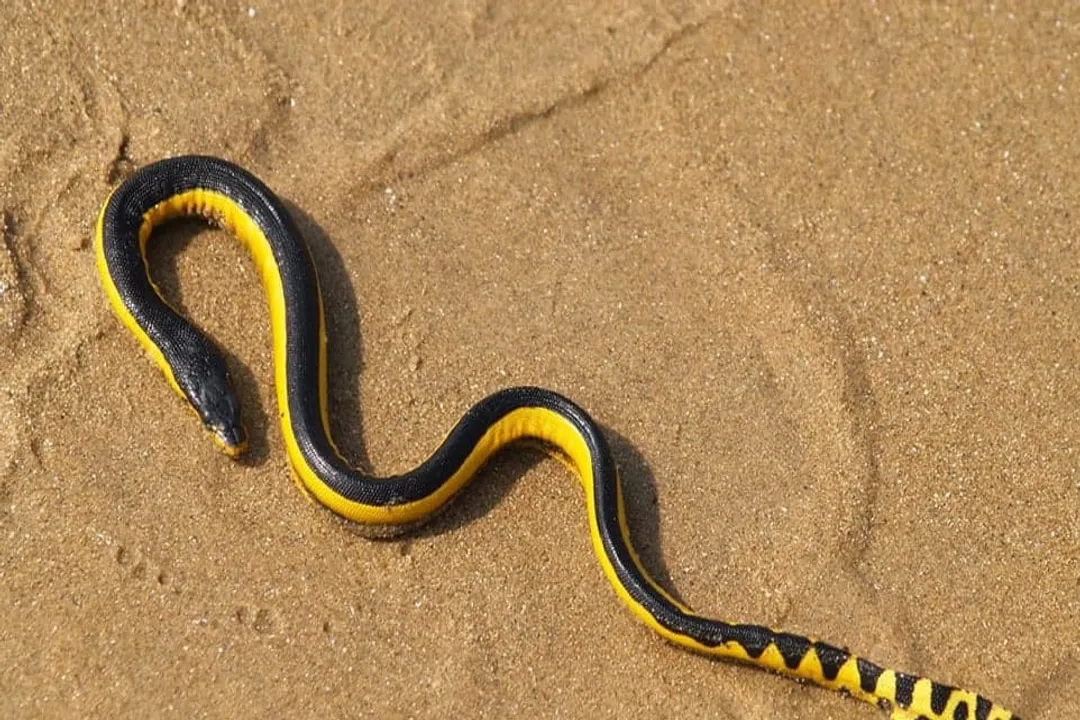
The snake’s identification has seen some revisions over the centuries, reflecting ongoing scientific inquiry into marine reptile phylogeny. First described by Linnaeus in 1766 under the name Anguis platura, it was later assigned its own genus, Pelamis, by Daudin in 1803, leading to the common designation Pelamis platuros. The genus name Pelamis is derived from an Ancient Greek term meaning "tunny fish," perhaps referencing its ocean habitat or perceived diet. The specific part of that old name, platurus, itself is a combination of Greek words meaning "flat tail," which perfectly describes its primary swimming apparatus.
Despite the historical use of Pelamis, recent molecular evidence has shifted its classification, placing it within the genus Hydrophis alongside many other sea snakes. This consolidation aims to reduce paraphyly and better reflect the snake’s evolutionary relationship, as sea snakes as a whole represent a monophyletic group that branched off from the front-fanged venomous land snakes of Australasia, like cobras, about 10 million years ago. Even with the taxonomic shift, common names like "yellowbelly sea snake" or "pelagic sea snake" persist, reflecting its distinctive appearance and habitat.
# Striking Look
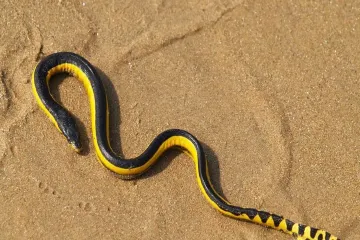
As its common name suggests, the yellow-bellied sea snake possesses a highly distinctive two-tone pattern that aids in distinguishing it from other marine reptiles. The dorsal, or upper, half of the body is typically a dark color—ranging from black to dark blueish-brown—which sharply delineates from the bright, often striking, yellow or brown on the ventral, or underside. This sharp demarcation is often very clear, although color variations exist; sometimes black spots or bars appear on the yellow belly, or the yellow may extend upward so that only a thin black stripe remains down the midline of the back. In certain regions, like the Golfo Dulce in Costa Rica, a completely yellow morph (Hydrophis platurus xanthos) is noted. The tail itself is notably flattened and paddle-shaped, often featuring dark spots or bars against its yellow base.
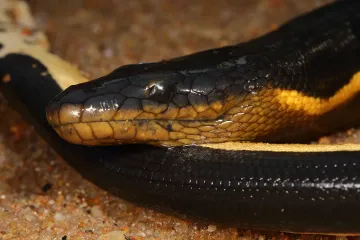
Morphologically, the snake is perfectly engineered for its aquatic life. Its body is laterally compressed, meaning it is flattened side-to-side, which aids propulsion. The head is narrow with an elongated snout, and the scales are small, smooth, and fit closely together. A key difference from land snakes is the ventral scaling: the belly scales are very small, often indistinguishable from body scales, and form a dorsal ridge or keel. This adaptation provides stability in the water but renders the snake quite helpless on land. Females are generally larger than males; males may reach up to 720 mm (28 inches) in total length, while females can extend to about 880 mm (35 inches). In contrast, the maximum recorded length is sometimes cited higher, reaching 1.13 or 1.14 meters depending on the source, often observed in females.
# Aquatic Engineering
The yellow-bellied sea snake's entire life cycle—mating, feeding, and giving birth—occurs at sea, necessitating profound physiological specialization. To manage breathing, its nostrils are positioned superiorly (high up on the snout) and feature valves that seal out water when the snake submerges. Beyond lung respiration, these snakes possess an impressive adaptation for prolonging time underwater: cutaneous gas exchange. Their skin is richly supplied with blood vessels and can absorb up to 33% of their necessary oxygen directly from the water, enabling dives lasting between 1.5 to 3.5 hours, or even longer, depending on activity and temperature. One study estimated they spend around 87% of their time underwater.
Water balance is another critical element of pelagic survival. While scientists once hypothesized that a salt gland in the lower jaw excreted ingested salt, it is now understood that sea snakes do not drink seawater. Instead, they rely on fresh water, primarily obtained by drinking rainwater that pools as droplets or lenses on the ocean's surface. This dependence means they are highly susceptible to dehydration, reportedly surviving periods of up to seven months without access to fresh water during dry seasons.
# Drift Lines
The snake's distribution across the warm Indo-Pacific is strongly influenced by favorable water temperatures—requiring a minimum of about 16–18 °C (60.8 to 64.4 °F) for long-term survival—and oceanic currents. They often utilize surface currents and even major storm systems to travel vast distances across the open ocean, frequently seen associated with oceanic drift lines. These drift lines are areas where converging currents bring together debris, foam, and scum, sometimes forming slicks stretching for many kilometers and varying widely in width.
It is commonly observed that thousands of these snakes will aggregate in or near these slicks, which is thought to be a strategy for hunting. This congregation is also proposed as a mechanism that simplifies finding mates in the otherwise empty expanse of the open ocean.
When moving, the snake employs lateral undulation of its body, using its flattened, paddle-like tail for efficient propulsion, allowing it to move both forward and backward in the water. The ability to swim backward is particularly notable and aids in its hunting technique. However, if pushed ashore by storms or currents, the yellow-bellied sea snake is severely disadvantaged. Because their belly scales are small and form a keel rather than broad ventral plates, they roll onto their sides and cannot move effectively on land.
This reliance on currents for travel introduces a fascinating ecological dynamic: the presence of these snakes in areas outside their typical thermal range is almost always a result of passive transport. For instance, their appearances on the coasts of places like New Zealand, Tasmania, or southern California are often temporally linked to major weather events, most notably El Niño, which strengthens and redirects tropical currents far outside their usual path. These displaced individuals are not establishing resident populations because the water temperatures drop below the threshold required for feeding and long-term survival. Thus, the appearance of H. platurus in New Zealand, a place generally snake-free, serves as a natural, albeit grim, indicator of significant, unusual shifts in Pacific oceanographic patterns during those years.
# Hunting and Diet
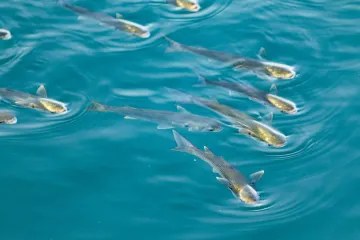
Hydrophis platurus is a carnivorous specialist, feeding almost exclusively on small fish and eels encountered in the upper water column, generally within the top 3 to 10 feet. As an ambush predator, it adopts a "float-and-wait" strategy. The snake often lies motionless at the surface, sometimes appearing like a piece of floating debris, which attracts small fish seeking shelter. When prey swims within range, the snake executes a rapid sideways swipe, injecting venom to quickly immobilize the fish before swallowing it whole, headfirst. The unusual backward swimming capability is also employed in hunting, allowing the snake to capture prey that approaches from behind its head. Feeding behavior is temperature-dependent; observations suggest that foraging ceases when water temperatures drop to around 16–18 °C.
# Reproduction at Sea
Reproduction in this species occurs entirely in the water, as they are ovoviviparous. This means the young develop inside the mother, with the eggs hatching internally, resulting in the birth of live, fully formed miniatures of the adults. Mating is thought to happen only when the water is sufficiently warm, typically above 20 °C (68 °F). The gestation period lasts about six months, after which the female gives birth to a small litter, usually ranging from two to eight young, though one source suggests up to ten are possible. Newborn snakes are already capable of swimming and feeding immediately, measuring around 220 mm to 260 mm (8.7 to 10 inches) in length and possessing substantial fat bodies to aid their initial survival.
# Minimal Threats
Despite carrying potent venom, the yellow-bellied sea snake has surprisingly few natural predators in its vast range. The striking black and yellow coloration serves as an aposematic signal, warning potential attackers that the snake is both highly venomous and potentially unpalatable or toxic if consumed. When predators do ingest pieces of the snake—as documented in experiments with marine fish or observations involving leopard seals—they often regurgitate the flesh shortly afterward. This suggests that factors like food shortages, disease, or the primary threat—being stranded in cold water—are far more significant population regulators than predation.
As a fully aquatic animal, managing skin shedding presents a unique challenge without rocks or reefs for abrasion. To overcome this, H. platurus employs a distinct behavior: it ties itself into a tight knot, sometimes for hours, and runs this knot along its body from one end to the other, effectively loosening the old skin and scraping off attached organisms like algae and barnacles. This knotting action is also used to clear accumulated epibionts such as barnacles and certain snake-specific barnacle species. Internally, they can host parasites like nematodes (roundworms) and cestodes (tapeworms).
# Venom and Danger
The venom of the yellow-bellied sea snake is indeed highly potent, belonging to the elapid family, and contains a complex mix of neurotoxins and other isotoxins capable of causing severe muscle damage (myotoxins). The subcutaneous LD50 value is reported as low as . This toxicity means a bite is medically significant, potentially leading to muscle breakdown, paralysis, and kidney damage.
However, actual human envenomation is rare, mainly occurring when the snake is accidentally caught or entangled in fishing nets, particularly in regions like the Philippines and Southeast Asia. The snake generally exhibits a docile temperament and is reluctant to bite defensively. Furthermore, the fangs are short, measuring around , and the venom yield per bite is relatively small, often between 1.0–4.0 mg. Crucially, it is widely reported that defensive strikes frequently result in "dry bites"—strikes without venom injection—with some estimates suggesting this occurs up to 80% of the time. If envenomation does occur, antivenom developed for the Beaked Sea Snake (Enhydrina schistosa) is effective, and tiger snake antivenom may also be administered. Despite the high toxicity of the venom, no human fatalities have been recorded in Australian waters.
# Trans-Oceanic Travel
The snake’s extreme distribution, spanning both the eastern and western sides of the Pacific, is a major point of interest for herpetologists. Its presence in the Atlantic Ocean is particularly noteworthy, as it is the only sea snake recorded there. These Atlantic sightings, primarily in the Caribbean Sea off the coast of Colombia, are not considered part of the snake’s native range; they are considered accidental dispersals.
This distinction highlights a critical geological versus man-made barrier comparison. The Isthmus of Panama, the land bridge connecting North and South America, formed millions of years ago and acted as a powerful dispersal barrier, preventing natural migration between the Pacific and the Caribbean (Atlantic). Although the man-made Panama Canal now connects the two bodies of water, the freshwater environment within the canal likely prevents the purely marine H. platurus from successfully crossing, suggesting the Atlantic individuals arrived via other means, such as being carried by ships or through other accidental human activities.
Another important factor shaping its global presence is its absolute intolerance for prolonged cold. The dependency on warmer waters means that when strong currents or El Niño events push the snakes into temperate zones such as the waters off southern California or south of Wellington, New Zealand, they become stranded casualties rather than colonizers. If a specimen washes ashore in an area like New Zealand, which otherwise lacks native land snakes, it is considered a highly significant, albeit unfortunate, visitor.
# Strandings and Care
Because the species is Least Concern globally according to the IUCN, its conservation status is stable, but local strandings present an immediate mortality risk due to external factors. When an ocean-going yellow-bellied sea snake is found washed up on a beach, the most important directive for the public is not to attempt to return it to the sea. This simple act of assistance can actually cause injury or death. Since the snake’s body is adapted for buoyancy and swimming, it lacks the muscle control and specialized ventral scales necessary to support its own weight and maintain adequate blood pressure when tilted or held horizontally out of the water. Without the hydrostatic support of the ocean, an extended period of being held can cause circulatory failure. Instead, local wildlife authorities or rescue services should be contacted immediately for proper assessment and care of the animal. Though they are highly venomous, their remote lifestyle keeps them isolated from most human activity, ensuring that severe human interaction remains a rare event tied to fisheries or accidental beachings.
Related Questions
#Citations
Yellow-bellied Sea Snake - The Australian Museum
Yellow-bellied sea snake - Wikipedia
Yellow-Bellied Sea Snake - Waikiki Aquarium
Yellow-bellied sea snake Facts for Kids
yellow-bellied sea snake - Students | Britannica Kids | Homework Help
Galapagos Yellow Bellied Sea Snake Facts with Quasar Expeditions
Pelamis platura (Yellowbelly Sea Snake ... - Animal Diversity Web
Yellow-bellied sea snake - New Zealand Herpetological Society
The Yellow-bellied Sea Snake Slithers in the Open Ocean
Yellow-bellied Sea Snake | Mexican Marine Life.org