Which species of cobra is mentioned as an example of a species that threatens or bites but does not project venom like *N. nigricincta*?
Answer
Egyptian Cobra (*Naja haje*)
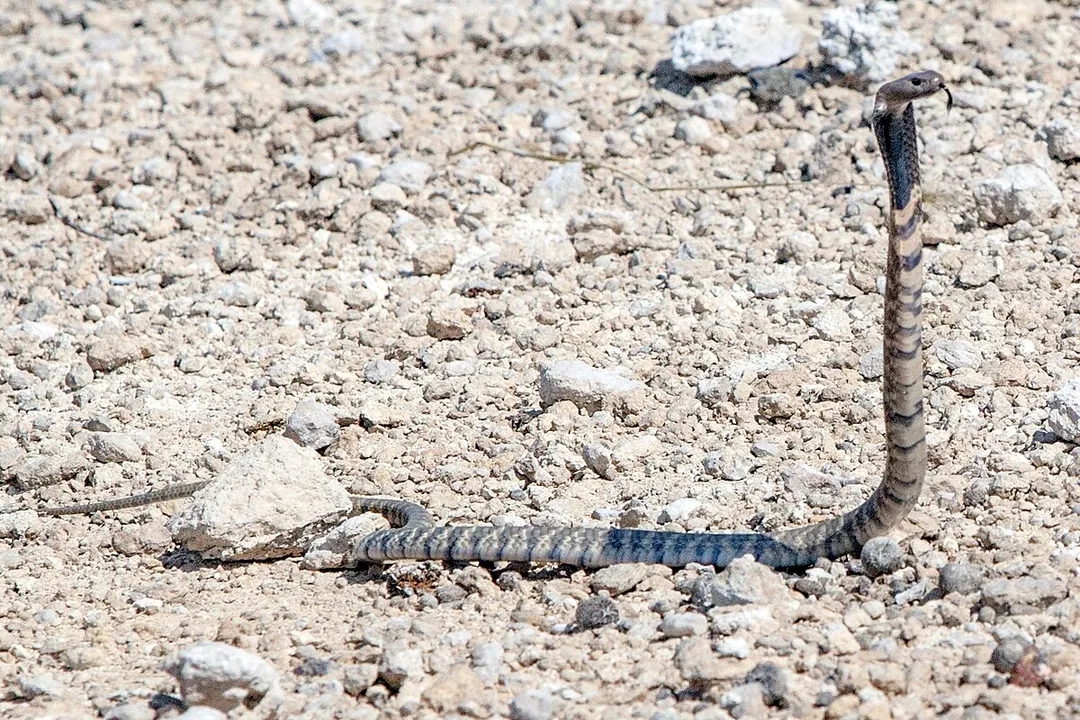
The text uses the Egyptian Cobra (*Naja haje*) as a specific contrast point when detailing the defensive divergence among cobras. While *N. haje*, like all cobras, employs the classic intimidation tactic of displaying its hood to visually exaggerate its size, it relies on threatening postures or biting for defense rather than actively projecting venom in a directed stream. This contrasts sharply with the adaptations found in spitting lineages like *N. nigricincta*, which have evolved an active, ranged chemical deterrent alongside the traditional hood display.
#Videos
Spitting cobras: the peculiar evolution of defensive venom in snakes
Related Questions
What physical change in the fang allows *Naja nigricincta* to eject venom as a spray?How does the venom chemistry of spitting cobras generally diverge from that of non-spitting *Naja* relatives?What is the functional role of maintaining the bite capability alongside the spitting adaptation in *N. nigricincta*?What physical trait defines many specimens of *Naja nigricincta* according to its binomial name?What selective pressure likely favored the evolution of venom spitting over purely defensive displays in the *N. nigricincta* environment?What is the evolutionary significance of spitting evolving independently across various snake lineages?Which species of cobra is mentioned as an example of a species that threatens or bites but does not project venom like *N. nigricincta*?For a cobra that spits, what delivery method is utilized for envenomation via biting, as opposed to spitting?What is the evolutionary consequence of maintaining the general apparatus for venom production in cobras prior to the fang specialization?Where are Zebra Spitting Cobras (*N. nigricincta*) generally distributed geographically?