Why is it called Mozambique Spitting Cobra?
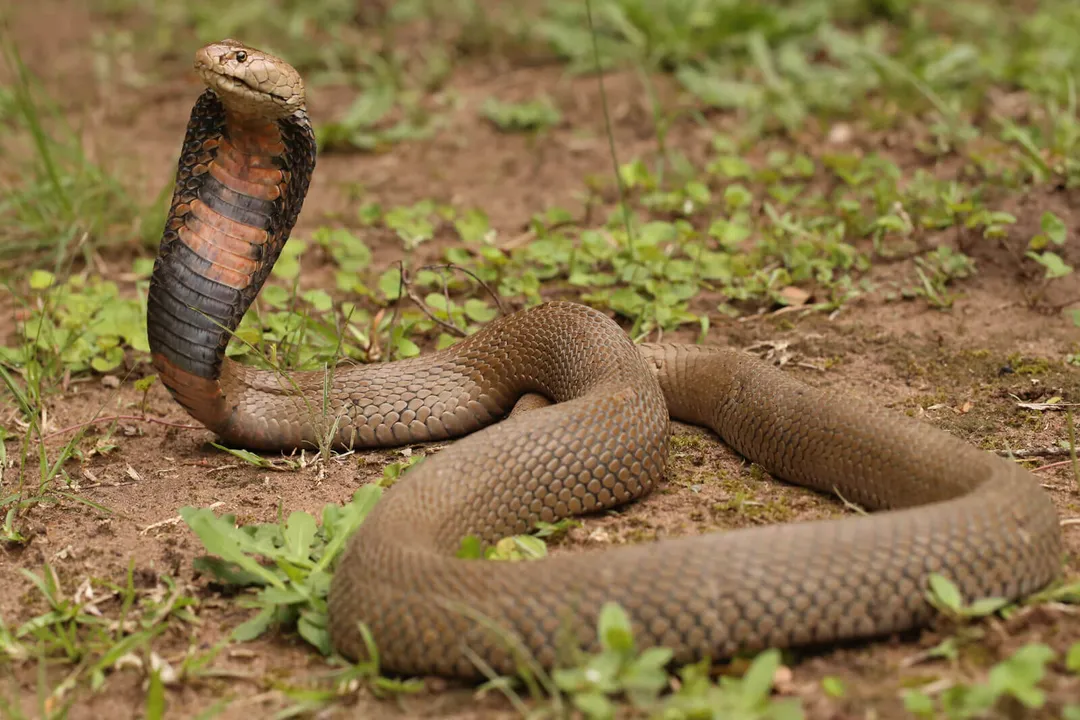
The moniker given to the Naja mossambica, the Mozambique Spitting Cobra, immediately tells a story about where it hails from and what dangerous specialty it possesses. It is a name derived directly from geography and behavior, combining the origin of its common recognition with its most famous defensive maneuver. [2][9] Specifically, the "Mozambique" portion of its name points to the nation of Mozambique, a country within its wider southern East African distribution. [2][9][7] The snake is officially known by the scientific binomial Naja mossambica, which anchors it firmly within the Naja genus, the true cobras. [9]
While the precise moment of formal scientific or popular naming isn't explicitly detailed across these accounts, the pattern for naming many species, particularly during historical periods of extensive exploration and natural history documentation, often involved tying the name to the country or region from which the specimen was first substantially collected, described, or most commonly sighted by European naturalists. [2][9] This often means that while the snake ranges far beyond that single location, the first place of note gives the name its anchor. [3] In the case of this Naja, its range encompasses countries like Mozambique, Eswatini, Zimbabwe, and parts of South Africa, including the Limpopo, Mpumalanga, and KwaZulu-Natal provinces. [2][6][7] It is a snake deeply rooted in the ecological landscape of the southern part of the African continent. [7]
# Behavioral Defense

The second, and perhaps more dramatic, part of its common name—"Spitting Cobra"—is entirely descriptive of its primary, highly specialized defense mechanism. [2][8] This action is what sets it apart from many other venomous snakes that rely solely on biting, although the ability to spit is not unique to this specific species within the cobra family. [8] The Mozambique Spitting Cobra is recognized as one of the species capable of projecting its venom with surprising accuracy over a distance. [7]
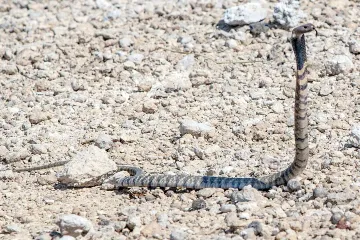
When threatened, the cobra will adopt a defensive posture common to many of its relatives: it elevates the front third of its body into the classic S-shape, preparing for a strike or defense. [7] However, instead of solely relying on its fangs for biting, specialized muscles around its venom glands contract powerfully, forcing the venom out through small ducts near the tips of the front fangs. [8] This projection is often described as a spray or jet of liquid aimed directly toward the eyes of a perceived threat. [7] The speed and force behind this expulsion allow the venom to travel several meters. [7] The venom is typically projected when the snake feels directly threatened, often after raising its hood as a warning display. [7] This entire aggressive defensive routine is the defining characteristic that cements the "spitting" descriptor into its common identity. [8]
# Potent Toxins
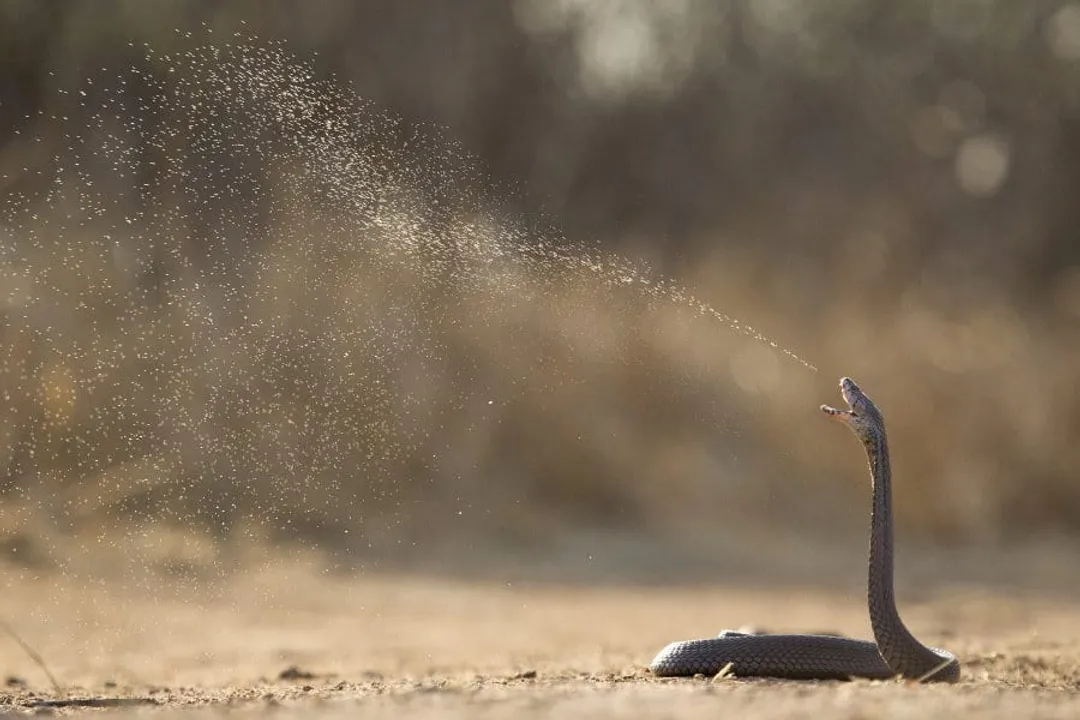
The reason this spitting capability is so critically important, both for the snake and for any creature it targets, lies in the composition and effect of its venom. The venom of Naja mossambica is considered highly potent. [7] It possesses a dual threat profile, combining significant cytotoxicity (tissue-destroying properties) with neurotoxicity (nerve-affecting properties). [2][6]
The cytotoxic effects are often the most immediately visible and regionally devastating after a bite. This venom causes rapid, painful necrosis, leading to extensive local tissue destruction around the bite site. [2][7] This damage can result in severe swelling, blistering, and the breakdown of muscle and skin tissue, potentially leading to long-term deformity or loss of limb function if not treated aggressively. [6] For those living in regions where this snake is common, understanding this local tissue destruction is vital, as immediate first aid for a suspected bite must prioritize keeping the limb still and seeking specialized medical attention to manage the necrosis. [7]
Conversely, the neurotoxic elements of the venom act on the nervous system, which can lead to symptoms like ptosis (drooping eyelids), difficulty swallowing, and potentially respiratory paralysis. [2][6] While the cytotoxic damage is often the headline feature, the neurotoxic effects are what pose the most immediate threat to life, as they can cause breathing to cease. [2] The combination makes the venom one of the more dangerous ones found in the region. [7]
In practice, while a bite delivers the full spectrum of venom—neurotoxins and cytotoxins—the projection of venom into the eyes is almost purely cytotoxic in its initial impact on the surface, though systemic absorption through mucous membranes is a concern. The projection is a highly accurate, non-lethal (if the snake is not provoked further) deterrent, whereas a bite injects the full dose directly into the victim's system. [7]
Considering the range disparity, a resident in a rural area of Limpopo, South Africa, might encounter this snake far more frequently than someone in the central plains of Mozambique, yet both must recognize the danger indicated by the name "Spitting Cobra". [2][7] The geographical designation links the snake to its historical discovery point, but its behavior links it to immediate danger avoidance.
# Appearance and Variation
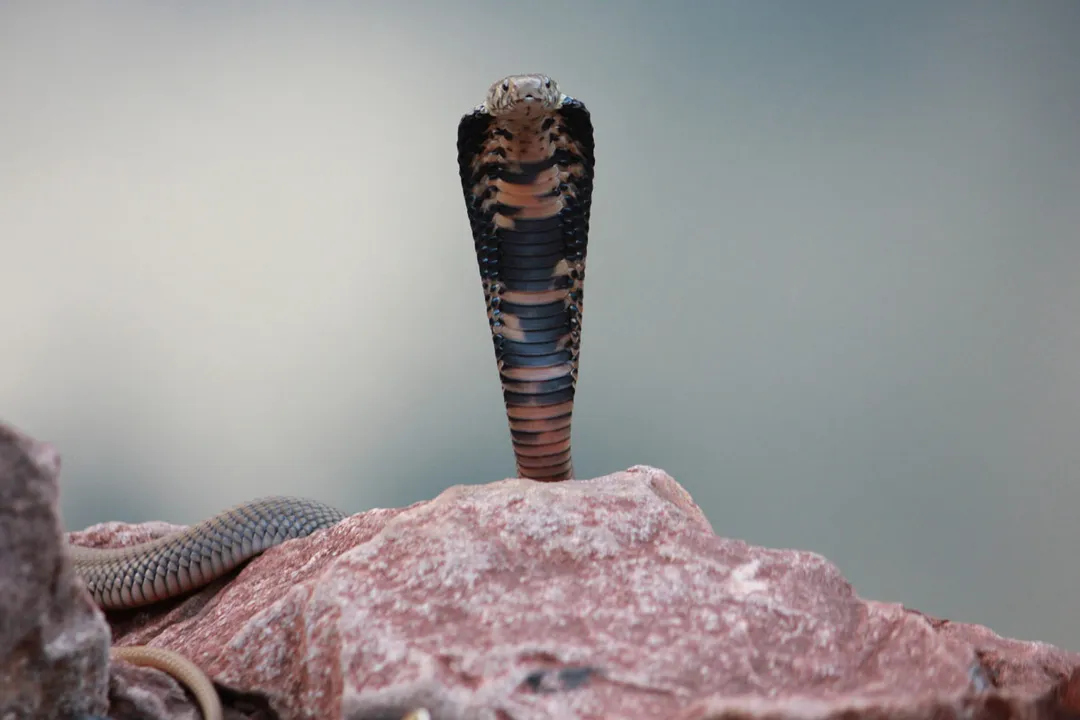
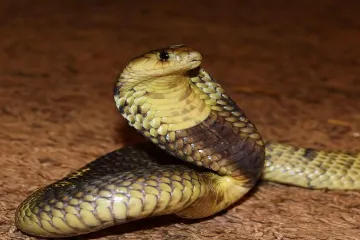
One of the challenges in quickly identifying this species, even if one is aware of its name, is its significant variation in color, which helps it blend into diverse habitats across its wide range. [2][7] Unlike some snakes that maintain a very consistent pattern, the Mozambique Spitting Cobra displays remarkable plasticity. [2] They can appear in shades ranging from reddish-brown, pinkish-red, or even orange-red, to more subdued tones like gray, olive green, or dusky brown. [2][6][7] Younger snakes, or juveniles, often exhibit lighter coloration, sometimes appearing distinctly pinkish. [7] A helpful identifying feature, when visible, is the presence of darker cross-bands, which may be present on the dorsal side. [2] This varied palette means a snake seen near a red-rock outcrop might look entirely different from one found in a dense, gray bushveld environment, reinforcing the need for caution regardless of the specific hue. [2]
# Habitat and Proximity
The snake’s distribution is generally associated with bushveld, woodland, and rocky areas, suggesting it favors environments with ample cover. [2] However, a critical piece of information for anyone living within its range is that the Mozambique Spitting Cobra frequently occurs in areas close to human habitation. [7] This overlap in habitat preferences—thriving in semi-open country where farming and settlement also occur—increases the probability of human encounters compared to snakes confined strictly to deep wilderness. [7] They are known to frequent gardens, farmlands, and areas near woodpiles or rubble, places that offer both hunting grounds and shelter. [3][7]
When analyzing distribution versus naming conventions, one might observe that many species retain the name of the first political entity encountered, even if the snake's highest population density or the most significant documented medical incidents later occurred elsewhere. For instance, while the snake is well-known in Mpumalanga (South Africa), the association with Mozambique in the common name remains the international standard, perhaps suggesting a historical authority or documentation center based there or nearby. [3] This highlights a common tension in taxonomy: names stick based on tradition, even when ecological data expands the known range considerably. [2][6]
# The Cobra Classification
To fully appreciate the name, one must understand its place among other cobras. The Mozambique Spitting Cobra is a member of the Elapidae family, which includes many of the world's most venomous snakes. [8] Within this family, the Naja genus includes both the classic "hooded" cobras, which primarily rely on biting, and the "spitting" cobras, which possess the specialized venom delivery system. [8] The distinction is based on the morphology of the fangs and the musculature controlling venom expulsion. [8] Not all cobras spit; only specific species have refined this adaptation. Therefore, the term "spitting cobra" is a specific functional category within the broader term "cobra," and Naja mossambica earns that specific classification due to its precise anatomical ability to project venom. [8]
The difference between a general cobra and a spitting cobra lies in this refined physical adaptation. Where a non-spitting cobra might accidentally leak or spray venom during a frantic bite, the spitting cobra has evolved mechanisms to aim a concentrated jet. This specialized targeting mechanism offers a significant advantage when faced with a large predator or an inquisitive human, allowing the snake to potentially neutralize a threat to its vision without having to risk a close-range bite, which is more metabolically expensive and inherently riskier for the snake itself. [7] This evolutionary refinement warrants the specific inclusion of "spitting" in the common name. [8]
# Conclusion
Ultimately, the full name—Mozambique Spitting Cobra—is a perfect descriptive label: it names the snake after the country that likely served as the initial focal point for its description (Mozambique), and it details its most formidable and defining defensive action (Spitting Cobra). [2][9] This dual naming system captures both its origin story and its immediate, eye-targeting threat profile, ensuring that anyone encountering this highly variable but dangerous snake understands the dual nature of the danger it presents. [7]
Related Questions
#Citations
Why is the Mozambique spitting cobra named as such if it's ...
Mozambique spitting cobra - Wikipedia
Why is it called Mozambique spitting cobra? - Kruger Park Hostel
Mozambique Spitting Cobra | Kloof Conservancy The Leopard's Echo
Herpetologist Reveals Secrets of the Mozambique Spitting Cobra
Mozambique Spitting Cobra: Fact Sheet - Eswatini Antivenom ...
Mozambique Spitting Cobra - African Snakebite Institute