How does the venom chemistry of spitting cobras generally diverge from that of non-spitting *Naja* relatives?
It favors a heightened presence of components causing immediate, agonizing pain.
The chemical composition of venom appears co-evolved with the spitting mechanism, suggesting a strategic shift in defense priority. While neurotoxins (which cause systemic collapse and paralysis) are characteristic of many elapids, research indicates that the venom of spitting cobras often displays a higher relative proportion of cytotoxic agents. Specific enzymes, such as certain types of phospholipase A2 (PLA2), are noted contributors to severe pain and local tissue destruction (myonecrosis). This chemical profile is evolutionarily advantageous for spitting because the primary goal of projecting venom at a distance is immediate deterrence through blinding or intense pain, which is achieved more effectively by pain-inducing factors than by a slow-acting neurotoxic cocktail.
#Videos
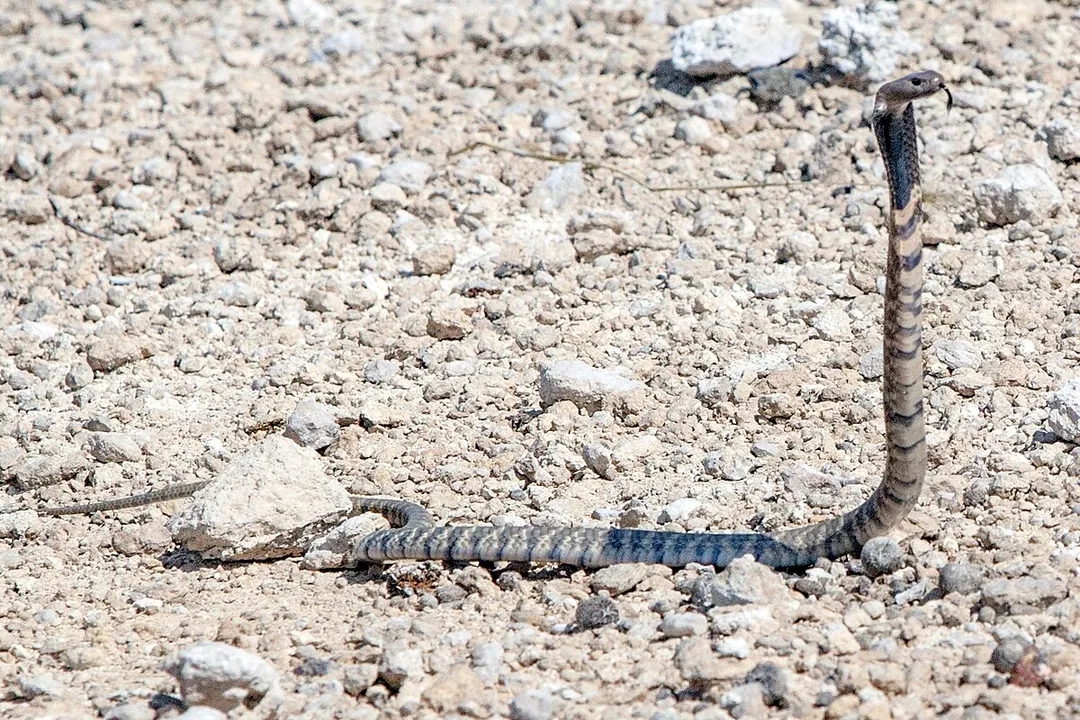
Spitting cobras: the peculiar evolution of defensive venom in snakes