What physical trait defines many specimens of *Naja nigricincta* according to its binomial name?
Answer
Dark or black bands circling the body, reflected in *nigricincta*.
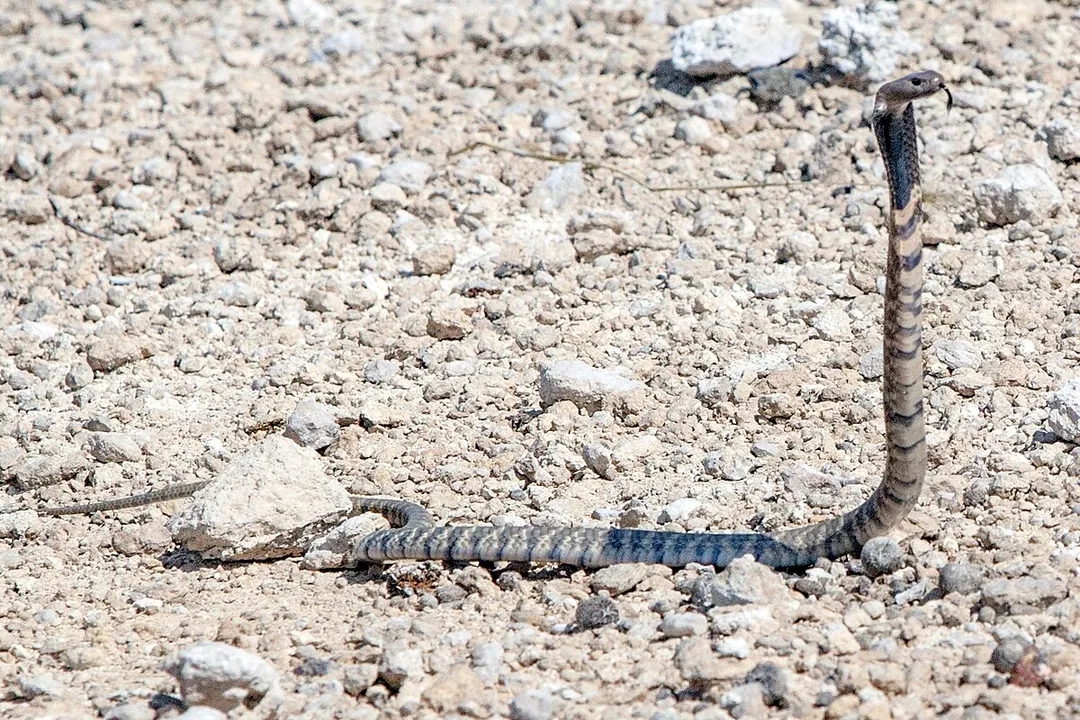
The species name *Naja nigricincta* directly references a distinguishing physical characteristic common among many individuals of this species. The term itself points toward the presence of dark or black bands encircling the snake’s body, which contrast with lighter sections, giving rise to its common name, the Zebra Spitting Cobra. While variation in this pattern exists across its geographic range—sometimes appearing almost uniformly dark—the banding pattern is the key descriptive element embedded within its formal Latin nomenclature.
#Videos
Spitting cobras: the peculiar evolution of defensive venom in snakes
Related Questions
What physical change in the fang allows *Naja nigricincta* to eject venom as a spray?How does the venom chemistry of spitting cobras generally diverge from that of non-spitting *Naja* relatives?What is the functional role of maintaining the bite capability alongside the spitting adaptation in *N. nigricincta*?What physical trait defines many specimens of *Naja nigricincta* according to its binomial name?What selective pressure likely favored the evolution of venom spitting over purely defensive displays in the *N. nigricincta* environment?What is the evolutionary significance of spitting evolving independently across various snake lineages?Which species of cobra is mentioned as an example of a species that threatens or bites but does not project venom like *N. nigricincta*?For a cobra that spits, what delivery method is utilized for envenomation via biting, as opposed to spitting?What is the evolutionary consequence of maintaining the general apparatus for venom production in cobras prior to the fang specialization?Where are Zebra Spitting Cobras (*N. nigricincta*) generally distributed geographically?