Zebra Spitting Cobra Locations
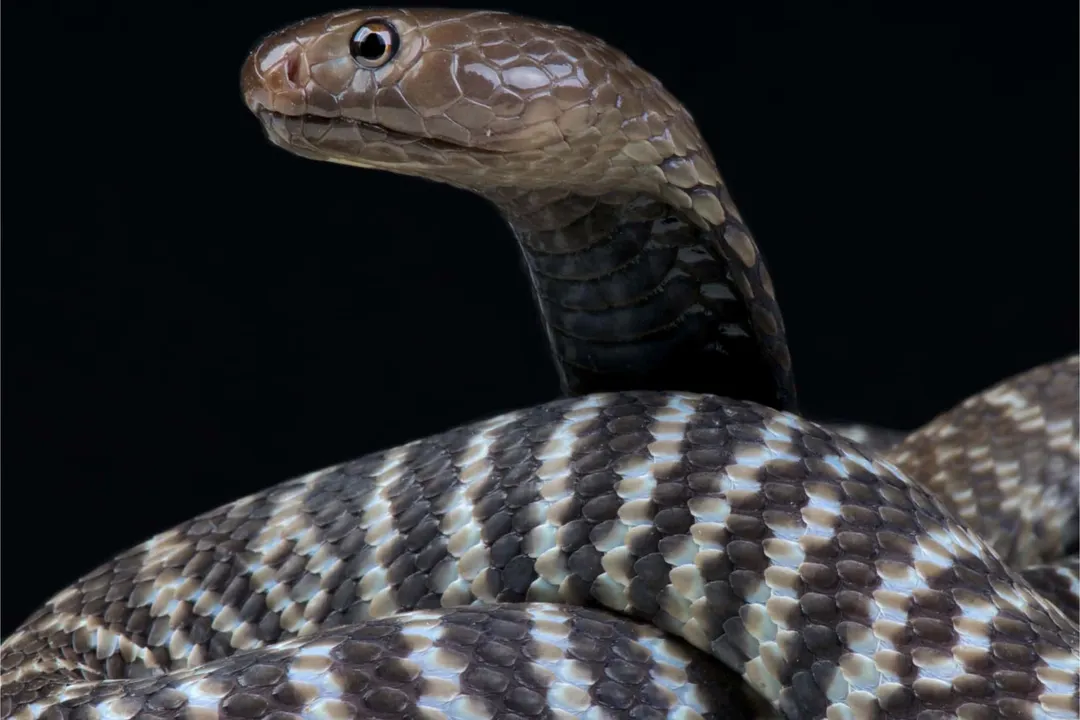
The distribution of the Zebra Spitting Cobra (Naja nigricincta) is strictly confined to the southern regions of the African continent, a fact that makes tracking its known range a matter of pinpointing specific neighboring countries and their unique arid environments. This species, recognized for its striking, contrasting bands, is not found randomly across the continent; instead, its presence is rooted in drier areas and deserts.
# African Range Core
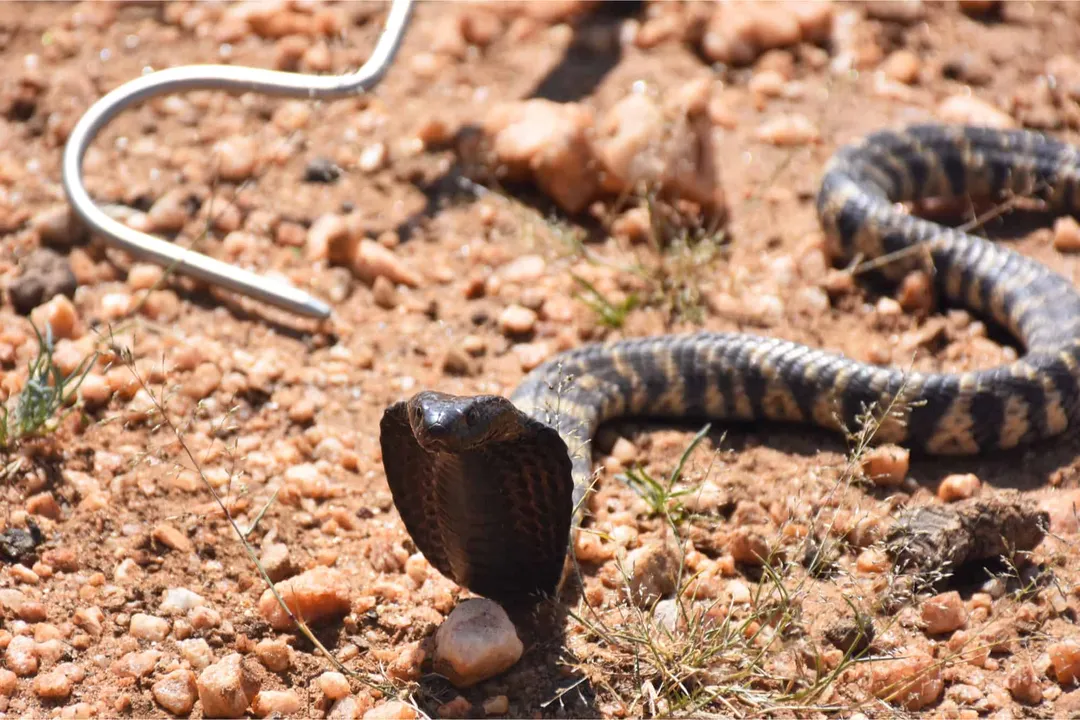
The primary focus for locating the Zebra Spitting Cobra is Southern Africa. Specifically, the species makes its home in three key nations: Angola, Namibia, and South Africa. Further delineating this distribution, genetic and geographic studies confirm its presence extends into parts of Botswana and even Lesotho, placing it firmly within the semi-arid and desert ecosystems of this sub-region. The snake is often encountered in areas characterized by shrubland, including those dominated by Acacia trees, as well as rocky terrain.
It is important to note that while the overall species range covers these areas, the specific subspecies found can vary significantly across the landscape. While the general habitat type might be broadly described as savanna or arid, the very adaptability of these cobras means they frequently enter human-occupied areas. This habit of frequenting both rural and urban settings increases the potential for interaction in the geographic areas where they are established.
# Subspecies Mapping
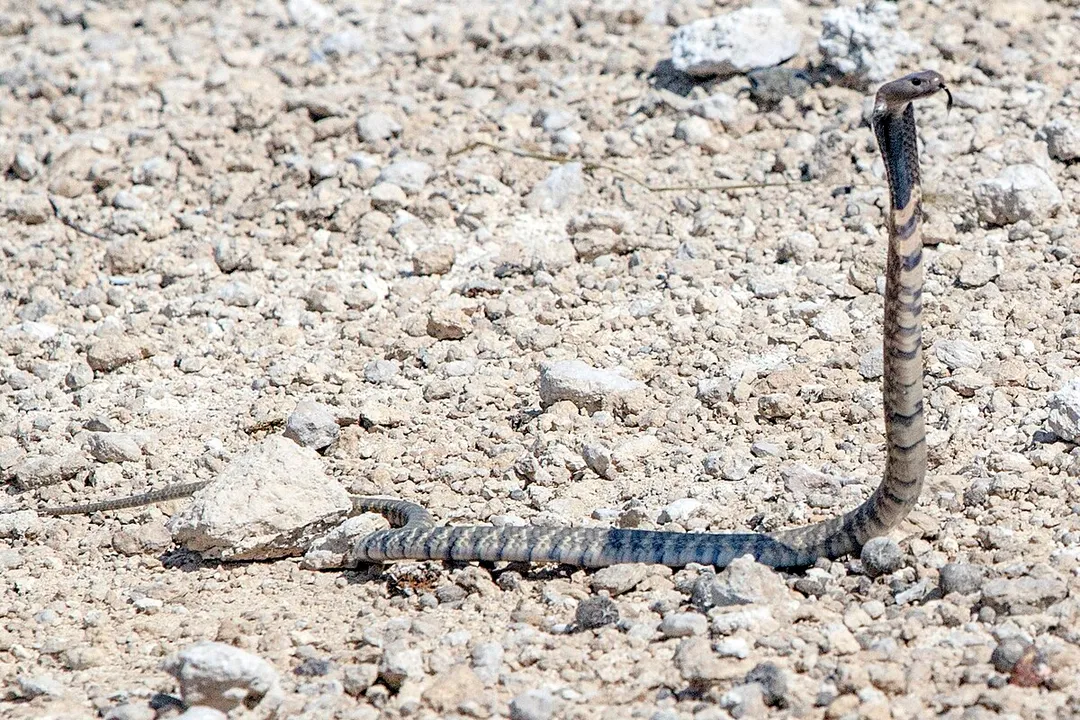
The single species, Naja nigricincta, is currently separated into two recognized subspecies, and their locations are distinct enough to almost define micro-ranges within the larger Southern African distribution.
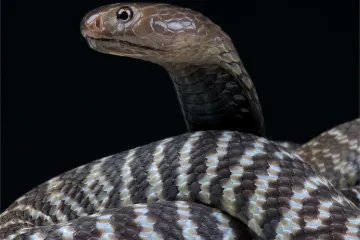
The nominate subspecies, N. n. nigricincta, is the one most commonly referred to as the Zebra Spitting Cobra due to its pronounced vertical light and dark banding. This form is typically associated with Central and Northern Namibia and parts of Southern Angola. Its coloration, described as grey-brown, yellow, or pink with dark bands, contrasts with its counterpart.
The second subspecies is N. n. woodi, known as the Black Spitting Cobra. This snake is distinct in appearance, presenting as solid matte black when fully grown, though juveniles may start as grey with black heads. Its geographic footprint includes Southern Namibia, Southern Botswana, Lesotho, and portions of South Africa. This difference in appearance and range suggests that N. n. woodi may be adapted to slightly different local conditions within the southern extremes, possibly areas where the pronounced striping of N. n. nigricincta would offer less effective camouflage against the ground cover.
# Comparing Provincial Finds
In South Africa, which hosts populations of the Black Spitting Cobra (N. n. woodi), the confirmed locations fall within the Western Cape and Northern Cape provinces. These regions are characterized by harsh, arid, and semi-arid environments, which aligns with the known preference for drier regions across the species' entire range. The fact that the species is listed as Least Concern by the IUCN, described as widespread and stable, speaks to the suitability of this southern African belt for their survival.
| Subspecies | Common Name | Key Locations Mentioned | Noteworthy Feature |
|---|---|---|---|
| N. n. nigricincta | Zebra Spitting Cobra | Central/Northern Namibia, Southern Angola | Distinctive zebra-like stripes |
| N. n. woodi | Black Spitting Cobra | Southern Namibia, Southern Botswana, Lesotho, South Africa (Western/Northern Cape) | Solid matte black as adults |
When considering the ecological demands of a species like this, it becomes apparent that the areas spanning from the Namib Desert fringes into the South African scrublands provide the necessary conditions: sufficient prey like rodents and birds, and the rocky outcrops or burrows needed for shelter. The presence of the snake in countries like Angola and Namibia means its range overlaps with extensive, sparsely populated desert and semi-desert zones, which might explain why population estimates remain "unknown" despite being classified as stable.
# Nocturnal Presence
Understanding where the Zebra Spitting Cobra lives is intrinsically linked to when it is active. This species is characterized as largely nocturnal. This behavioral trait is critical for anyone living within or visiting its native range, as it directly influences the risk of encounter. They are often seen crossing roads under the cover of darkness.
Because they hunt primarily at night, they rely on excellent low-light vision to locate prey such as mice, frogs, and fish. For residents or researchers in Namibia or the Northern Cape of South Africa, this means that the highest probability of seeing one is after sunset.
While primarily nocturnal, they are not strictly so; they can be observed moving about during the early mornings and evenings as well. This slightly flexible activity pattern suggests they might take advantage of cooler twilight hours when temperatures are more moderate than the peak midday heat in their arid habitats.
When discussing local context in these arid zones, a practical consideration emerges: the thermal environment dictates their activity peaks. In extremely hot periods, their nocturnal habits will become more pronounced to avoid overheating, meaning late-night movements are more likely. Conversely, during a cooler spell, an early evening foray might be common, providing a wider window for accidental contact near human settlements.
# Habitat Specificity
The general descriptors of "rocky," "shrubland," and "savanna" paint a picture of their preferred terrain. These environments provide the necessary structure for their survival strategy: ambush and concealment. They are known to hide beneath piles of rocks or within burrows when seeking refuge.
The preference for arid rocky areas is very specific. This type of habitat offers excellent camouflage for both the striped N. n. nigricincta against the varied tones of stone and earth, and the solid black N. n. woodi against dark shadows or scorched earth. Furthermore, their diet—which includes small mammals, amphibians, reptiles, and birds—is sustained by the biodiversity present in these specific ecosystems, even those that appear harsh.
One must distinguish the natural distribution from temporary occurrences, as the species has gained notoriety outside its native range when kept as exotic pets. A case in Raleigh, North Carolina, demonstrated that while the snake is native to Southern Africa, its location can temporarily include non-native suburban environments following an escape. This anecdote, while not indicative of the species' natural distribution, serves as a reminder of the very real danger associated with keeping such venomous, spitting animals in captivity, even thousands of miles from their home ranges.
# Venom Defense Locations
When discussing the location of the Zebra Spitting Cobra, it is also useful to consider the "location" of the threat they aim their venom at: the face and eyes. This defensive mechanism is unique among cobras in its accuracy and reach, which plays a role in how they position themselves relative to a perceived threat. They can spray their venom a significant distance, cited as nine feet or even further, directly targeting the eyes of a predator or human intruder. They do not need to be upright to spray; they can eject the venom from ground level or while displaying their hood.
The effectiveness of this aim is crucial for the snake's survival, as the venom causes intense pain and can lead to temporary or permanent blindness if not immediately addressed by copious rinsing with water. Understanding this defensive behavior reinforces why these shy animals only engage in this dramatic display when they feel cornered, as an inaccurate spray wastes a precious resource. For those living near known habitations in Namibia or Angola, understanding the accuracy of this defense is a vital piece of regional awareness, as an unexpected encounter at night might lead the snake to defend itself from a very close range.
The Zebra Spitting Cobra’s geographical range is tightly defined by the drier climatic zones of Southern Africa—primarily Namibia, Angola, South Africa, and adjacent regions like Botswana and Lesotho—where its banded or solid black form thrives in rocky, scrubby environments.
Related Questions
#Citations
Naja nigricincta - Wikipedia
Zebra Spitting Cobra Animal Facts - Naja nigricincta
Zebra Spitting Cobra | Made in the Wild
Spitting cobra | Types, Species, Range, Venom, & Facts | Britannica