What defensive posture distinguishes members of the genus *Naja* from other elapids like mambas or kraits?
Answer
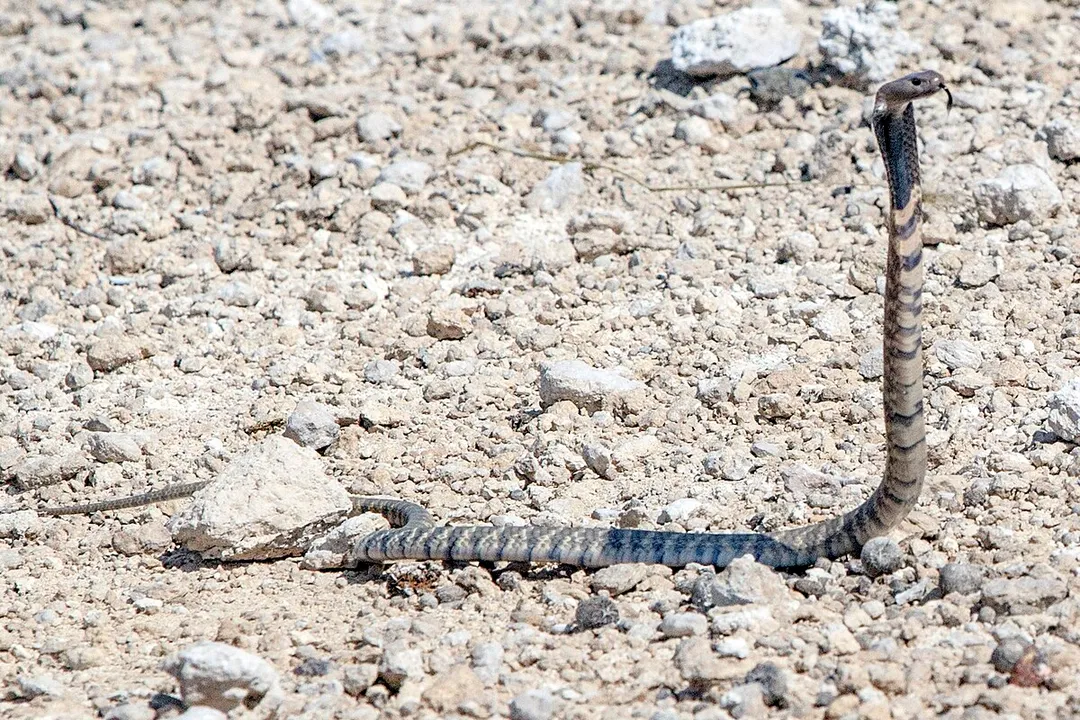
Raising the front body part and spreading neck ribs to form a hood.
Snakes belonging to the genus *Naja*, commonly known as true cobras, possess a unique behavioral and morphological characteristic that sets them apart from many other elapids, such as mambas or kraits. When threatened, these cobras exhibit the ability to raise the anterior portion of their bodies into an upright posture. Simultaneously, they engage their specialized neck ribs, expanding them outward to create the iconic, flattened threat display known as the hood. This specific defensive mechanism is a defining feature tied directly to membership in the *Naja* genus.
Related Questions
What characterizes the venom delivery system in the Family Elapidae that includes *Naja nigricincta*?What physical description is implied by the specific epithet *nigricincta* in *Naja nigricincta*?What defensive posture distinguishes members of the genus *Naja* from other elapids like mambas or kraits?Which reptilian Order is characterized by kinetic skulls and the process of ecdysis for snakes like *Naja nigricincta*?What defining physiological trait links *Naja nigricincta* to the Class Reptilia regarding its interaction with the environment?What ancestral internal structure confirms the placement of the Zebra Spitting Cobra in the Phylum Chordata?What is the general nature of the venom composition typical for snakes classified within the Family Elapidae?Which species are noted as being sometimes confused with or closely related to *Naja nigricincta* based on geography and spitting behavior?What nutritional requirement places *Naja nigricincta* within the Kingdom Animalia rather than Fungi or Plants?What specific taxonomic rank confirms that *Naja nigricincta* possesses the defining characteristic of forming a hood when threatened?