Zebra Spitting Cobra Physical Characteristics
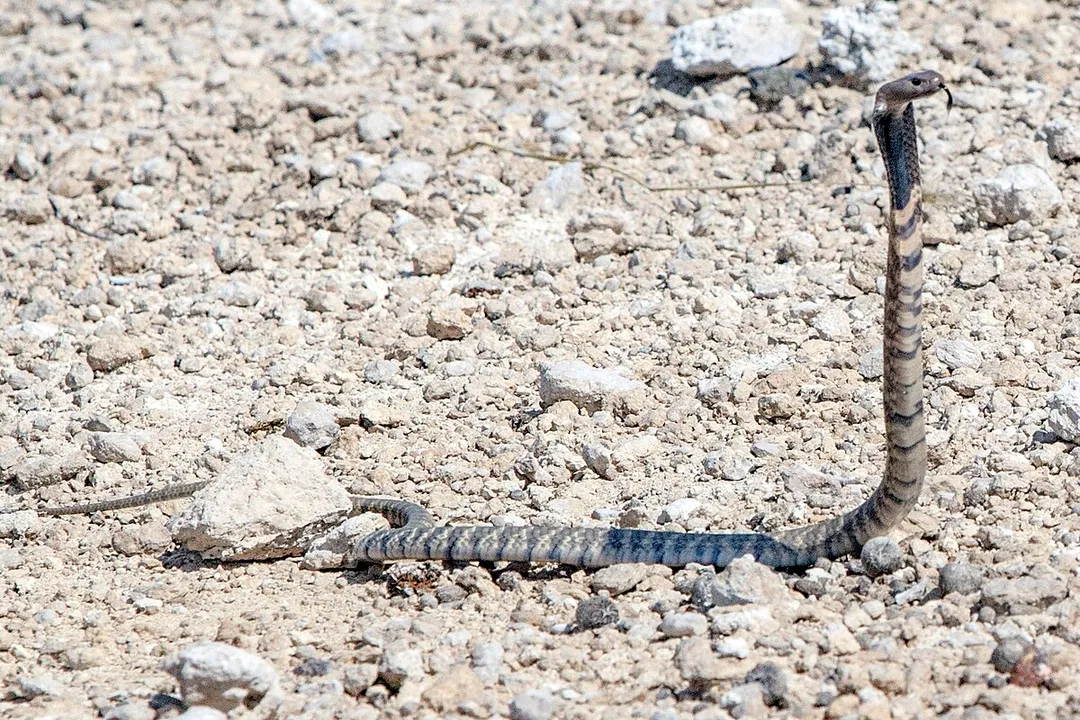
The Zebra Spitting Cobra, known scientifically as Naja nigricincta, presents a striking visual profile that often precedes its defensive capabilities. [2][5] Its appearance is highly variable across its range, which spans across West and Central Africa, yet it is the dramatic banding that most frequently earns it its common name. [2][5] This snake is generally categorized as a medium-sized cobra, typically reaching lengths between 1.2 and 1.5 meters (about 4 to 5 feet) as an adult, though larger specimens reaching nearly 1.8 meters have been documented. [1][4][5][2]
# Color and Markings
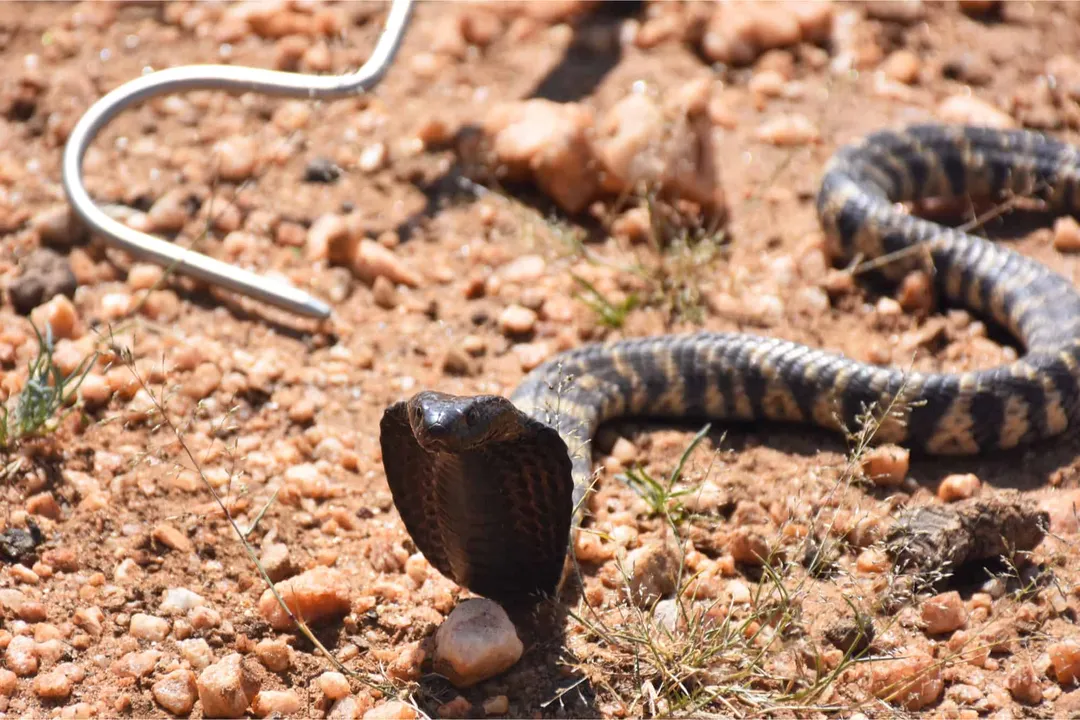
The defining characteristic of this species is the pattern of alternating light and dark bands that wrap around the body. [1][4] The dark bands are typically black, while the lighter bands can range from pale yellow or cream to a duller brown or off-white, contributing to excellent disruptive camouflage in its preferred habitats, such as savannas and woodlands. [2][5]
However, uniformity in appearance is not guaranteed. The width of these bands can vary significantly; some individuals display narrow, tightly packed rings, while others exhibit broader bands separated by thinner lines. [2] Furthermore, environmental pressures result in geographical variations in coloration. In some populations, the black coloration may dominate, making the snake appear almost entirely black, or the bands may fade entirely in dryer, more arid locales, resulting in a predominantly brown or uniform appearance. [2][5] This plasticity in physical pattern, where the namesake zebra striping can become heavily muted or even absent, suggests that the snake’s camouflage strategy is finely tuned to the local substrate and vegetation density across its wide distribution. [2][5] Observing the exact pattern—whether the bands are distinct or smeared, dark or light—can sometimes offer an immediate, albeit non-definitive, clue to the region from which the specimen originates. [2]
# Body Structure
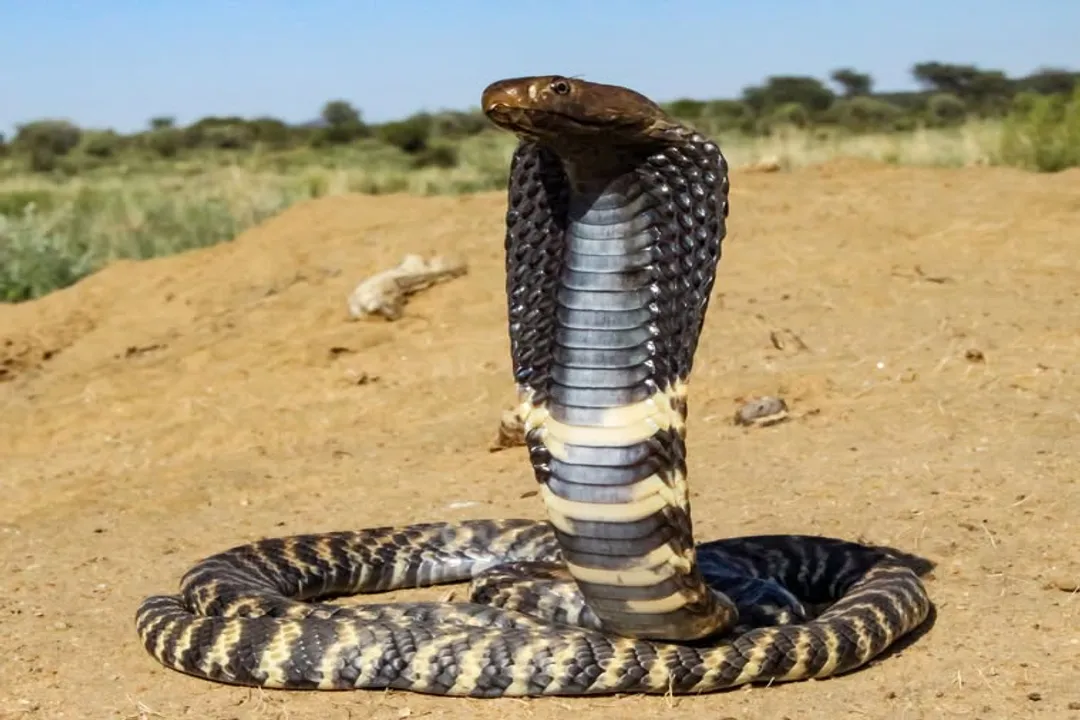
Physically, the Zebra Spitting Cobra possesses a relatively slender build when compared to some of its larger African cousins. [5] Its body is muscular, supporting its terrestrial lifestyle, and the scales across its body are characteristically smooth. [1] This smoothness contributes to its sleek movement, allowing it to navigate through leaf litter and dense grasses efficiently. [1]
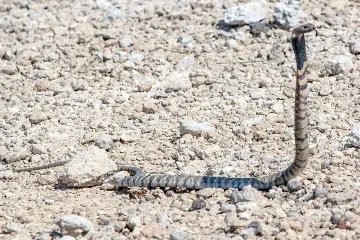
When feeling threatened, the snake exhibits the classic cobra defense posture. It will raise the anterior portion of its body off the ground, preparing to strike or defend itself via its specialized spitting mechanism. [1][6] This display involves flattening the ribs behind the head to create a visible hood. [1][4] While this hood is effective as a visual deterrent, experienced observers note that the spread of the Naja nigricincta hood is often described as relatively short or modest compared to the expansive crowns displayed by some other large Naja species. [1][6]
# Cranial Elements
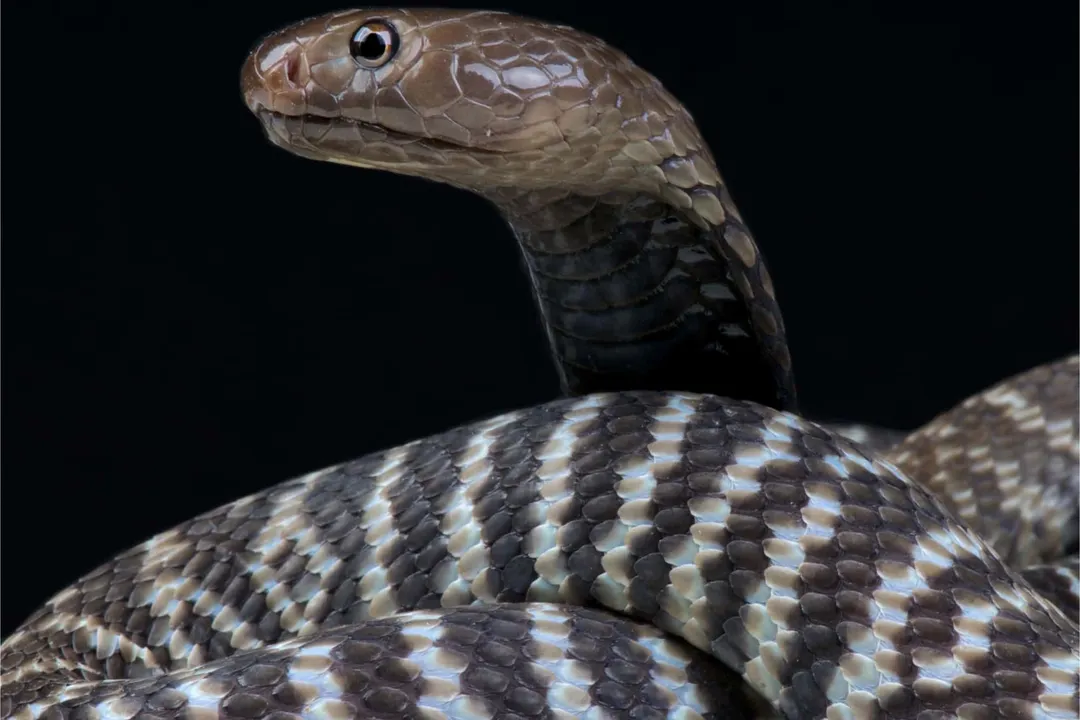
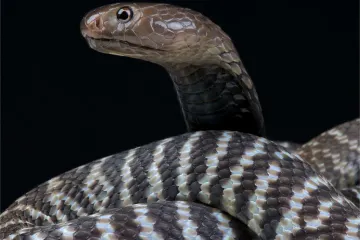
The head structure of Naja nigricincta is relatively distinct. It is often described as being somewhat more slender than the heads of many other African cobras, a feature that might correlate with its tendency to forage in dense undergrowth where a very broad head could impede movement. [5] The eyes are dark, blending well with the dark sections of its facial markings or overall darker specimens. [5]
The primary mechanism housed within the head structure that commands respect is, of course, its venom delivery system. Like all spitting cobras, this species has modified fang tips with small openings positioned forward on the front of the hollow fangs. [1][4] When the snake forcefully contracts the muscles surrounding its venom glands, the toxic liquid is ejected with surprising velocity and accuracy. [1][6] The effectiveness of this spit does not rely solely on the visual intimidation of the hood display; rather, it hinges on the mechanical precision derived from the musculature around the venom glands, allowing for effective defense at a distance when a full strike is not required or possible. [1][6]
# Morphological Comparison
When comparing the Zebra Spitting Cobra to other species in the Naja genus, its intermediate size and strong banding pattern set it apart from uniform species, like the Black Spitting Cobra (Naja nigricollis), which shares some overlap in range but usually lacks the distinct light banding. [2][5]
The name nigricincta itself hints at its appearance, translating roughly to "black-banded," which perfectly describes the most common presentation of the species. [2] It is worth noting that the variations—from heavily banded to nearly uniform dark coloration—can sometimes lead to misidentification in the field unless the observer is familiar with the immense phenotypic plasticity within this one species. [2][5] This variation means that physical characteristics, while useful, should always be considered alongside geographic location when attempting definitive identification in the wild.
# Scale Counts and Physical Metrics
While general readers are often more concerned with color and size, for herpetologists and researchers tracking population health, specific metric data are essential. For instance, the count of ventral scales (the belly scales) and subcaudal scales (those under the tail) are standardized physical characteristics used to differentiate species and morphs within the cobra family. [2] Although the exact figures vary based on sex and individual specimen, these counts provide a quantifiable metric for experts assessing the snake’s physical conformity to the species standard. [2] While a field observer might not count scales, understanding that these physical markers exist reinforces the scientific approach to cataloging the subtle differences that a layman’s eye might miss between closely related cobras. The smooth texture derived from these overlapping scales allows the snake to maintain a low profile when needed, an advantage that complements its striking warning coloration when a threat is perceived. [1]
#Videos
Zebra Cobra (Naja nigricincta nigricincta) - Namibia - YouTube
Related Questions
#Citations
Zebra Spitting Cobra Animal Facts - Naja nigricincta
Naja nigricincta - Wikipedia
Zebra Spitting Cobra Characteristics and First Aid in Windhoek ...
Zebra Spitting Cobra | Made in the Wild
Naja nigricincta - Facts, Diet, Habitat & Pictures on Animalia.bio
Zebra Spitting Cobra Facts & Photos | Wowzerful
Zebra Cobra (Naja nigricincta nigricincta) - Namibia - YouTube
Spitting cobra | Types, Species, Range, Venom, & Facts | Britannica
Zebra Cobra - African Snakebite Institute