Which natural element do Wood Ducks rely on for nesting cavities since they cannot excavate their own?
Answer
Abandoned excavations made by woodpeckers
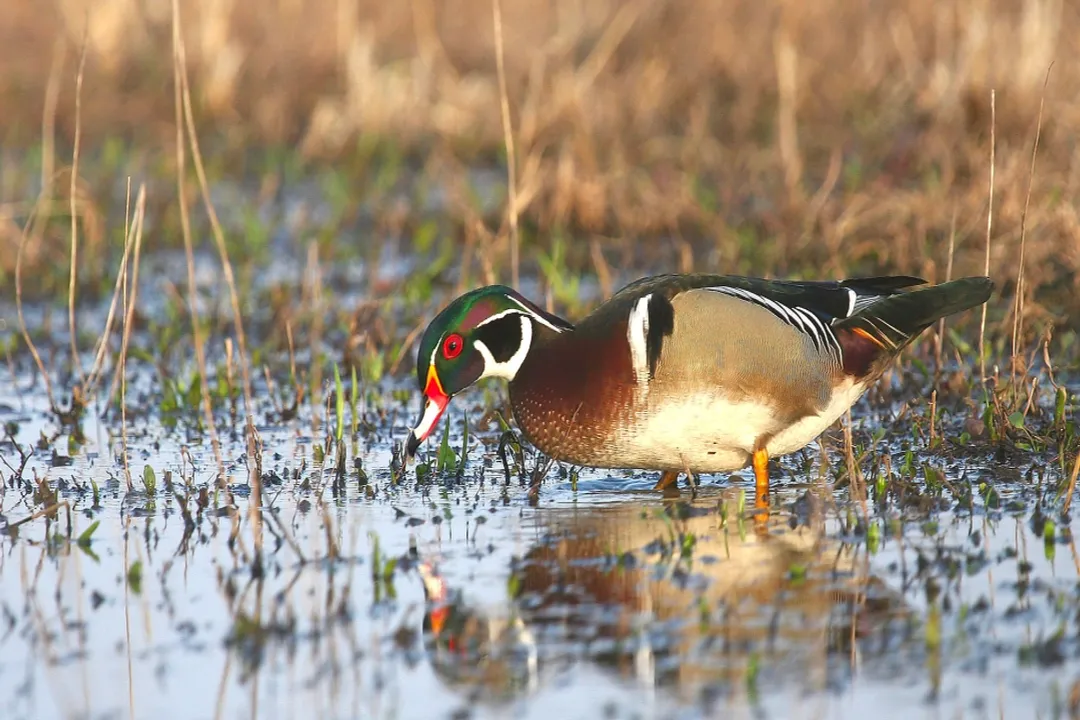
Wood Ducks exhibit a strong preference for nesting in tree cavities, typically located near or directly above water sources like sluggish streams or wooded swamps. Because they lack the ability to drill or create these holes themselves, they depend entirely on natural cavities formed by decay or, more commonly, abandoned excavations originally made by other species, particularly woodpeckers. Once a suitable cavity is located, the female prepares the nest by lining the interior using soft down feathers plucked from her own breast before beginning to lay her clutch.
Related Questions
What does the scientific name Aix sponsa translate roughly to for the Wood Duck?What distinct feature marks the more subdued female Wood Duck?What is the term for the male Wood Duck's appearance after the breeding season concludes in early summer?What physical adaptation suits Wood Ducks for maneuvering into tree cavities for nesting?Which natural element do Wood Ducks rely on for nesting cavities since they cannot excavate their own?What unique reproductive strategy does the Wood Duck regularly employ in a single breeding season?How do newly hatched Wood Ducklings safely descend from nests situated up to 50 feet high above the water?What is the male Wood Duck's distinct flight call transcribed as when pairing in late winter?What legislative act starting in 1916 helped rescue the Wood Duck from near extinction?What negative consequence results when Wood Duck nest boxes are installed too closely together?