Wood Duck Scientific Classification
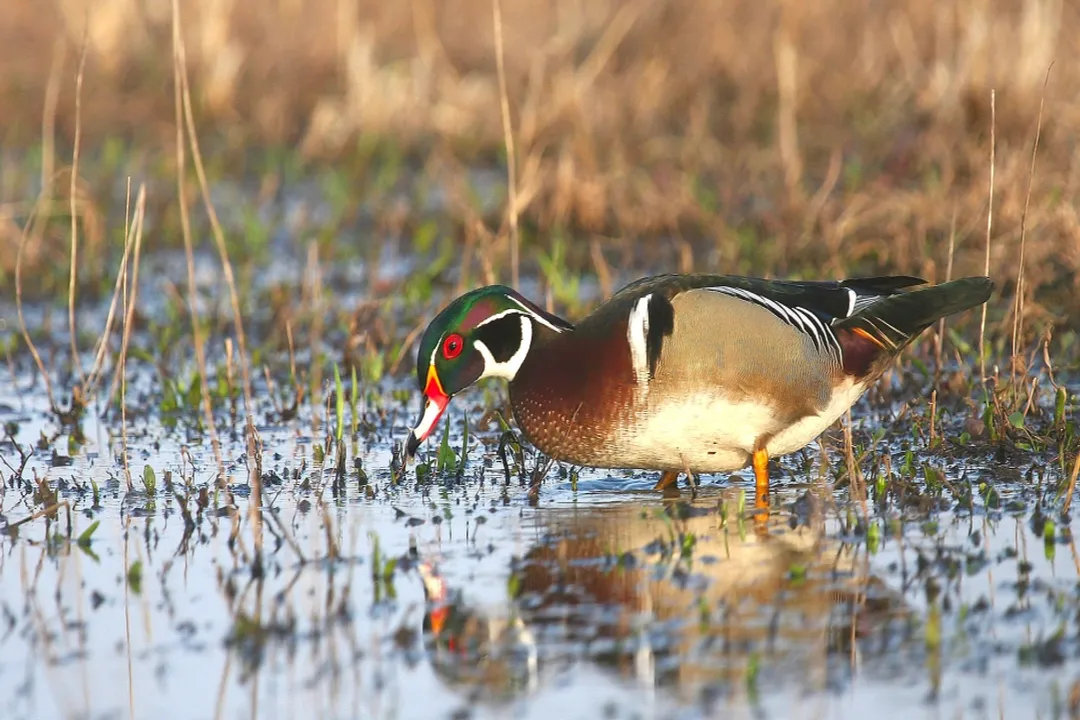
The Aix sponsa, commonly known as the Wood Duck, carries a scientific designation that tells a concise yet profound story about its place in the natural world. Examining this classification, from the broadest kingdom down to the species name, offers a window into its evolutionary history, distinguishing features, and unique ecological role. The name itself, Aix sponsa, is often loosely translated to mean “a waterfowl in wedding dress,” a nod to the male’s spectacular breeding plumage. This seemingly simple binomial nomenclature is the gateway to understanding why this bird is so distinct from its waterfowl relatives.
# Kingdom Placement
The taxonomic system begins by placing the Wood Duck firmly within the Kingdom Animalia. This classification immediately separates it from plants, fungi, and protists, confirming that Aix sponsa is a multicellular, heterotrophic organism—it consumes food for energy. All animals share characteristics like bilateral symmetry and being endothermic, traits essential for active organisms like ducks. This broad grouping is the first confirmation of its place as a mobile creature interacting with its environment, rather than a producer within it.
# Phylum Distinction
Moving down one level, the classification diverges slightly depending on the authority consulted, but the general path remains clear. Most sources agree on the Phylum Chordata, which encompasses all animals possessing a notochord at some stage of their development—the group that includes vertebrates. Idaho Fish and Game, however, uses Craniata. While often used interchangeably with Vertebrata (which is sometimes listed as a subphylum under Chordata), Craniata specifically denotes animals with a skull, placing the Wood Duck squarely among the backboned creatures that rely on a centralized nervous system protected by bone or cartilage. The fact that it belongs to this phylum confirms it possesses complex internal support structures necessary for its agile flight and terrestrial movements.
# Class Aves
The Class Aves is perhaps the most visually obvious placement for the Wood Duck. This places it with all birds. Membership in Aves means the Wood Duck possesses feathers, is endothermic (maintaining a high, regulated body temperature), has forelimbs modified into wings, and lays hard-shelled eggs. This class is defined by features optimized for flight and often specialized behaviors related to reproduction and migration. The relatively short wings of the Wood Duck, compared to some other ducks, are actually an adaptation that allows it to better maneuver through the dense branches of the forested wetlands it calls home.
# Order Anseriformes
Within Aves, the Order Anseriformes groups the Wood Duck with ducks, geese, and swans. This order is characterized by birds that are often strongly associated with water, possessing webbed feet for swimming. The Wood Duck is specifically categorized as a dabbling duck, meaning it typically feeds near the surface of shallow waters by tipping its body forward, rather than fully diving to pursue food. This contrasts with diving ducks and solidifies its feeding niche within the Order.
# Family Anatidae
The Family Anatidae is the assemblage of waterfowl that includes all ducks, geese, and swans. While belonging to this large family, the Wood Duck’s placement warrants closer inspection of its unique characteristics within Anatidae. Most waterfowl in this family nest on the ground or in shallow depressions, but the Wood Duck is one of seven North American ducks that regularly nest in natural tree cavities. This specific nesting requirement—seeking cavities in mature trees, often over water—is a key ecological distinction that influences its choice of habitat, linking it directly to wooded swamps and bottomland streams.
# Genus Aix
The genus level, Aix, is where the Wood Duck truly sets itself apart from the majority of other dabbling ducks, such as those in the genus Anas. The genus Aix contains only two living species: Aix sponsa (the Wood Duck) and the closely related Mandarin Duck (Aix galericulata) found in East Asia. This small genus distinction highlights the specialized evolutionary path these birds have taken. The common thread linking Aix members, setting them apart from most other Anseriformes, is their strong association with wooded habitats and obligatory cavity nesting. While they feed like typical dabblers, their physical adaptations—like the specialized body shape for fitting into tree holes and large eyes for navigating woods—are unique within the North American context. A fascinating ecological consequence of this specialized need is that conservation efforts for the Wood Duck heavily rely on artificial structures; the availability of nest boxes or natural cavities within a mile of water can be the single greatest factor limiting local population success.
The scientific translation of Aix sponsa as "waterfowl in wedding dress" is particularly relevant when considering this genus. The dazzling, complex plumage of the male suggests a strong sexual selection pressure, which often correlates with highly specialized or secluded breeding behaviors. In this case, the spectacle of the drake's iridescence is displayed during courtship near the very tree cavities that define the genus’s ecological niche.
# Species Aix sponsa
The final rank, the specific epithet sponsa, completes the scientific name. Aix sponsa defines this particular North American species, known for its exotic, iridescent greens, blues, and purples on the male’s head and crest. The female is far more understated, featuring a smoky gray appearance contrasted by a striking white patch surrounding each eye. Their shared physical traits, like the rectangular tail and white markings on the wing, help distinguish them even in flight, though females can sometimes be mistaken for female Mandarin Ducks based on their generally drab coloration.
The naming convention underscores a critical aspect of this species' history: its visual appeal nearly led to its downfall. The brilliant plumage that warrants the "wedding dress" descriptor also made them highly sought after by hunters in the late 19th and early 20th centuries. Coupled with widespread logging that destroyed their mature nesting trees, the population plummeted toward extinction. The official protection provided by treaties, alongside the targeted human intervention of installing nest boxes, allowed the species to recover dramatically. It serves as a prime example where understanding a species' specific taxonomic and ecological requirements—like the need for arboreal cavities—was the direct path to successful large-scale conservation management. If one were to track population data over the last century, the steep incline following the implementation of these protective measures, informed by this understanding of their unique biology, is remarkable. It suggests that for species with such visually appealing characteristics, legal protection must be paired with habitat mitigation that addresses their most specific limiting factor, which for Aix sponsa is clearly secure nesting real estate, often far from the open waters where they feed. This highlights an interesting interplay: the very aesthetic that made them a target is now a visual shorthand for successful conservation work.
# Taxonomic Summary and Characteristics
To appreciate the full scope of their classification, it is helpful to see the consensus hierarchy together. While slight variations exist in the phylum level, the higher and lower groupings are consistent across major wildlife agencies and academic databases:
| Rank | Classification | Implication |
|---|---|---|
| Kingdom | Animalia | Multicellular, mobile heterotroph |
| Phylum | Chordata / Craniata | Possesses a notochord/skull, vertebrate |
| Class | Aves | Feathered, egg-laying, endothermic |
| Order | Anseriformes | Waterfowl, web-footed, dabbling habits |
| Family | Anatidae | Ducks, geese, and swans |
| Genus | Aix | Distinct genus characterized by obligate cavity nesting |
| Species | Aix sponsa | The specific, vividly colored North American species |
The Wood Duck’s classification within Aix and its general habits as a dabbler underscore a key ecological principle: minor behavioral shifts, like choosing tree cavities over open ground for nesting, can be significant enough to warrant separation at the genus level, especially when coupled with distinct physical ornamentation. Furthermore, their diet reflects their habitat diversity; they consume acorns, seeds, and nuts gleaned from wooded areas, alongside aquatic invertebrates found in the marshes and ponds they frequent. This omnivorous diet, necessary to support high-protein demands during egg production, is a biological trait tied to their overall positioning in the food web. Even their communication is distinct; they are not true quackers, with the female emitting a high-pitched squeal and the drake a finch-like whistle. Every step in the scientific classification system confirms that Aix sponsa is a beautifully adapted specialist thriving in the interface between forest and water.
Related Questions
#Citations
Wood Duck (Aix sponsa) | U.S. Fish & Wildlife Service
Wood Duck - Aix sponsa - New Hampshire PBS
Wood Duck | NC Wildlife
Aix sponsa (Wood Duck) | Idaho Fish and Game Species Catalog
Wood Duck - Forest Park Living Lab
Wood duck | Louisiana Department of Wildlife and Fisheries
Aix sponsa (wood duck) | INFORMATION - Animal Diversity Web
Wood Duck | Game Commission | Commonwealth of Pennsylvania