What family is the wood duck in?
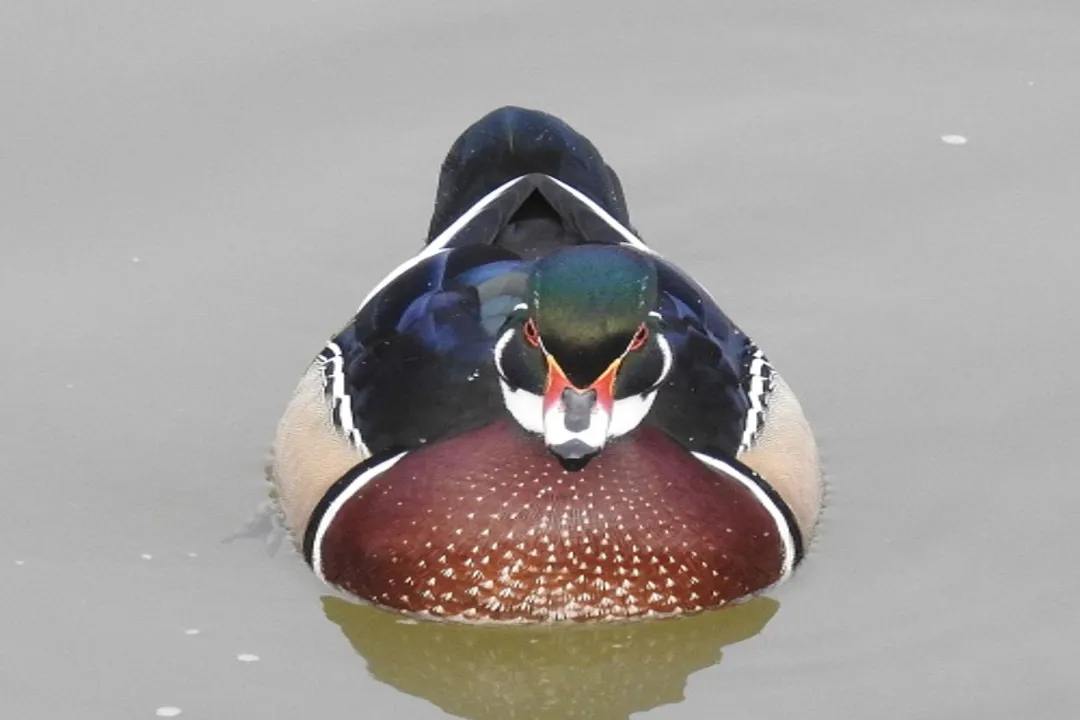
The Wood Duck, scientifically known as Aix sponsa, belongs firmly within the large and diverse waterfowl family Anatidae, the same family that encompasses the more familiar geese and swans. However, within this vast group, the Wood Duck occupies a distinct and somewhat specialized niche, often categorized specifically as a "perching duck". This placement is not arbitrary; it reflects a unique set of behaviors and physical traits that set this North American beauty apart from its dabbling and diving cousins. Sharing its genus, Aix, only with the Asian Mandarin Duck, the Wood Duck is truly singular in its North American context. This intimate taxonomic relationship with the Mandarin suggests shared evolutionary pathways, particularly regarding their arboreal tendencies, marking them as the most tree-dwelling ducks in the region.
# Family Role
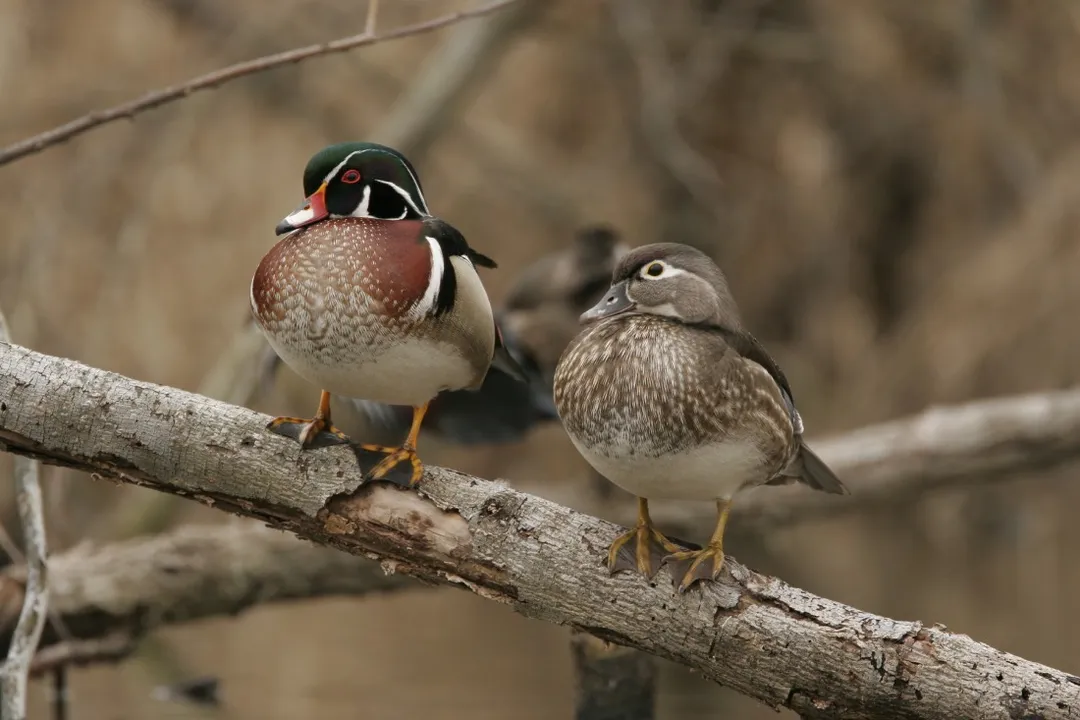
The placement of Aix sponsa within the Order Anseriformes establishes its broad relationship with all waterfowl. Within the family Anatidae, Wood Ducks are grouped with other perching ducks, distinguishing them from the vast majority of ducks that are classified as dabblers (like Mallards) or divers. A key structural difference that facilitates this arboreal lifestyle is the presence of sharp claws on their feet, a feature uncommon among other North American ducks, which allows them to cling to bark and roost comfortably on tree branches. This distinction is visible in their preferred environment: flooded timber and bottomland swamps, habitats rich with the large, mature trees they rely upon for security.
The Wood Duck's common name is a direct nod to this affinity for wooded areas. While they feed by dabbling at the water's surface or grazing on land—traits typical of many ducks—their nesting strategy separates them entirely. They are cavity nesters, selecting holes in trees, often situated high above the water. This preference for tree hollows is a defining characteristic that influences their survival and dictates where conservation efforts must focus.
# Plumage Contrast
Perhaps the most immediate way to recognize the Wood Duck's unique status is through its extraordinary sexual dimorphism, particularly during the breeding season. The male, or drake, is frequently hailed as one of the most spectacularly colored birds in the entire waterfowl spectrum. His head is an iridescent mosaic of green, blue, and purple, sharply accented by parallel white stripes running from the bill and behind the eye, culminating in a distinct crest. This contrasts sharply with his deep, red-brown chest and buff-colored flanks, often accented with white markings. The eyes themselves are a brilliant red.
In contrast, the female is significantly more subdued, possessing a drabber gray-brown body. However, she retains one striking and recognizable feature: a prominent white eye-ring and a white throat patch. Even the iridescent speculum on the wing, which is blue-green with a white border, is shared between the sexes, providing a flash of color in flight. Interestingly, males molt into a duller "eclipse plumage" after breeding, resembling the female more closely, though retaining some distinguishing features like a crested head.

# Nesting Heights
The arboreal habits of Aix sponsa lead to dramatic reproductive events. Unlike most ducks, which lay eggs on the ground or low in reeds, Wood Ducks nest in tree cavities, sometimes as high as 15 meters (about 50 feet) off the ground. The female lines this secure hollow with wood chips and her own down feathers. This elevation offers substantial protection from ground predators like raccoons and foxes.
The consequences of this high-rise nursery are astonishing. When ducklings emerge after roughly 30 days of incubation, they immediately face a perilous descent. They must climb to the nest opening and jump straight down to the forest floor or, ideally, into the water below. Some accounts suggest these young birds survive falls of up to 50 feet unharmed, aided by soft leaf litter if water isn't immediately available. The mother then calls them out the day after hatching, leading them to the safety of the water.
When providing artificial habitat, understanding the tree-dwelling nature is crucial. While many conservation efforts utilize manufactured boxes, an important consideration for those setting up these amenities is managing density to prevent reproductive failure. A common problem, especially where natural cavities are scarce, is dump nesting or nest parasitism, where a female lays eggs in a neighbor's nest, sometimes resulting in clutches of 30 or more eggs, often too many for one female to successfully incubate. To ensure the highest success rate for nesting boxes, landowners should remember that placing boxes too close together encourages this dump nesting behavior. Aim for separation of at least 100 yards between boxes in prime habitat areas, allowing each female a sense of territorial space, even if the box itself is not strictly defended. This subtle spacing strategy acknowledges their need for security without requiring extensive, tree-to-tree territory defense like some other waterfowl species.
# Diet Specifics
The Wood Duck’s diet reflects its flexible habitat use, ranging from the water surface to the forest floor. They are classified as omnivores, with their primary sustenance often coming from vegetation, particularly items they can find near water or on the ground beneath trees. Acorns are a significant part of their diet when available, which they are capable of crushing in their gizzard after swallowing. They also consume various seeds, berries, and aquatic plants.
However, they are not strictly vegetarian. Wood Ducks readily supplement this diet with aquatic insects and other small invertebrates, such as beetles, flies, and snails. This varied intake, especially the reliance on nuts during the fall and winter, ties their well-being closely to the health of the hardwood bottomland forests they inhabit.

# Vocalizations
One charming aspect of identifying a Wood Duck is realizing they do not produce the classic "quack" associated with many ducks. The calls are distinctive and much more subtle. The male has a thin, raspy whistle that often rises in pitch. Females, on the other hand, use a loud, short squeak when flushed, and a sharper "cr-r-ek, cr-e-ek" alarm call when danger is spotted. During courtship, these whistles are used in conjunction with elaborate visual displays like head-bobbing and wing-flashing to establish pair bonds.
# Recovery Story
The history of the Wood Duck is closely linked to large-scale habitat modification in North America, making its eventual comeback a celebrated conservation victory. By the close of the 19th century, extensive logging destroyed the bottomland hardwood forests these ducks needed for nesting, combined with intense market gunning for their meat and decorative plumage, brought the species perilously close to extinction.
The tide turned with protective legislation like the Migratory Bird Treaty Act of 1918. Protection alone was not enough; the key to recovery involved addressing their specific nesting requirement. The widespread construction of artificial nest boxes starting in the 1930s provided the necessary safe cavities that logging had removed. While studies suggest that natural tree hollows are preferred over boxes, the artificial structures proved instrumental in halting the population's decline and encouraging a rebound.
This recovery story highlights a fascinating ecological synergy often overlooked when discussing conservation successes. It is worth noting that the resurgence of the American Beaver (Castor canadensis) across many parts of the Wood Duck’s range has also played an unheralded but significant part in their recovery. Beaver dams create the flooded, wooded wetland mosaics—complex, dynamic, and nutrient-rich environments—that perfectly mimic the preferred, historical habitat of the Wood Duck. In effect, nature's most famous engineers unintentionally created vital refuge corridors that complemented the targeted human effort of building nest boxes. This dual approach—protecting breeding sites (boxes) and restoring foundational habitat (wetlands via beavers)—is a powerful template for managing other specialized species.
Today, while they remain a popular game bird, second only to the Mallard in harvest numbers in some flyways, Wood Duck populations are generally stable or increasing, estimated at around 3 million breeding pairs. The fact that they can raise two broods in a single season in southern regions, a trait shared by few other North American ducks, underscores their successful adaptation and resilience in the face of historical pressures. Their continued presence, announced by those unique whistling wings at dawn, confirms the success of decades of focused conservation work centered on protecting their specific, woodland-dependent life cycle within the expansive Anatidae family.
Related Questions
#Citations
Wood duck - Wikipedia
Aix sponsa (Wood Duck) | Idaho Fish and Game Species Catalog
Wood duck | Mallard, Waterfowl, Plumage - Britannica
Wood Duck - Aix sponsa - NatureSpot
Aix sponsa (wood duck) | INFORMATION - Animal Diversity Web
Species Profile: Wood Duck | Mossy Oak
Wood Duck | Oklahoma Department of Wildlife Conservation