Wood Bison Facts
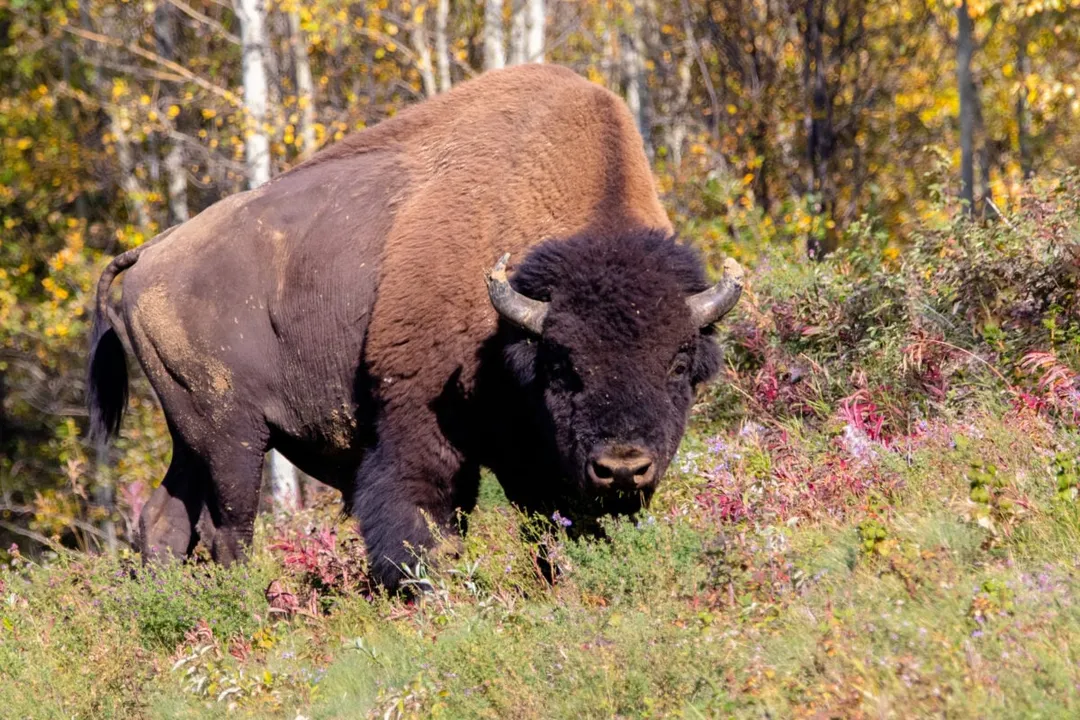
The wood bison (Bison bison athabascae) holds a unique and imposing stature in the North American fauna. Often conflated with their more numerous southern relatives, these animals are, by many metrics, the true giants of the continent's land mammals. [2][7] While the common name “buffalo” is often used, perhaps due to historical French nomenclature suggesting an "ox-like" beast, these animals are distinct from true buffalo found in Africa or Asia. [4][6] Biologically classified as a distinct northern subspecies or ecotype of the American bison, the wood bison’s story is one of near annihilation and determined, decades-long recovery across northern wildernesses. [4][10]
# Giant Kinship
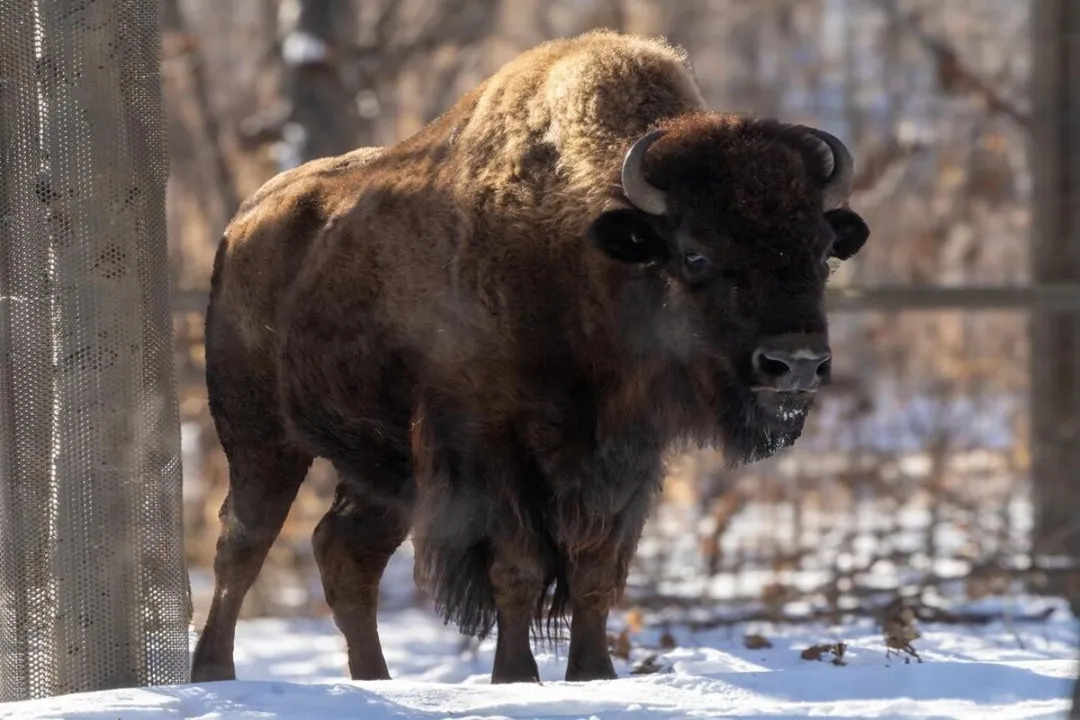
The sheer scale of the wood bison sets it apart immediately. They are generally recognized as being larger and heavier than the plains bison (Bison bison bison). [2][3][4] A mature bull can be an astonishing sight, sometimes reaching heights of around 6 feet at the shoulder, spanning over 10 feet in body length, and tipping the scales at over 2,000 pounds. [3][5] Some historical records note weights approaching 2,600 pounds. [4] Female wood bison are also substantial, typically weighing around 1,200 pounds. [3][5] To put this size into perspective, the wood bison is often cited as the largest extant terrestrial animal in both North America and Siberia. [4]
This size difference is a central point of comparison between the two North American bison types. While plains bison are impressive, wood bison average about 15% heavier. [2][3] This greater mass is an adaptation, possibly aligning with Bergmann’s rule, where larger body size in colder climates helps generate and retain necessary body heat. [4] This bulk necessitates a different physical configuration, which manifests most clearly in their posture and profile.
# Northern Build
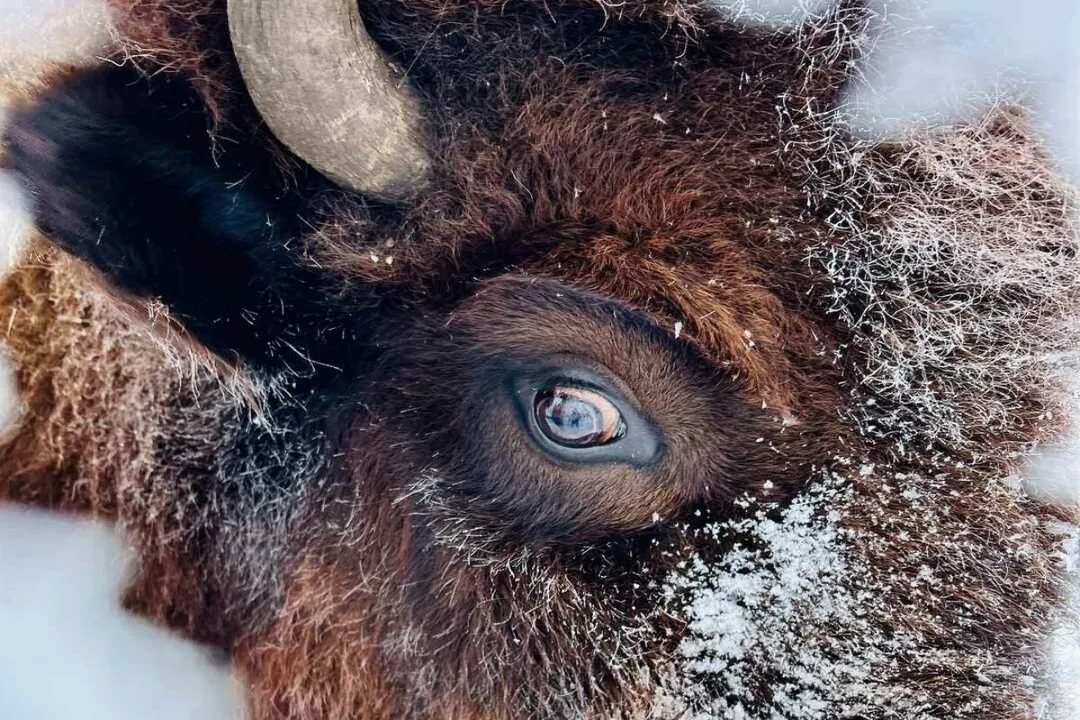
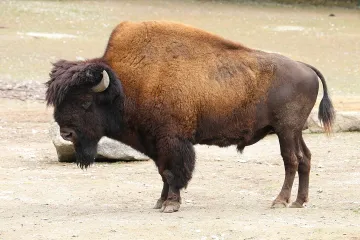
The physical markers distinguishing the wood bison are subtle but consistent adaptations to the frigid, forested environments they inhabit, contrasting with the open grassland specialization of the plains bison. [2][4] Their coat is thick, dense, and woolly, offering superior insulation against the harsh northern cold—so effective, in fact, that snow often collects on their backs rather than melting into their fur. [3][4] They also undergo two distinct molts annually, shedding their thick winter growth in the spring for a fresh coat by mid-summer. [3][5]
Their horns are another key feature, generally described as curving upward and being quite massive, especially on the bulls. [3][5] Behaviorally, they also exhibit differences; for instance, the social challenges during the mating season, or rut, tend to be less aggressive or violent among wood bison compared to their plains counterparts. [2][4] Furthermore, wood bison possess excellent hearing and an acute sense of smell, capable of detecting scents from up to three kilometers away, which somewhat compensates for their comparatively poorer eyesight. [7]
# Hump Placement
Perhaps the most reliable visual distinction when comparing the two subspecies relates to the structure of the massive shoulder hump. [10] In the wood bison, the peak of this hump is located anterior to (forward of) the front legs, rising almost straight up from the neck before sloping sharply down to the hips. [3][4]
This anterior placement is more than just a shape difference; it relates directly to how the animal feeds in deep snow. The powerful musculature supported by this forward-positioned bone structure allows the wood bison to use its enormous head as a snowplow, sweeping aside deep, powdery accumulation to reach the grasses and sedges buried underneath. [3][4] While plains bison hump peaks are generally situated directly above their forelegs, the wood bison’s specialized shoulder serves as a dedicated tool for accessing forage when the snowpack becomes an obstacle, suggesting an evolutionary prioritization of broad-front snow clearing over the more compact stance suited for prairie winds and shorter, crusted snowfalls. [4][10]
# Dietary Shift
Wood bison are primarily herbivores, classified as grazers that rely mainly on grasses, sedges, and forbs throughout the year. [2][4][7] However, their habitat demands dietary flexibility that plains bison may not require to the same degree. In the summer, they supplement their intake with woody browse, such as the leaves of willow and silverberry. [2][3][7]
Survival in their northern home requires significant physiological accommodation for seasonal scarcity. When deep snow and freezing temperatures limit ground access to food, the wood bison possesses a remarkable ability to reduce its metabolic rate. [3] This slowing of digestion means they can extract maximum nutrients from every meal, effectively lowering their overall energy demand—a critical survival mechanism when food availability is severely restricted. [3] This combination of physical tools (the head-plow) and internal physiology (metabolic adjustment) allows them to endure conditions that would decimate less adapted herbivores. [3]
# Social Rhythms
Wood bison are fundamentally social animals, thriving in groups, though the composition of these herds changes seasonally. [3] For most of the year, cows and their young form larger aggregations, sometimes numbering between 20 and 60 individuals. [2][3] Adult bulls, however, generally maintain smaller bachelor groups or live solitarily, keeping separate from the main cow-calf herds. [3][4] This segregation typically breaks down in the late summer (July through September) when the rut, or mating season, begins, and bulls actively seek out and guard harems of females. [2][3][4]
Reproductively, females reach sexual maturity around two to three years of age. [2][4] After a gestation period lasting approximately nine months, cows usually give birth to a single calf in May, though the birthing window spans from April through August. [2][3][4] Interestingly, females typically only produce a new calf once every two to three years, reflecting the high energetic investment required to raise a successful offspring in this challenging environment. [2][3][10]
The young are born precocial, meaning they are relatively developed. Newborn calves sport a distinctive reddish-brown coat, which darkens to the adult deep brown within the first few months. [2][3] Crucially for survival, they can stand within 30 minutes, run, and kick within hours of birth to evade predators like wolves or bears, though predators generally take longer to learn how to successfully hunt healthy, adult bison. [2][3][8]
# Near Extinction
The history of the wood bison is a stark reminder of the devastating impact of unregulated human activity. By the early 1900s, massive population declines driven by hunting and habitat change left fewer than 300 individuals remaining in Canada. [3][4] The situation was so dire that by the mid-1950s, the entire subspecies was thought to be extinct. [3][4][10] A crucial turning point came in 1957 when a small, relatively isolated, and pure herd was discovered deep within Wood Buffalo National Park (WBNP). [3][4]
This rediscovery provided the genetic foundation for modern recovery programs. Elk Island National Park (EINP) in Canada became instrumental, establishing disease-free conservation herds derived from these survivors to serve as source animals for reintroduction efforts across their former range and internationally. [4][10] Thanks to considerable effort, the Canadian population has rebounded significantly; by the mid-2010s, there were over 11,000 individuals in Canada across various managed and free-ranging herds. [3] Conservation agencies in Canada have worked to change the status of the wood bison from "endangered" to "threatened" (COSEWIC) or "Special Concern". [4][6][7]

# Genetic Shadow
The recovery narrative is complicated by a historical management decision that conservation biologists strongly opposed. [10] Between 1925 and 1928, the Canadian government moved over 6,600 plains bison, sourced from an overpopulated reserve, into WBNP to manage surplus animals. [4][6][10]
This introduced two major threats simultaneously: hybridization and disease. [4] The introduced plains bison were carriers of bovine diseases like tuberculosis and brucellosis, which spread to some of the WBNP wood bison herds. [4][6][10] Furthermore, the interbreeding diluted the pure genetic stock of B. b. athabascae. [4] While the WBNP population is now considered largely descended from these hybrids, the discovery of disease-free, genetically distinct herds, such as the Ronald Lake and Firebag River herds, provides a crucial window into the original lineage. [4] It is the management of these diseased herds that continues to pose a serious challenge for governments and Indigenous communities sharing the northern landscape. [4]
# Modern Range
Today, the wood bison population remains largely within Canada, spanning British Columbia, Alberta, Yukon, Northwest Territories, and Manitoba (though Manitoba is slightly outside the historical range). [4][7] The United States Fish and Wildlife Service lists the wood bison as Threatened under the Endangered Species Act (ESA). [4][5]
Alaska once supported a robust wood bison population, but they were extirpated by the early 1900s, likely due to overhunting. [3] A significant conservation milestone was reached in 2015 when the Alaska Department of Fish and Game reintroduced a herd of 130 disease-free animals from Canada into the wild along the Innoko River near Shageluk. [2][3][5] This became known as the Lower Yukon/Innoko Rivers Herd. [3] The species is listed as a Threatened and Experimental Population, Non-Essential within the U.S. to allow for flexible management of this reintroduced group. [5] Early monitoring revealed significant hurdles; in certain years, heavy snows coupled with rain-on-snow events created impenetrable ice layers, leading to population declines as the bison could not sweep through the ice to reach forage. [4][10] This highlights that for the Alaskan reintroduction, surviving chronic ice events—a different winter obstacle than the deep, soft snow their evolution specifically prepared them for—is a core measure of long-term success. [3][4] Scientists believe a population of 400 to 500 animals would establish a healthier minimum for genetic viability in that region. [3]
# Russian Relocation
In an extraordinary international effort reflecting the animal's evolutionary tie to the region, wood bison have been reintroduced to Asia. [4] The wood bison is the closest living relative to the extinct steppe bison (Bison priscus), which once roamed Siberia. [10] Starting in 2006, and continuing with subsequent shipments, disease-free wood bison from EINP were sent to the Sakha Republic (Yakutia), Russia, to begin a "rewilding" project in conditions climatically similar to their Canadian home. [4][10] By 2019, this Russian population exceeded 210 animals, with some already released into the wild, demonstrating the species’ adaptability across continents. [4][6] This global distribution effort not only supports the species’ overall numbers but also preserves genetic diversity against localized threats in North America. [4]
Related Questions
#Citations
Wood Bison Species Profile, Alaska Department of Fish and Game
Wood bison - Wikipedia
Wood Bison - Alaska Wildlife Conservation Center
Animal Facts: Wood bison | Canadian Geographic
Species Profile for Wood Bison(Bison bison athabascae) - ECOS
Wood bison Facts for Kids
Wood Bison - Wilder Institute/Calgary Zoo
Wood Bison: History and Near Extinction
Wood Bison | ALASKA.ORG
Wood Bison - Wood Buffalo National Park - Parks Canada