Which fossil giant wombat species is named *Mukupirna*, meaning 'big-boned'?
Answer
*Mukupirna*
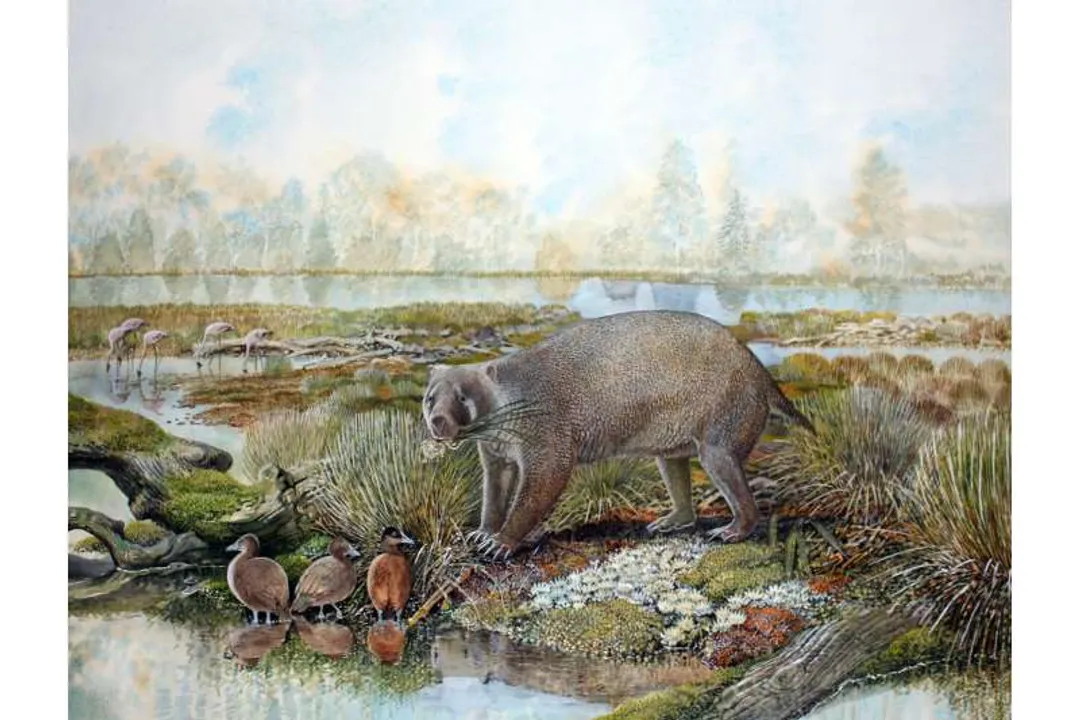
The specific fossil species that serves as a cornerstone for understanding the giant phase of wombat evolution is known as *Mukupirna*. This name, derived from a local Aboriginal language, translates literally to 'big-boned,' accurately reflecting the robust skeletal structure paleontologists observe in its remains. The detailed analysis of the nearly complete skull of *Mukupirna* has provided crucial morphological data, allowing scientists to reconstruct features like jaw mechanics and dentition with unprecedented clarity, thereby illuminating the adaptations of these ancient, massive marsupials that are distinct from living relatives.
Related Questions
To which taxonomic order do wombats belong alongside kangaroos and koalas?What distinctive, geometric shape characterizes the scat produced by wombats?What is the estimated maximum weight attributed to some extinct giant wombat forms?Which fossil giant wombat species is named *Mukupirna*, meaning 'big-boned'?Approximately how long ago are the fossils of *Mukupirna* estimated to have lived?What dental adaptation, characterized by high-crowned teeth, is present in modern wombats?Which marsupial shares a common ancestor with wombats within the suborder *Vombatiformes*?What major environmental change is cited as the reason for the decline of giant wombats?What adaptation relating to their pouch aids wombats in their powerful digging lifestyle?Which family classification encompasses the common wombat (*Vombatus*) and the two hairy-nosed species?