Approximately how long ago are the fossils of *Mukupirna* estimated to have lived?
Answer
1.7 million years
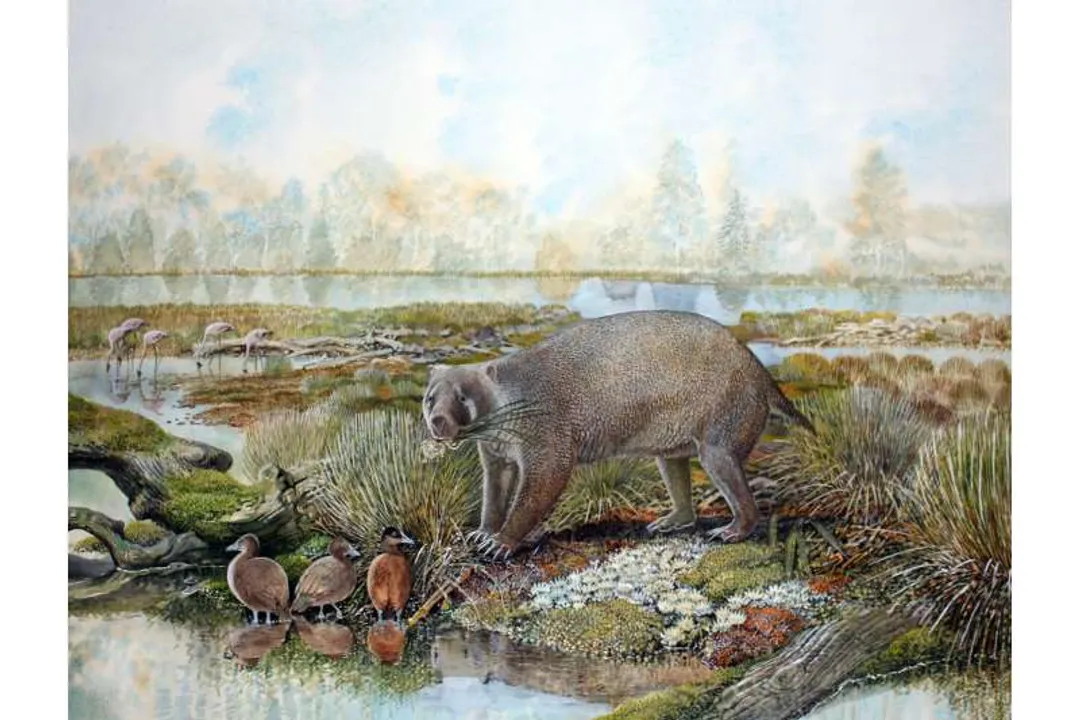
The fossils attributed to the giant wombat species *Mukupirna* have been scientifically dated back to an approximate age of 1.7 million years. This places their existence firmly within the Pleistocene epoch, a time known for the flourishing of large-bodied fauna across Australia. Understanding this deep temporal placement is vital because it frames the evolutionary context; these creatures were navigating a significantly different environment than modern wombats, influencing the development of their robust skulls and massive body size before the climate shifts that eventually led to their extinction.
Related Questions
To which taxonomic order do wombats belong alongside kangaroos and koalas?What distinctive, geometric shape characterizes the scat produced by wombats?What is the estimated maximum weight attributed to some extinct giant wombat forms?Which fossil giant wombat species is named *Mukupirna*, meaning 'big-boned'?Approximately how long ago are the fossils of *Mukupirna* estimated to have lived?What dental adaptation, characterized by high-crowned teeth, is present in modern wombats?Which marsupial shares a common ancestor with wombats within the suborder *Vombatiformes*?What major environmental change is cited as the reason for the decline of giant wombats?What adaptation relating to their pouch aids wombats in their powerful digging lifestyle?Which family classification encompasses the common wombat (*Vombatus*) and the two hairy-nosed species?