What is the estimated maximum weight attributed to some extinct giant wombat forms?
Answer
Up to three tonnes
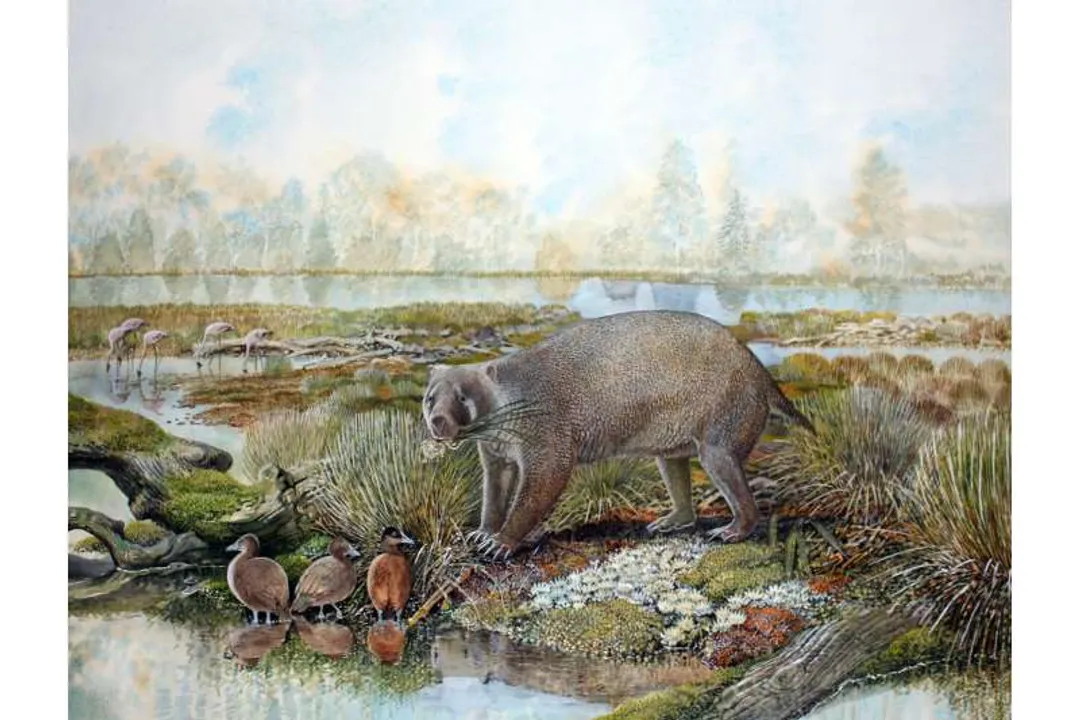
Fossil evidence suggests that extinct relatives of the wombat reached enormous sizes during the Pleistocene epoch, with some estimates proposing that these giant forms could have achieved body masses reaching up to three tonnes. This massive size places them firmly within the category of Australian megafauna that characterized the landscape millions of years ago. The reconstruction of their morphology, particularly comparisons of bone density and muscle attachment points revealed in skull analysis, indicates a dramatic shift in scale compared to modern species, reflecting adaptations to a different, bulkier ecological niche.
Related Questions
To which taxonomic order do wombats belong alongside kangaroos and koalas?What distinctive, geometric shape characterizes the scat produced by wombats?What is the estimated maximum weight attributed to some extinct giant wombat forms?Which fossil giant wombat species is named *Mukupirna*, meaning 'big-boned'?Approximately how long ago are the fossils of *Mukupirna* estimated to have lived?What dental adaptation, characterized by high-crowned teeth, is present in modern wombats?Which marsupial shares a common ancestor with wombats within the suborder *Vombatiformes*?What major environmental change is cited as the reason for the decline of giant wombats?What adaptation relating to their pouch aids wombats in their powerful digging lifestyle?Which family classification encompasses the common wombat (*Vombatus*) and the two hairy-nosed species?