Is wombat poo shaped like a cube?
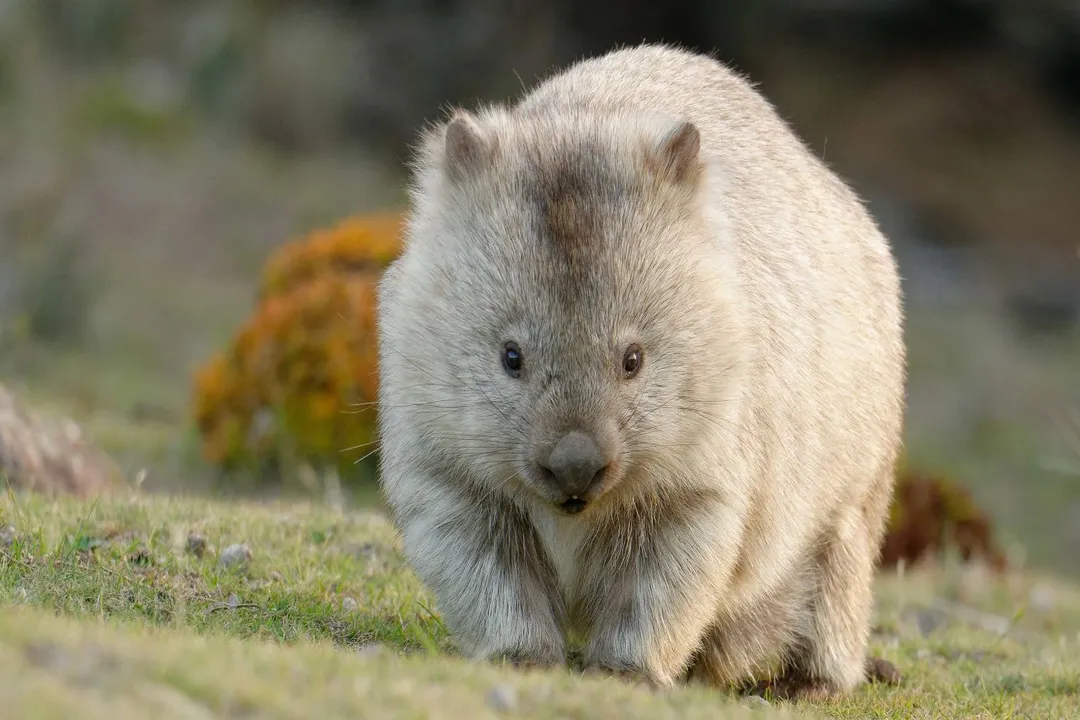
The sight of wombat droppings scattered across the Australian landscape often sparks confusion, as these aren't the typical pellets or coils left by other animals. Instead, they are small, distinct cubes. [1][9] This peculiar biological quirk has fascinated zoologists and the general public alike, turning the humble wombat’s scat into a globally recognized, if slightly odd, piece of trivia. [5] It is a confirmed reality, not a myth, that these marsupials produce stool shaped like dice or miniature blocks. [1][8]
# Fact Confirmation
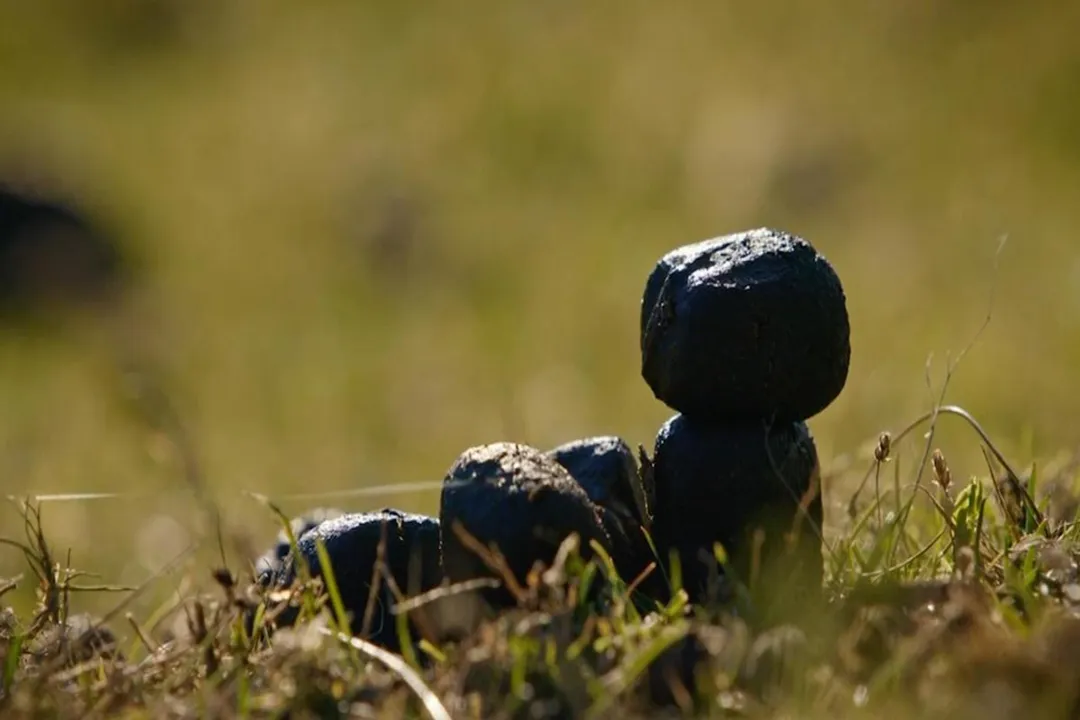
The shape is remarkably consistent across the species studied, most notably the common wombat (Vombatus ursinus). [1] These droppings are relatively dry, though not entirely brittle, and they maintain their sharp, geometric form even after being deposited. [1] While some may initially question the precise uniformity, scientists who have examined the process confirm that the structure reliably features four distinct flat sides and defined corners. [1] This is unique in the animal kingdom; very few, if any, other mammals produce feces that naturally assume such a rigid, non-spherical, non-cylindrical geometry upon exit. [1]
# Gut Mechanics
Understanding how this occurs requires looking deep inside the wombat’s digestive tract, as the shape isn't imposed by external pressure after leaving the body, but rather formed within the colon. [1] Researchers have pinpointed the final section of the intestinal tract as the critical shaping zone. [1] The key lies in the walls of this lower colon, which exhibit variable elasticity. [1]
Imagine the stool material moving along the intestine as a long, soft cylinder. In the area where the shaping occurs, sections of the intestinal wall are stiffer than others. [1] These stiffer bands contract unevenly, essentially squeezing the soft fecal matter into angular shapes rather than smooth, rounded contours. [1] The process is similar to kneading dough or clay, where uneven pressure creates facets and edges. [1] The material sets in this shape just before exiting the body, resulting in the distinctive cubes. [1] The final consistency, which is quite firm, helps preserve these sharp edges once they hit the ground. [2]
# Territory Markers
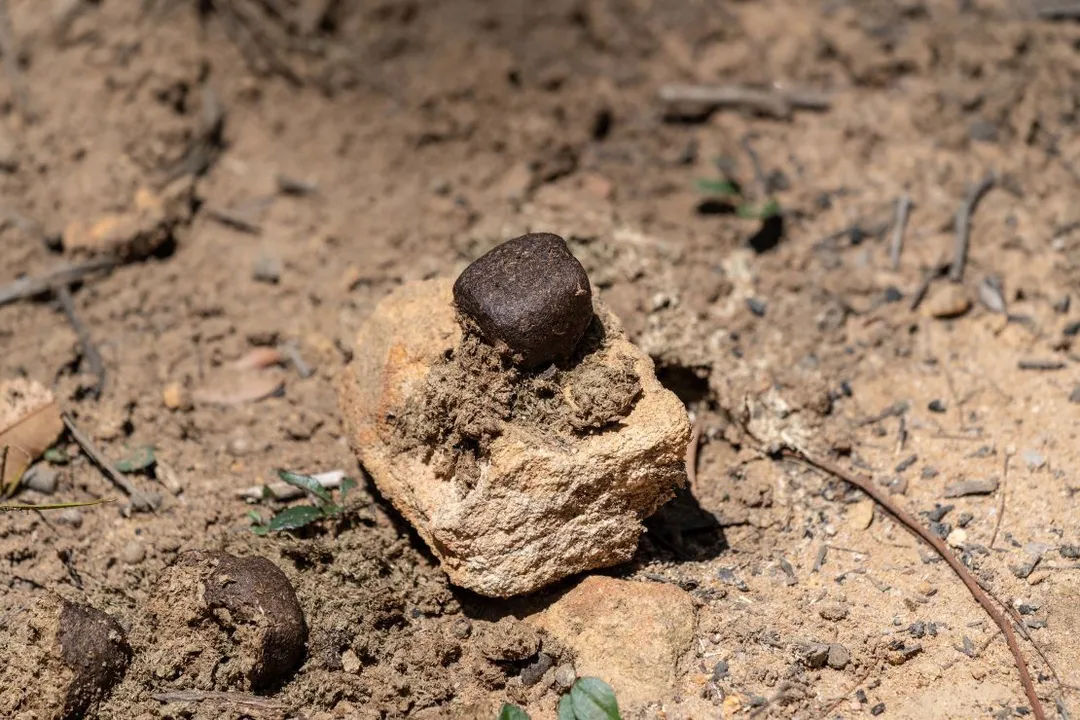
The function of this unusual shape is intrinsically linked to the wombat’s need to communicate its presence to others. [1][8] Wombats are primarily solitary animals, and they use their droppings as markers to delineate their territory. [5] They often deposit these little cubes on prominent features like logs, rocks, or mounds of earth, placing them high up to maximize visibility and scent dispersion. [8]
The cubic shape provides a distinct evolutionary advantage for this purpose: they do not roll away. [1][5] A rounded dropping would easily tumble off a log or rock, rendering the territorial message lost or moved to an unintended spot. [1] The flat sides ensure the marker stays exactly where the wombat placed it, even if the substrate is uneven or slightly sloped. [1] This reliance on static, visible, and scent-marked communication suggests a highly localized territorial system, where precise placement matters greatly for intra-species recognition and avoidance. [1][8] This stable nature of the marker means that a wombat can reliably check on boundary markers established days or weeks earlier, maintaining a consistent pattern of resource control within its home range.
# Scientific Confirmation
For a long time, the cube-poop phenomenon was simply anecdotal folklore surrounding this unique Australian animal. [1] It wasn't until researchers dedicated specific study to the anatomy of the digestive system that the mechanism began to be understood. [1] Scientists, including those at the Royal Veterinary College, examined the intestines of deceased wombats. [1] By studying the tension and elasticity along the length of the colon, they were able to confirm the physical mechanism causing the cubing effect. [1] This detailed investigation moved the topic from a curious observation to established biological fact. [1]
While the digestive process in wombats is slow—taking up to two weeks for food to pass through—and highly efficient at extracting moisture, which results in dry feces, this dryness alone doesn't account for the shape. [1] Many desert herbivores have very dry droppings but produce standard pellets or balls. [1] It is the variable elasticity of the colon wall, a unique feature compared to other large mammals, that separates the wombat’s output from the norm. [1] This suggests that while the adaptation to drier environments drove the material consistency, an unrelated physical constraint or evolutionary quirk resulted in the development of this distinct shaping mechanism.

# Comparative Waste Management
Considering the digestive physiology of the wombat generally, one can draw a comparison to other grazing herbivores. Wombats consume large amounts of tough, fibrous material like grasses and roots. [1] Their slow transit time is necessary for the gut microbes to break down this tough cellulose. [1] The final product, being very dry, is typical for an animal needing to conserve every drop of water, especially given that wombats often inhabit somewhat dry environments. [2] The main difference between a wombat's output and, say, that of a rabbit or a deer is purely morphological at the exit point. The material exiting a rabbit is small, soft pellets; a deer produces larger ovoids; the wombat produces a cube. [1] The underlying need—efficient water retention—is shared across many herbivores, but the architectural solution to marking territory is uniquely wombat.
This efficiency in water conservation, evidenced by the dry nature of the final product, is likely intertwined with the material's ability to hold a sharp shape. If the fecal matter were too moist, the pressure from the intestinal walls might simply deform the shape upon exiting, leading to a rounded lump rather than a stable cube ready for stacking. [1] Thus, the arid-adapted digestive requirements indirectly support the maintenance of the cubic structure.
# An Unfolding Mystery
Despite the significant scientific breakthrough detailing the how, the question of why this particular geometric shape evolved over other non-rolling shapes (like a pyramid or a flattened oval) remains a subject of minor debate. [1] The cubes are not identical in size across all deposits; they can vary slightly depending on the wombat's diet and hydration level at the time of defecation. [1]
Ultimately, the wombat’s cube-shaped poo stands as a delightful example of how evolution can produce incredibly specific, seemingly odd, solutions to common biological problems, like leaving a message for your neighbors that won’t be lost in the breeze or a slight tremor in the ground. [1][8]
#Videos
Why is wombat poop cube-shaped? Researchers reveal its mystery.
Related Questions
#Citations
How do wombats poop cubes? Scientists get to the bottom ... - Science
Why is wombat poo square #NaturalHistoryMuseum #Poop - YouTube
ELI5: Why do wombat's poop cubes? : r/explainlikeimfive - Reddit
Why Wombats Poop Cubes | Season 49 | Episode 2 - PBS
Wombats poop like everyone else, but unlike other species, they ...
Wombat poop: Scientists reveal mystery behind cube-shaped ... - BBC
Why do wombats poop cubes? Scientists may finally have the answer