What dental adaptation, characterized by high-crowned teeth, is present in modern wombats?
Answer
Hypsodonty
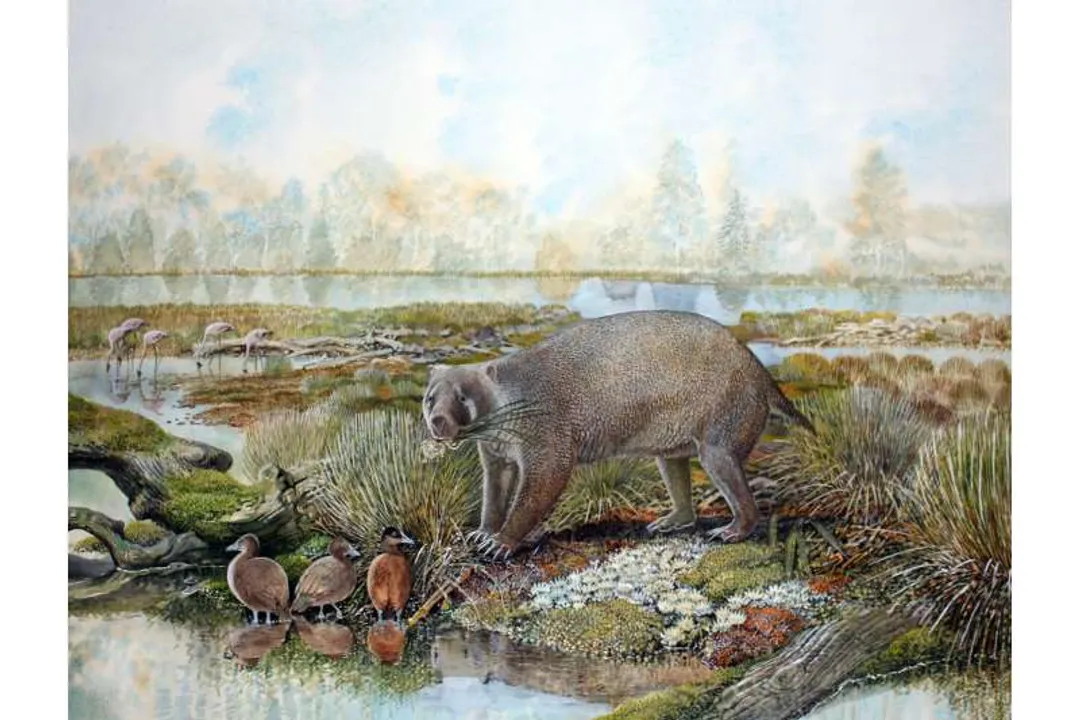
Modern wombats exhibit hypsodonty, which describes teeth that possess high crowns. This dental specialization is a critical adaptation for survival in environments where the primary food source, such as abrasive grasses, causes significant wear on the chewing surfaces of the teeth. The hypsodont structure allows for continuous enamel replacement as the tooth wears down, ensuring effective grinding capability over the animal's lifespan. This contrasts with the likely adaptations of extinct forms, suggesting a key efficiency refinement occurred in the dental system during the transition from giantism to the smaller modern body plan.
Related Questions
To which taxonomic order do wombats belong alongside kangaroos and koalas?What distinctive, geometric shape characterizes the scat produced by wombats?What is the estimated maximum weight attributed to some extinct giant wombat forms?Which fossil giant wombat species is named *Mukupirna*, meaning 'big-boned'?Approximately how long ago are the fossils of *Mukupirna* estimated to have lived?What dental adaptation, characterized by high-crowned teeth, is present in modern wombats?Which marsupial shares a common ancestor with wombats within the suborder *Vombatiformes*?What major environmental change is cited as the reason for the decline of giant wombats?What adaptation relating to their pouch aids wombats in their powerful digging lifestyle?Which family classification encompasses the common wombat (*Vombatus*) and the two hairy-nosed species?