Wombat Evolution
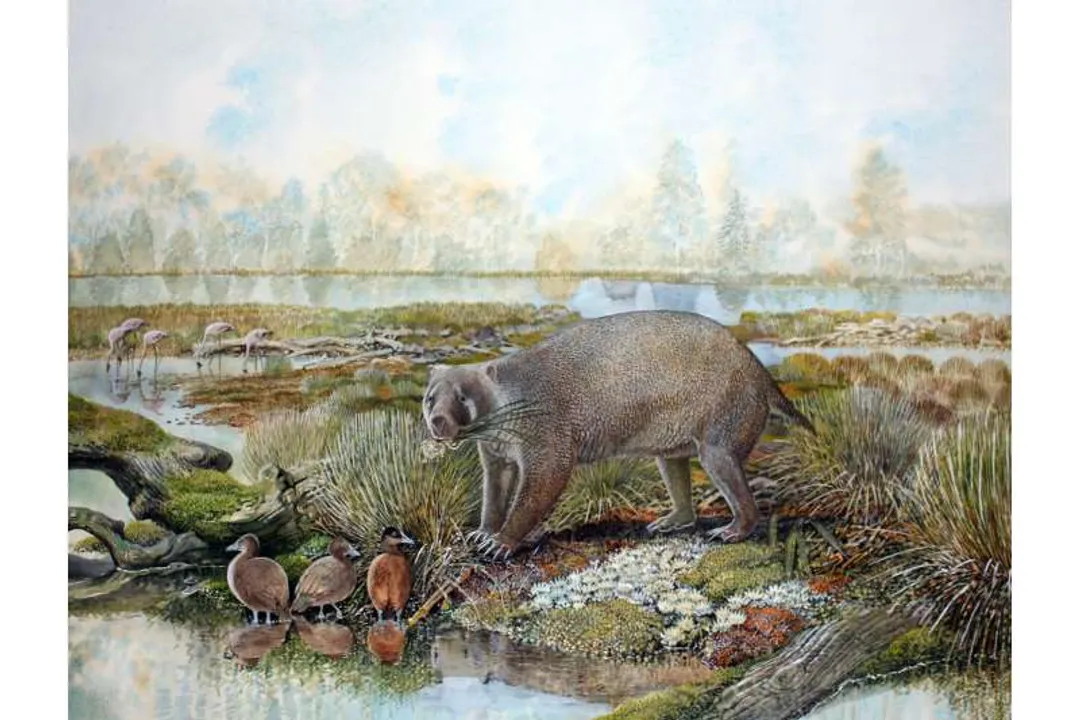
The world of Australian marsupials holds many peculiarities, but few are as charmingly sturdy and seemingly simple as the wombat. These stout, burrowing mammals, known for their distinctive cube-shaped scat, represent a fascinating evolutionary trajectory rooted deep in the continent's prehistory. Tracing their lineage is like digging through the layers of time, revealing a family tree that once supported creatures far grander than their modern counterparts. Understanding where they came from helps explain their unique anatomy, from their powerful claws to their backward-facing pouch.
# Marsupial Group
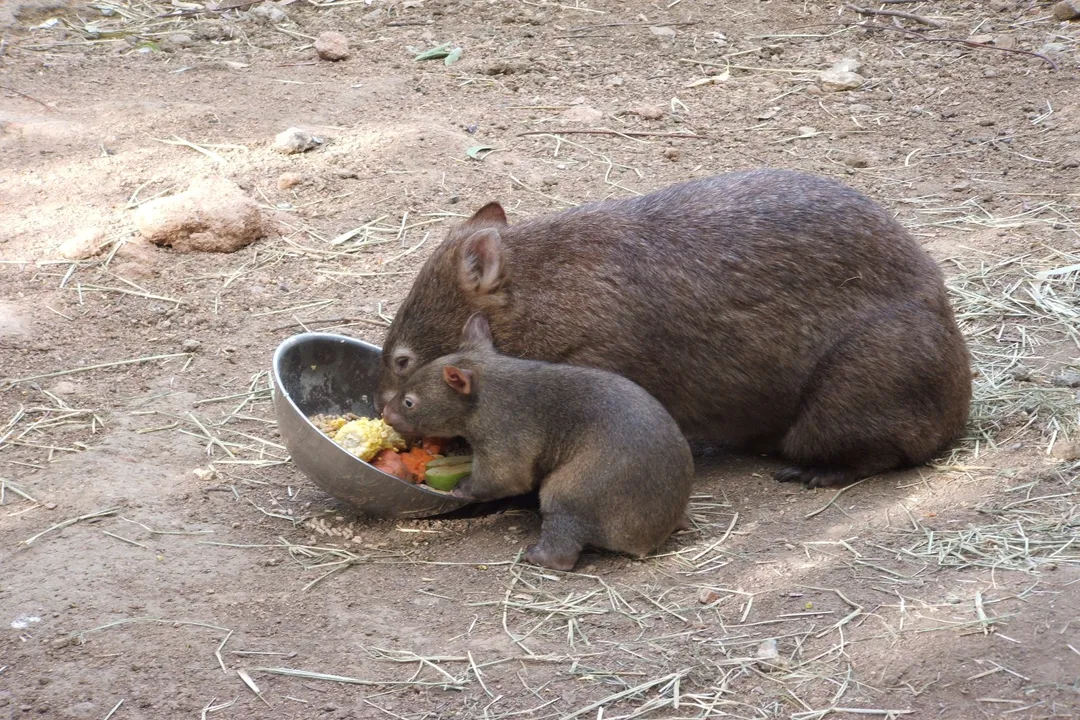
Wombats belong to the order Diprotodontia, which is the largest order of Australian marsupials, encompassing kangaroos, koalas, and possums. More specifically, they sit within the suborder Vombatiformes, a group that shares a common ancestor with koalas, though they diverged significantly over evolutionary time. Modern wombats are classified into three extant genera within the family Vombatidae: the common wombat (Vombatus), the northern hairy-nosed wombat (Lasiorhinus krefftii), and the southern hairy-nosed wombat (Lasiorhinus latifrons). These species share a fundamental body plan characterized by a stocky build and strong limbs adapted for digging.
An interesting point of context when looking at the modern diversity is realizing how restricted the group is now compared to its past. The current three species represent the survivors of a much richer evolutionary assembly of Vombatiformes, many of which were significantly larger and occupied different ecological niches.
# Giant Fossils
The evidence suggesting a far more dramatic evolutionary history comes primarily from paleontological digs across Australia. These discoveries have unearthed fossils belonging to extinct wombats that dwarf their living relatives. These ancient giants roamed the landscape during the Pleistocene epoch, and their fossilized remains provide critical snapshots of how these marsupials adapted to changing environments over millions of years.
One of the most significant recent finds relates to a true giant wombat, allowing scientists to reconstruct a more complete picture of its head structure. These extinct forms were part of the diverse megafauna that characterized much of Australia's past, a time when animals were generally bulkier and more specialized. Scientists have assigned various names to these extinct relatives, but the study of their morphology—the size and shape of their bones—is what truly illuminates the evolutionary pathway.

# Fossil Skull
A particular area of research has focused on reconstructing the skull of an extinct giant wombat, offering unprecedented detail into this lineage. The sheer scale of these ancient animals is striking; some estimates suggest they could have weighed up to three tonnes. In scientific terms, a nearly complete skull description of one of these fossil giants has been achieved for the first time, providing clarity on features previously inferred from fragmentary evidence.
The identification of a species known as Mukupirna, meaning "big-boned" in the local Aboriginal language, provides a cornerstone for this understanding. Mukupirna fossils are estimated to date back approximately 1.7 million years. Analyzing its skull structure allows researchers to compare its dentition and cranial architecture directly against modern wombats. For instance, the structure of the snout and the attachment points for the jaw muscles reveal clues about its feeding habits and overall skull strength. When you compare the robust, heavily reinforced skull of an extinct wombat with the smaller, more generalized skull of today's common wombat, you see a clear shift in adaptation, perhaps driven by changes in available vegetation over millennia.
If we look purely at the robust nature of the extinct species' jaw mechanics, it suggests an adaptation toward processing very tough, perhaps highly fibrous or abrasive, vegetation that may have been more prevalent during the Pleistocene. This is a subtle difference from the modern wombat, which, while capable of grinding tough grasses, possesses a lighter frame that dictates less extreme chewing forces. The fossil evidence allows researchers to map the increase in bite force capacity across the Vombatiformes lineage.
# Evolutionary Lineage
The study of these large fossils fundamentally shifts the understanding of wombat evolution. The discovery of Mukupirna and similar forms clarifies that large-bodied wombats were not just an isolated anomaly but part of a diverse radiation of large marsupials. Furthermore, the lineage shows a continuous thread connecting these massive creatures to the smaller, modern forms. The current species are essentially the surviving, albeit highly specialized, remnants of a far grander ecological cast.
The evolutionary pressure that led to the decline of the giant wombats is often linked to the significant climate shifts that occurred around the end of the Pleistocene, which saw a reduction in resource availability and perhaps specialized megaflora upon which they depended. The smaller, more adaptable modern wombats survived this bottleneck, demonstrating a flexibility that the giants may have lacked.
When considering the physical adaptations, it's striking how successful the basic burrowing blueprint has been. Even though the size varied dramatically, the core features needed for digging—the powerful shoulders, short legs, and specialized claws—remained central to their survival strategy across millions of years. The deep history of this group suggests that while the 'mega' phase of wombat evolution faded, the fundamental ecological solution they inhabit—that of a robust, subterranean herbivore—proved enduring. It suggests that niche occupation, rather than sheer size, dictated long-term success in the changing Australian environment.
It is often overlooked that the transition from the giant forms to the modern ones involved not just a reduction in mass, but likely a refinement of dental efficiency. Modern wombats exhibit hypsodonty, or high-crowned teeth, which are excellent for grazing on abrasive grasses by continuously replacing enamel as the tooth wears down. While the fossil evidence for Mukupirna suggests strong dentition, the specific degree and type of hypsodonty might reveal a key adaptive difference between the two eras—perhaps the modern species adapted a more efficient, lower-energy grinding system suitable for leaner, more modern plant communities. This subtle dental shift could be as significant to their survival as their reduction in overall body size.
The ongoing work mapping the complete skull structure of creatures like Mukupirna continues to provide the high-resolution data necessary to trace these evolutionary connections accurately. By comparing genetic markers with skeletal morphology across deep time, scientists can build a more reliable picture of how the Vombatiformes family tree branched and developed its distinctive traits. This comprehensive approach confirms that the story of the wombat is one of deep-time resilience, marked by a dramatic flourish of giantism followed by a successful, quieter persistence in the modern era.
Related Questions
#Citations
Wombats (Vombatus and Lasiorhinus spp.) Fact Sheet: Taxonomy ...
Fossils of 'big boned' marsupial shed light on wombat evolution
Watches and Wombats | The Institute for Creation Research
[PDF] A new species of Miocene wombat (Marsupialia, Vombatiformes ...
Big-boned marsupial unearths evolution of wombat burrowing ...
Scientific Evidence Proves Wombat Evolution Theory
Woobat Pokédex: stats, moves, evolution & locations
The Wombat – a Backwards Creature!!…But Evidence of a Designer!!
For the first time ever, we have a complete skull description of a true ...