Which Alaskan reintroduction site is noted as establishing a viable population where Wood Bison had been absent for decades?
Answer
Delta Junction
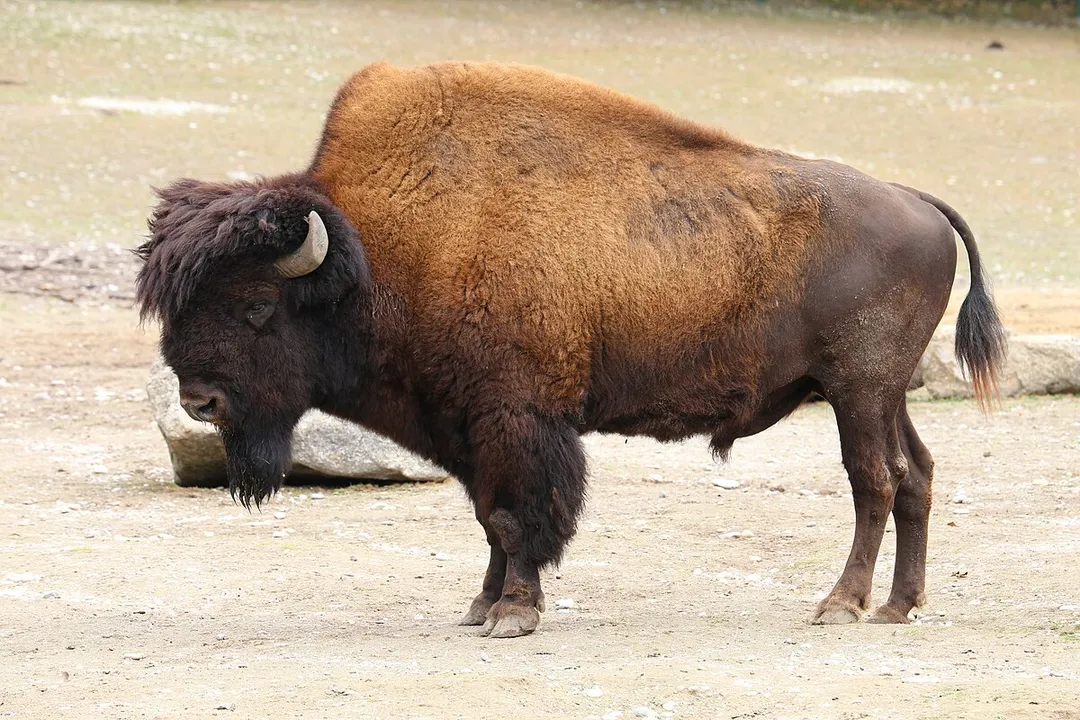
The recovery story in the United States centers on Alaska, where the species was once extirpated. Several managed herds have been established there, often through translocations from Canadian sources, with the Alaska Department of Fish and Game overseeing the process. Among these critical recovery points, the herd specifically established near Delta Junction is highlighted as a significant management achievement, marking the successful return of a viable population to an area they had not inhabited for many decades. This site, utilizing interior Alaska habitats like mixed spruce-birch forests, contrasts with the core WBNP environment.
Related Questions
What physical trait distinguishes the Wood Bison hump from the Plains Bison hump?Which protected area serves as the single most significant location and primary stronghold for Wood Bison populations?What was the ESA status change for the Wood Bison in the United States?Which two Canadian jurisdictions define the borders spanned by Wood Buffalo National Park?What historical factor was responsible for the drastic reduction of the Wood Bison’s traditional territory?What habitat niche historically defined the range of the Plains Bison relative to the Wood Bison?Which Alaskan reintroduction site is noted as establishing a viable population where Wood Bison had been absent for decades?Besides WBNP, what geographical features within Canada host smaller, managed Wood Bison groups?What ecological benefit do satellite herds outside WBNP provide for species adaptability assessment?Which region in the United States was Wood Bison once extirpated from due to historical overhunting?