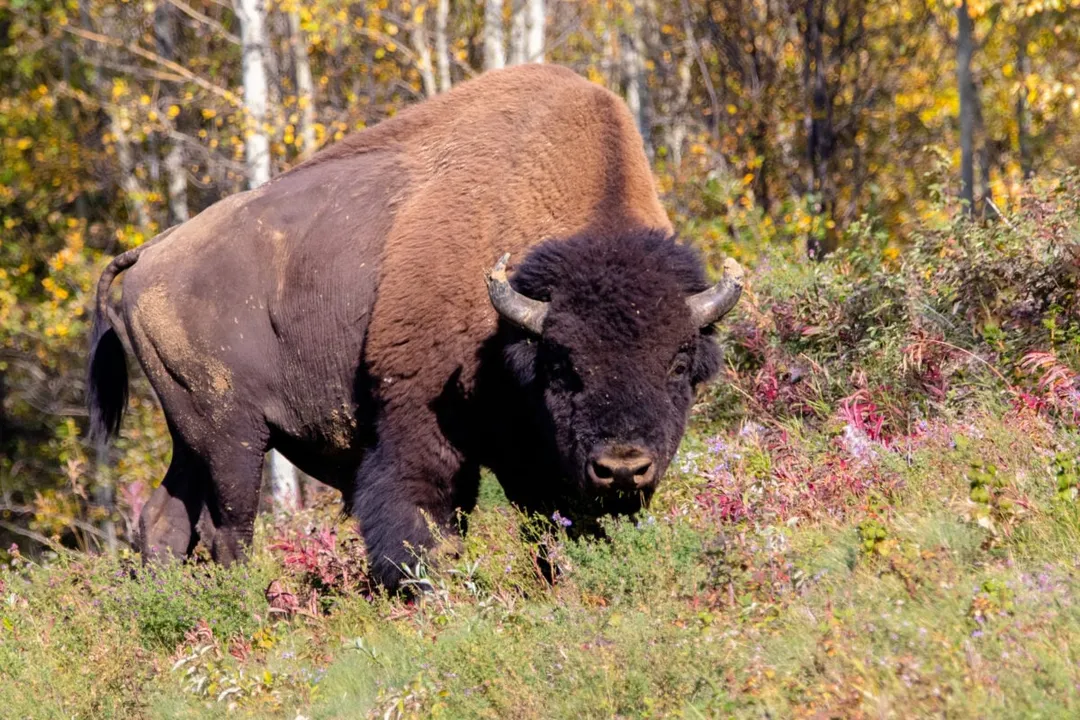
Where are the distinctly lighter, straw-colored patches, sometimes called "britches," found on the Wood Bison coat?
Answer
Hind legs
The coat of the Wood Bison displays a notable two-toned appearance that aids in field identification, contrasting sharply with the dark brown or almost black coloration typical of the front half of the animal. While the head, neck, and shoulders are covered in thick, shaggy hair providing excellent insulation against cold climates, the lower portions of the legs feature distinctly lighter hair. These hind legs frequently exhibit denser, lighter patches, specifically referred to as "britches" or "chaps," creating a noticeable visual demarcation against the darker front body section.
Related Questions
What is the maximum documented weight for a mature Wood Bison bull?What structures support the massive muscular hump of the Wood Bison?Where are the distinctly lighter, straw-colored patches, sometimes called "britches," found on the Wood Bison coat?What is the approximate maximum height a mature Wood Bison bull can reach at the shoulder?How is the horn curvature of the Wood Bison described regarding its tips?What advantage do the slightly longer legs of the Wood Bison provide in their northern ranges?How does the head shape of the Wood Bison compare to the Plains Bison?What is the functional implication of the heavy musculature anchored by the shoulder hump structure?What color is the coat of young Wood Bison calves upon birth?What maximum speed can Wood Bison reach over short distances when charging?