What does wood bison eat?
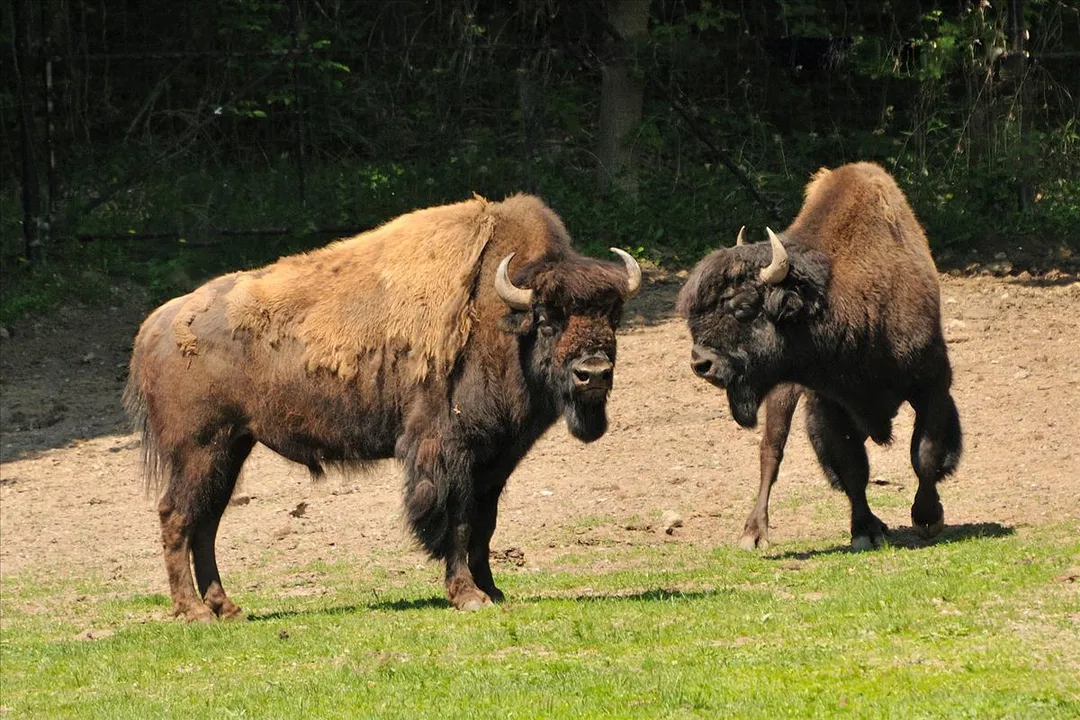
The wood bison, the largest land animal in North America, maintains its massive bulk through a diet perfectly tailored to the demanding boreal and aspen forest landscapes it inhabits. As the environment shifts drastically between seasons, its ability to find and consume the right nutrition dictates survival, especially when snow piles high across its range in the Yukon, Northwest Territories, and Alberta.
# Primary Food
At its foundation, the wood bison is classified as a herbivore and, more specifically, an obligate grazer. This classification means that grasses and sedges form the core of its entire annual sustenance. These graminoids are the main staple, providing the bulk of the energy needed for this enormous mammal. For the wood bison herds observed at the Toronto Zoo, this dietary split is quantified: sedges and grasses constitute about 85 percent of what they consume, leaving the remaining portion for other vegetation. Wood bison spend a considerable portion of their active hours feeding, often dedicating between nine and eleven hours each day just to grazing. They exhibit a daily pattern of moving from meadow to meadow, grazing their fill before moving on to rest.
# Varied Forage
While grasses and sedges dominate, the wood bison's diet is not monotonous; it adapts to what the immediate environment offers throughout the year. The term "forbs" covers a significant portion of the non-grass, non-sedge intake.
Seasonal shifts bring specific plant additions to their menu:
- Summer Diet: As temperatures warm, leaves from woody plants, specifically willow and silverberry, become a part of their intake. In the Mackenzie population, willow leaves can make up a large quantity of the early-to-mid-summer diet.
- Autumn Intake: If available, lichens become an important dietary component for a brief period in the fall, typically found in open canopy forests adjacent to the meadows and grasslands.
- Winter Alternatives: When deep snow blankets the ground, access to preferred grasses is obstructed, prompting them to consume other available greenery, such as sagebrush.
This adaptability shows that while they are obligate grazers, their survival in northern conditions depends on being opportunistic consumers of shrubs and herbs when the primary food source is locked under snow or ice.

# Winter Foraging Mechanics
The way the wood bison accesses its winter food supply is perhaps the most telling example of its specialized evolution for the northern climate. Unlike many other hoofed northern animals that might use their feet to paw through snow, the wood bison employs its massive head and powerful neck muscles to clear the way. The distinct, forward-reaching hump structure on their back is supported by a complex of ligaments and muscles designed precisely to enable this sweeping motion through deep snowdrifts to uncover buried grasses and sedges.
This method of accessing forage, while effective, demands significant physical effort and energy. A practical consideration for understanding their nutritional needs is recognizing that these few hours of intense, focused foraging under harsh conditions constitute a massive expenditure of their already limited daily energy reserves during the coldest months. Consequently, the nutritional quality of the available forage must be high enough to offset the mechanics of acquiring it, making the transition to readily available, high-energy vegetation in summer crucial for rebuilding reserves.
# Ecosystem Engineers
The feeding habits of the wood bison extend their influence far beyond mere personal nutrition; they actively shape the landscape they inhabit. Because they are highly associated with graminoid-dominated plant communities, their consumption habits help maintain these specific environments.
Their impact is multifaceted:
- Plant Diversity: Grazing, combined with physical disturbance from their hooves and the depressions left by their wallowing behavior, encourages greater plant diversity.
- Nutrient Cycling: This activity also boosts overall plant productivity and accelerates the cycling of essential nutrients within the soil.
Historically, this dynamic interaction between the bison and the vegetation, sometimes aided by natural or human-set fires, was vital for keeping wet meadows open. The loss of bison from certain regions, coupled with modern fire suppression and altered flood patterns, has resulted in the encroachment of woody species like willow, effectively shrinking the meadows the bison rely upon. Therefore, when discussing what wood bison eat, we are also discussing what they maintain—the very habitat that produces their food. Considering this relationship, it is interesting to note how modern resource management—which often seeks to control fire and water flow—is inadvertently removing the historical maintenance system provided by the bison's grazing pattern, turning a food source dependency into a habitat threat.
# Feeding Niche
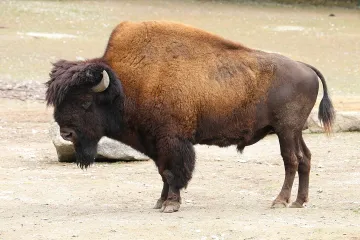
Wood bison occupy a distinct feeding niche compared to other large ungulates in the northern ecosystems. Because their diet is so heavily skewed toward grasses and sedges—especially in winter—there is minimal potential for direct competition over food resources with species that might prefer browse (shrubs/leaves) or different types of grasses. Their preference for meadow environments, even when surrounded by boreal forest, carves out a specific resource base. This dietary separation allows them to coexist, though their presence can indirectly affect other species, such as wolves, who may increase in number in response to the abundance of bison prey.
# Dietary Summary Table
The following table summarizes the primary and secondary food items reported across the wood bison's range:
| Food Category | Primary/Secondary | Seasonal Availability | Key Sources |
|---|---|---|---|
| Grasses | Primary (85% total diet) | Year-round, essential in winter | Meadows, open areas |
| Sedges | Primary (85% total diet) | Year-round, essential in winter | Wet meadows, Peace/Athabasca River lowlands |
| Forbs | Primary/Secondary | Year-round | General grazing |
| Willow Leaves | Secondary | Summer | Shrubby areas, savannas |
| Silverberry Leaves | Secondary | Summer | Shrubby areas |
| Lichen | Secondary | Short period in Fall | Open canopy forests |
| Sagebrush | Alternative | Winter (when grass is scarce) | General greenery |
In essence, the wood bison's survival strategy is built around efficiently processing coarse grasses and sedges, supplemented by available browse and lichen when necessity demands, all supported by unique physical adaptations that allow it to "dig" for sustenance when winter conditions make foraging a true physical challenge.
Related Questions
#Citations
Wood Bison Species Profile, Alaska Department of Fish and Game
[PDF] Wood Bison
Wood bison - Facts, Diet, Habitat & Pictures on Animalia.bio
Wood bison in Canada
[PDF] Status of the Wood Bison (Bison bison athabascae) in Alberta
Wood Bison | Wild America Wiki - Fandom
Wood Bison: History and Near Extinction
Wood bison - female herd Viewable - Toronto Zoo | Animals