Wood Bison Physical Characteristics
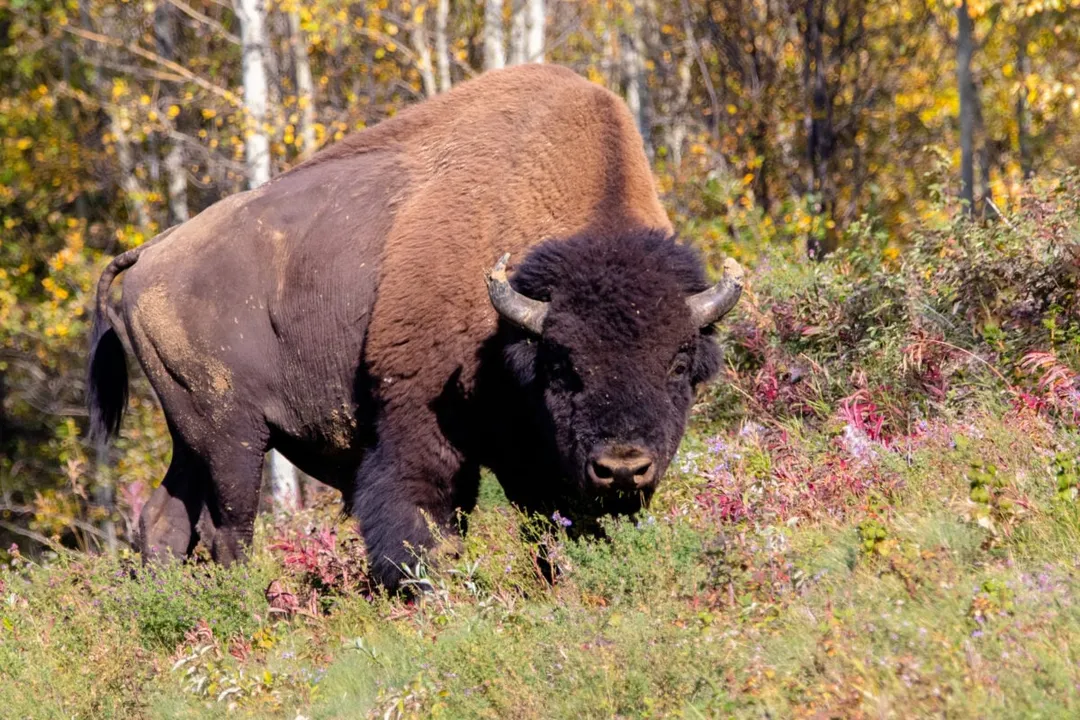
The sheer scale of the Wood Bison (Bison bison athabascae) immediately sets it apart in the North American fauna. These magnificent animals are recognized as the largest land mammal on the continent. [2][4][5] When observing a mature bull, its physical presence is imposing, often reaching heights of up to $1.8$ meters ($6$ feet) at the shoulder. [1][3][4][5] This impressive stature contributes to their ability to traverse deep snow, a necessity in their northern habitats. [8]
# Massive Build
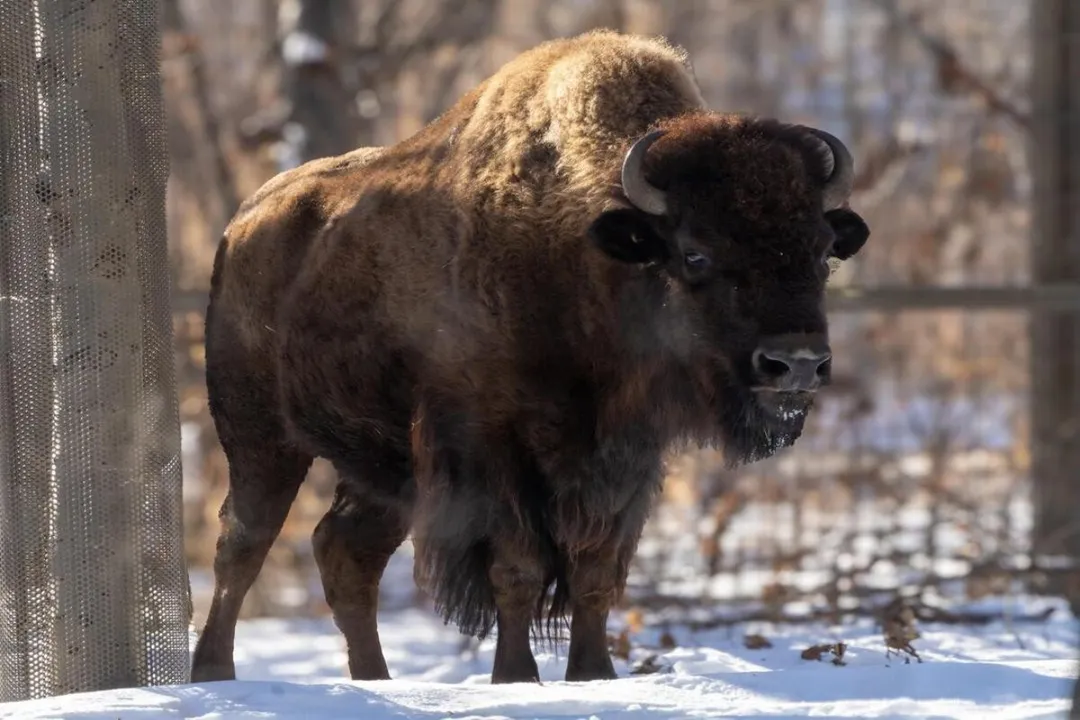
The weight carried by a large bull is staggering. Mature males can weigh well over $900$ kilograms, with some documented individuals approaching $1,000$ kilograms ($2,200$ lbs). [1][4][5][8] By contrast, the females, or cows, are noticeably lighter, generally tipping the scales around $450$ kilograms ($1,000$ lbs). [4][5] This sexual dimorphism in mass is typical for bison species, but the absolute size of the Wood Bison places it at the top of the continent’s terrestrial herbivores. [4] When standing, their heads tend to hang relatively low, which is a characteristic feature often observed when they are grazing or moving slowly. [4]
# Shoulder Structure
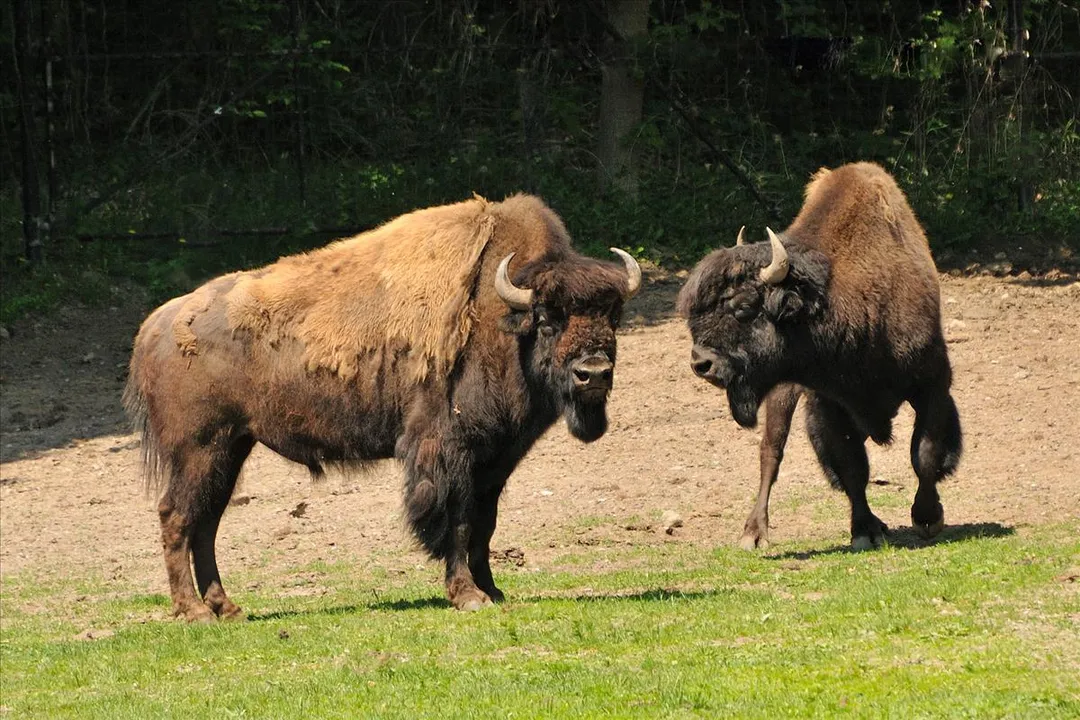
A defining physical feature of the Wood Bison, much like its southern cousin, is the massive muscular hump located directly over the shoulders. [1][4][5][8] This prominent hump is supported by unusually long neural spines on the thoracic vertebrae. [4] Functionally, this structure acts as a powerful anchor for the neck and shoulder muscles needed to support the heavy head and to swing it powerfully during confrontations or while foraging through dense vegetation or snow. [4] One interesting implication of this heavy musculature and skeletal structure is that these bison are built more for straight-line power and pushing through obstacles than for the agility seen in lighter ungulates.

# Coat Appearance
The coat of the Wood Bison is another key identifier, particularly its coloration and texture, which are adaptations to cold climates. [1][4] The primary color is a deep, dark brown, sometimes appearing almost black. [1][3][4][5] However, the distribution of hair varies significantly across the body. The hair covering the head, neck, and the entire front section—the shoulders and forequarters—is notably thick and shaggy, providing excellent insulation. [1][4][5]
Moving towards the rear, the coat changes. The hair on the lower portions of the legs is distinctly lighter, often described as straw-colored or pale. [1][4] Furthermore, the hind legs often feature denser, lighter patches, sometimes referred to as "britches" or "chaps," which contrast sharply with the darker front half. [1][4] This two-toned appearance is a visual marker easily noted in the field.
# Head and Horns
Both male and female Wood Bison possess horns, which are essential for defense and social status within the herd. [1][5] The horns are dark, smooth, and taper to a sharp point. [1] Their curvature is distinct: they typically grow outward from the head, curve upward, and then slightly inward at the tips. [4] Unlike some other bovids, these horns are relatively short compared to the overall size of the animal, but they are dense and incredibly strong. [1] The massive, somewhat square-shaped head sits low, contributing to the overall rugged silhouette. [4]
# Distinguishing Traits Versus Plains Bison
Understanding the Wood Bison often involves comparing it directly to the Plains Bison (Bison bison bison), as they are closely related but distinct subspecies. [4][6] The differences are subtle but measurable, highlighting the unique evolutionary path of the Wood Bison in the boreal forests and parklands. [4][6]
| Characteristic | Wood Bison (B. b. athabascae) | Plains Bison (B. b. bison) |
|---|---|---|
| Shoulder Hump | Higher, more peaked [1][4][6] | Lower, more sloping [4] |
| Leg Length | Generally longer legs [4][6] | Shorter legs [4] |
| Coat Shagginess | Longer, shaggier coat, especially on the forequarters [4] | Less shaggy [4] |
| Horn Curvature | Curves outward, then up and slightly in [4] | Curves more directly upward [4] |
| Head Shape | More massive, squarer face [4] | Less massive face [4] |
The slightly longer legs of the Wood Bison are a practical adaptation that aids their movement across the wetland and muskeg terrain characteristic of their northern ranges, allowing for better footing where their Plains counterparts might struggle. [4][6] This subtle difference in limb proportions speaks volumes about the specific environmental pressures shaping their morphology over millennia.
# Feet and Gait
While not as extensively detailed as the coat or size, the feet are crucial for survival in their preferred habitat. [6] Wood Bison inhabit areas with softer ground, including muskeg and wet meadows. [8] Their hooves must provide adequate purchase on this terrain. Their gait is generally described as a slow, lumbering walk when moving casually, but they are capable of surprisingly fast charges when necessary, reaching speeds of up to $55$ kilometers per hour ($34$ mph) over short distances. [3] Observing them move through uneven, soft ground reveals the effectiveness of their large hooves distributing their massive weight, preventing them from sinking excessively compared to an animal with less surface area contact.

# Aging and Maturity Indicators
While not strictly a physical characteristic of the species as a whole, an individual bison's appearance changes with age, offering cues to seasoned observers. Younger calves are born with a lighter, reddish-brown coat that darkens as they mature. [5] As bulls reach peak maturity, their massive shoulder hump and thick neck mane become even more pronounced, often giving them a more imposing, front-heavy appearance than younger males or females. [1] Distinguishing between a mature bull and a prime cow can be challenging from a distance, but the sheer bulk and the development of the neck/shoulder muscle mass usually resolve the identification. [5]
The overall impression left by the Wood Bison is one of immense, albeit somewhat shaggy, power, perfectly tailored for the rigorous, often wet and snow-covered, environment of the taiga and boreal plains they inhabit. [1][4] Their physical design is a testament to survival in one of North America’s harshest terrestrial ecosystems. [8]
Related Questions
#Citations
Wood Bison Species Profile, Alaska Department of Fish ...
Wood Bison (Bison bison athabascae)
Animal Facts: Wood bison
Wood bison
Wood bison - Animals
Wood Bison - Alaska Wildlife Conservation ...
Species Profile for Wood Bison(Bison bison athabascae)
Wood Bison - Wood Buffalo National Park - Parks Canada
Wood Bison - Wilder Institute/Calgary Zoo