What subtle, consistent difference do taxonomists use to delineate the three species within the Genus *Sphyrapicus*?
Answer
Subtle but consistent differences in head and nape coloration
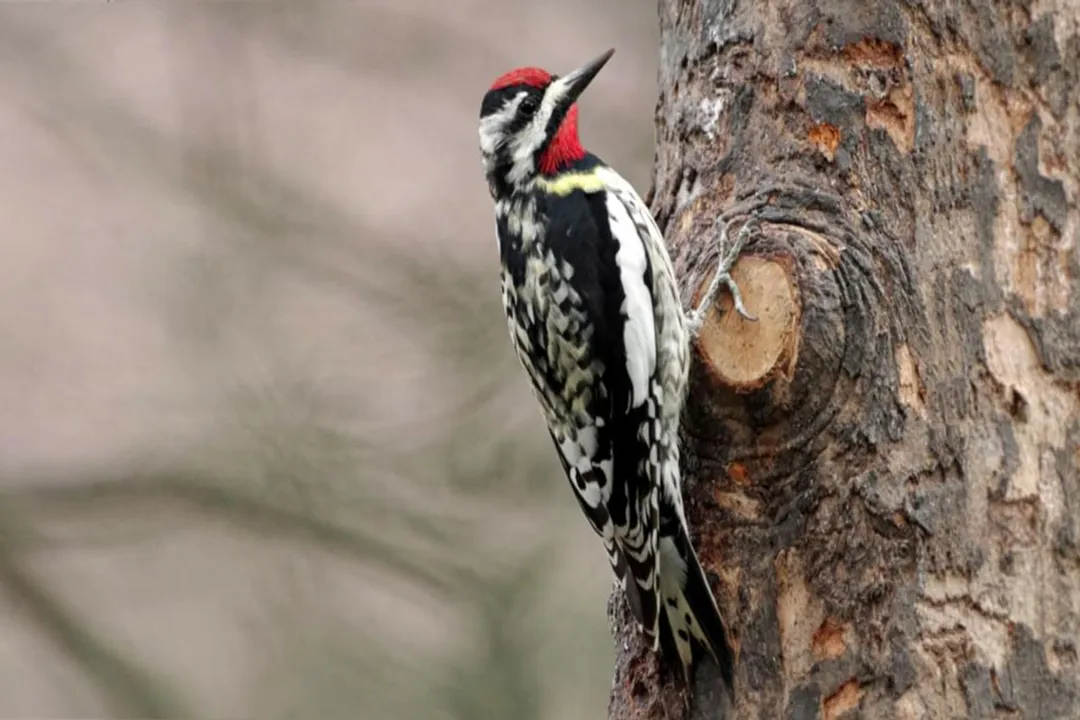
Within the Genus *Sphyrapicus*, the three constituent species—*S. varius*, *S. nuchalis*, and *S. ruber*—are very closely related and share the defining sap-feeding behavior. Taxonomists rely on fine details to separate these sister species when visual identification is necessary. These subtle but consistent differences are found primarily in the patterns and extent of colored plumage on the head and nape region. For example, the placement of the red patch (throat for *S. varius* versus nape for *S. nuchalis*) is a primary identifier. This reliance on superficial markings at the species level contrasts with the deeper evolutionary traits that placed them together in the genus.
Related Questions
What foot structure characterizes the Order Piciformes, including toucans and barbets?Which species are included in the Genus *Sphyrapicus* besides *S. varius*?What does the specific name *varius* denote for *Sphyrapicus varius*?What fundamental requirement places *Sphyrapicus varius* in the Kingdom Animalia?What highly specialized diet behavior distinguishes *S. varius* within the Family Picidae structure?What statement confirms *S. varius* is evolutionarily closer to a Costa Rican toucan than a flycatcher?What specific structural feature is shared among all members of Phylum Chordata, including the sapsucker?What significance did Baird assign to *Sphyrapicus varius* when erecting the genus *Sphyrapicus* in 1858?What avian features specifically place the sapsucker within Class Aves?What subtle, consistent difference do taxonomists use to delineate the three species within the Genus *Sphyrapicus*?