What invasive agents in Hawaii are responsible for raiding the small nests of native yellow-faced bees?
Answer
Non-native ants.
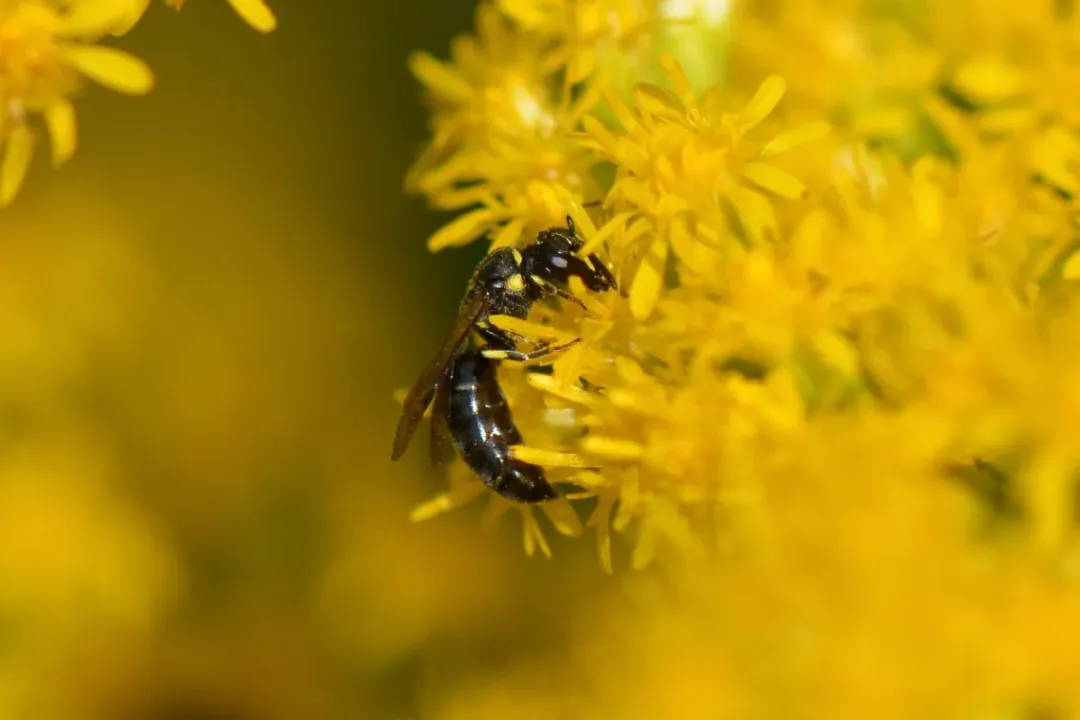
The conservation challenges facing endemic Hawaiian yellow-faced bees are severely compounded by the introduction of invasive species. A particularly damaging element is the presence of non-native ants. These ants pose a direct, aggressive threat to the survival of the native bee populations by raiding their small, hidden nests. Once inside, these ants consume the vital provisions—the stored liquid pollen mixture—or directly attack and consume the developing larvae, leading to a significant mortality rate for the next generation of *Hylaeus* bees.
Related Questions
How do yellow-faced bees of the genus Hylaeus transport pollen differently than many other bees?What specialized structure found on honeybees do yellow-faced bees notably lack?What characteristic, cellophane-like substance do female Hylaeus bees use when constructing nest cells?Which of the following Hawaiian species is noted as being found across Oahu, Maui, Molokai, and Kauai?What is the Hawaiian name often used locally for native yellow-faced bees?Where is Hylaeus kuakea, a species found in dry forests, known to establish its nesting tunnels?What invasive agents in Hawaii are responsible for raiding the small nests of native yellow-faced bees?What type of nesting habitat is indicated by small, perfectly round exit holes in dead branches for cavity-nesting Hylaeus species?Which *Hylaeus* species in the Pacific Northwest of North America is listed as a species of conservation concern?What specialized requirement for supporting yellow-faced bees should gardeners focus on instead of just quantity of blooms?