Given its near-blindness, what dual sensory role might the Yeti Crab's setae perform?
Answer
chemical and physical sensors
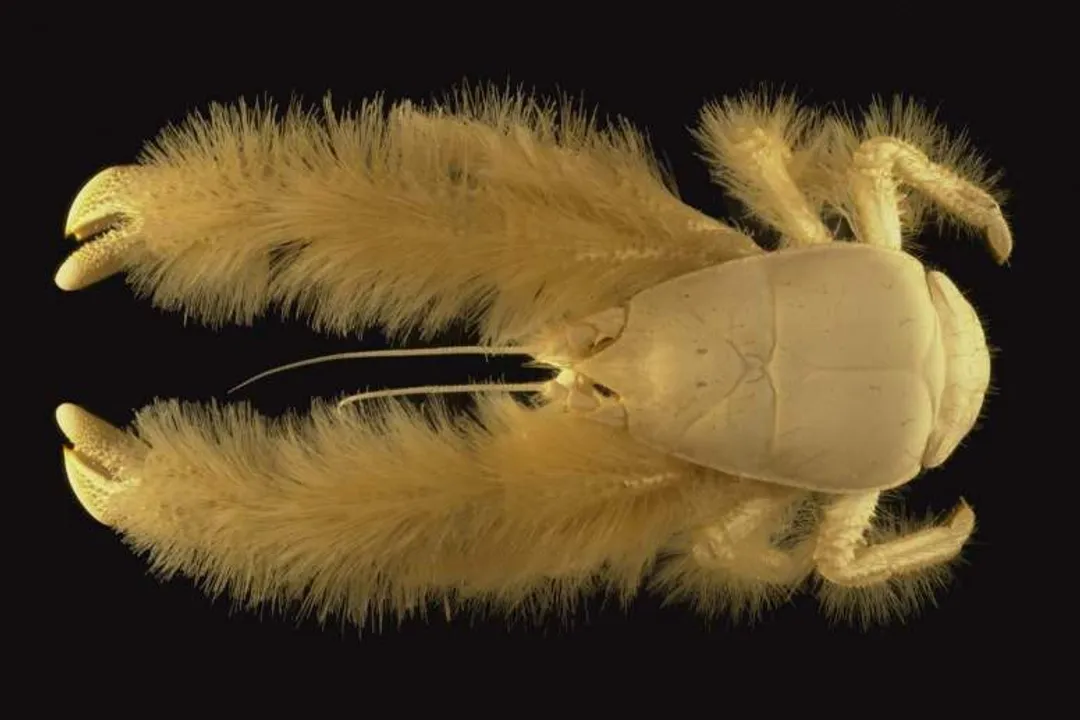
The Yeti Crab possesses highly reduced eyes, rendering it virtually blind in the perpetual darkness below 7,000 feet. To compensate and locate vital resources such as food or mates, the long, waving setae covering its limbs are believed to serve a dual sensory purpose. These specialized bristles likely act as highly sensitive chemical sensors, detecting minute gradients of necessary chemicals associated with bacterial growth or potential mates in the water. Simultaneously, they function as physical sensors, registering changes in water movement or nearby objects, allowing the crab to navigate and interact with its immediate, chemically rich surroundings.
#Videos
Yeti Crab - Animal of the Week - YouTube
Related Questions
When was Kiwa hirsuta, the Yeti Crab, first encountered by scientists?What specialized, hair-like spines cover the Yeti Crab's chelipeds and legs?To which infraorder, grouping it with hermit crabs, is the Yeti Crab classified?What geological feature is essential for sustaining the dense populations of Yeti Crabs?What is the primary diet strategy involving bacteria cultivated on the Yeti Crab's bristles?Given its near-blindness, what dual sensory role might the Yeti Crab's setae perform?Which deep-sea submersible was used by the expedition that discovered Kiwa hirsuta?What entirely new biological family was created to accommodate the distinct nature of Kiwa hirsuta?What maximum density of Yeti Crabs has been observed packed per square meter near favorable vent flows?Where does the female Kiwa hirsuta attach her eggs until they hatch into larvae?