What reproductive method allows an entire female population of L. flavimaculatum to produce clones without male fertilization?
Answer
Parthenogenesis
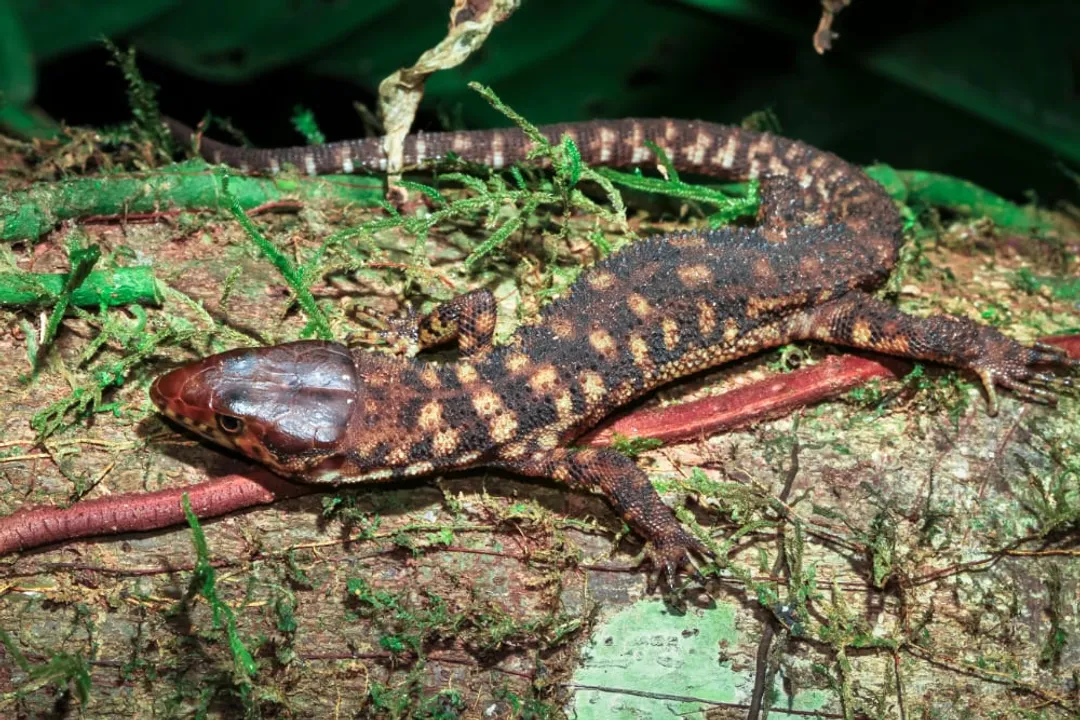
One of the most fascinating biological traits of the Yellow-spotted night lizard is its reproductive flexibility, specifically its ability to reproduce via parthenogenesis. Parthenogenesis is a form of asexual reproduction where females are capable of producing viable offspring that are essentially clones of themselves, entirely bypassing the need for fertilization by a male. While the species can also produce male offspring when actual fertilization does occur, the capacity for asexual reproduction is a unique survival mechanism, particularly relevant given their secretive nature.
#Videos
Are the Yellow Spotted Lizards from Holes REAL? - YouTube
Yellow-spotted Lizard Facts - Animal a Day XYZ Week - YouTube
Related Questions
What is the scientific designation for the creature commonly known as the Yellow Spotted Lizard?What texture covers the dorsum of Lepidophyma flavimaculatum, contrasting with its head?What is the approximate maximum altitude where Lepidophyma flavimaculatum thrives in tropical wet and moist forests?What ecological term describes the L. flavimaculatum's tendency toward extremely restricted home ranges under specific cover?What reproductive method allows an entire female population of L. flavimaculatum to produce clones without male fertilization?Why should keepers avoid using red heat bulbs when attempting to create a thermal gradient for L. flavimaculatum?What primary feeding classification describes the diet of Lepidophyma flavimaculatum based on its consumption of invertebrates?Which spatial dimension, floor space or height, is paramount when setting up an enclosure for the terrestrial L. flavimaculatum?What color is the ventral side or belly of the Yellow-spotted night lizard typically described as?Since L. flavimaculatum is viviparous, what mode of birth does the female employ instead of laying eggs?