What primary food sources constitute the diet of this benthic carnivore?
Answer
Invertebrates and small vertebrates in the sediment layer
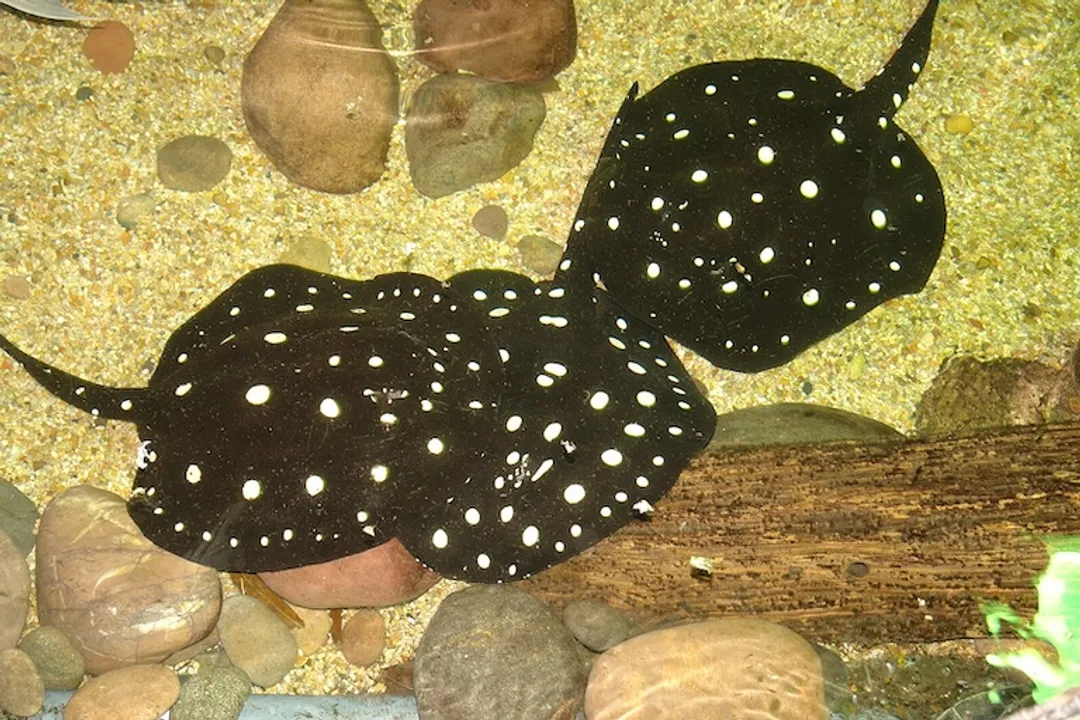
As a classified benthic carnivore, the Xingu River Ray's feeding strategy revolves entirely around organisms living within or just above the riverbed sediment. Its diet typically includes a variety of small prey items such as small fish, aquatic worms, various crustaceans, and mollusks. The ray utilizes specialized electroreceptors located on its underside—a characteristic shared by all elasmobranchs but finely tuned for this freshwater application—to detect and locate these buried or hidden food sources within the murky substrate.
Related Questions
Where is the Xingu River Ray (*Potamotrygon leopoldi*) exclusively found?What characterizes the striking disc coloration of *P. leopoldi*?What is the preferred habitat zone for the Xingu River Ray?What primary food sources constitute the diet of this benthic carnivore?Approximately what diameter can adult Xingu River Rays reach?How does *P. leopoldi* differ from the vast majority of stingrays regarding habitat?What behavior helps the ray camouflage while resting or ambushing prey?What human activity poses a major pressure due to the ray's visual appeal?Why does the endemic nature of the Xingu River Ray increase its vulnerability?What adaptations must the ray's sensory systems possess for foraging in Amazonian tributaries?Which primary environmental pressures threaten the Xingu River Ray population?