What behavior helps the ray camouflage while resting or ambushing prey?
Answer
Partially burying itself in the substrate, leaving only eyes and spiracles visible
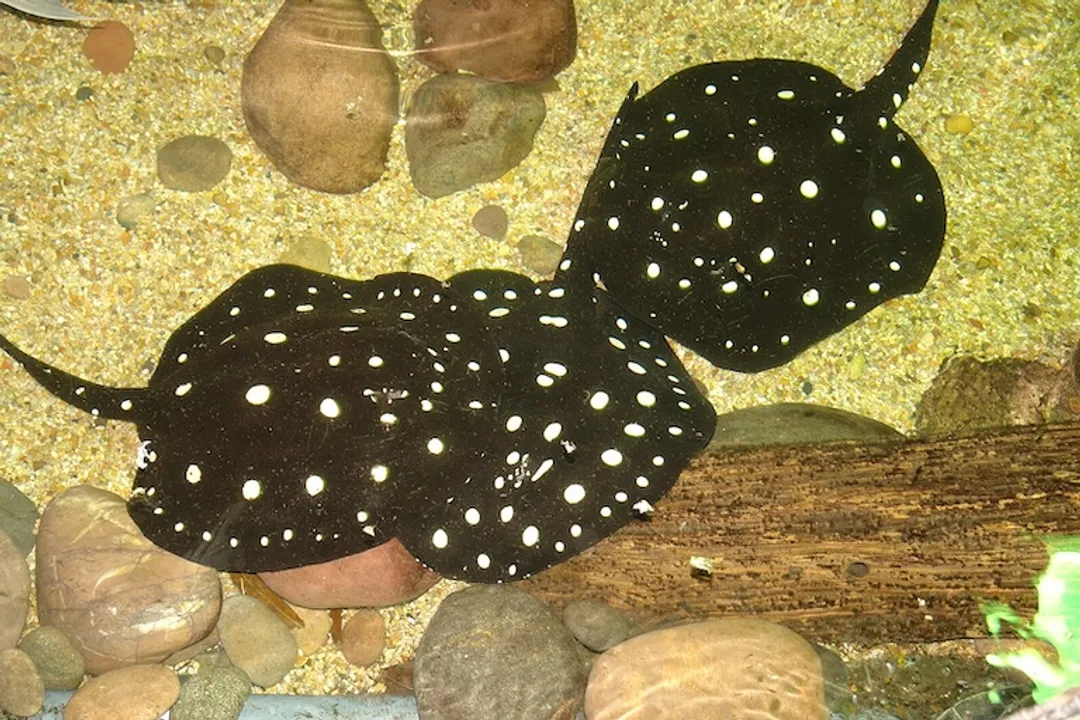
To maximize camouflage against predators viewing from above and to effectively ambush unsuspecting food items, the Xingu River Ray employs a specific behavior involving the river bottom sediment. The ray will settle onto the substrate and partially bury itself within the silt or sand. This action effectively conceals the majority of its body, leaving only its eyes and spiracles—the openings used for breathing while resting on the bottom—exposed above the layer of sediment, providing excellent cover.
Related Questions
Where is the Xingu River Ray (*Potamotrygon leopoldi*) exclusively found?What characterizes the striking disc coloration of *P. leopoldi*?What is the preferred habitat zone for the Xingu River Ray?What primary food sources constitute the diet of this benthic carnivore?Approximately what diameter can adult Xingu River Rays reach?How does *P. leopoldi* differ from the vast majority of stingrays regarding habitat?What behavior helps the ray camouflage while resting or ambushing prey?What human activity poses a major pressure due to the ray's visual appeal?Why does the endemic nature of the Xingu River Ray increase its vulnerability?What adaptations must the ray's sensory systems possess for foraging in Amazonian tributaries?Which primary environmental pressures threaten the Xingu River Ray population?