What material do Yellow-bellied Sapsuckers typically excavate for creating their nesting cavities?
Answer
Dead or decaying trees or limbs, usually in hardwoods or conifers
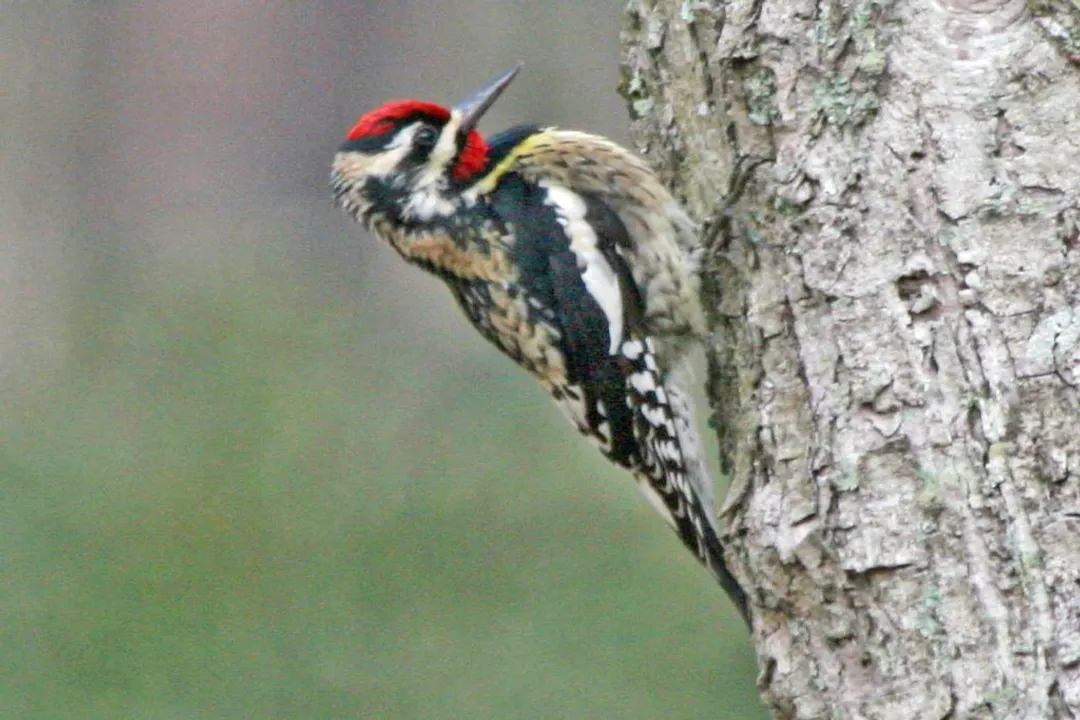
Although their feeding behavior focuses on the sap just under the surface of living trees, their nesting habits align more closely with other woodpeckers concerning the substrate used for shelter. The Yellow-bellied Sapsucker excavates cavities for rearing young, preferring wood that is already compromised due to death or decay. This substrate can include both hardwood and coniferous materials. The entrance hole for these nests is characteristically small, usually measuring less than two inches in diameter, and the cavity might contain wood chips left over from the excavation process.
#Videos
Yellow-bellied Sapsucker. A real bird! Exciting Facts for You!
Related Questions
What is the primary sustenance sought by the Yellow-bellied Sapsucker using its unique drilling technique?How are the head markings of an adult male Yellow-bellied Sapsucker described regarding throat and forehead color?What key difference exists between the throat patches of adult male and adult female Yellow-bellied Sapsuckers?What specific arrangement and spacing characterize the sap wells drilled by the Yellow-bellied Sapsucker?Which geographical areas are typically occupied by Yellow-bellied Sapsuckers during their breeding season?What environmental condition strongly correlates with the impetus for the majority of the Yellow-bellied Sapsucker population to migrate south?How is the typical vocalization of the Yellow-bellied Sapsucker during the breeding season characterized?What descriptive characteristic is often used to describe the Yellow-bellied Sapsucker's territorial drumming pattern?What material do Yellow-bellied Sapsuckers typically excavate for creating their nesting cavities?What potential negative impact can high densities of sap well drilling have on vulnerable or young sap-producing trees?