What management activity poses a direct threat to successful Yellowthroat breeding success?
Answer
Drainage of wetlands and removal of dense riparian thickets
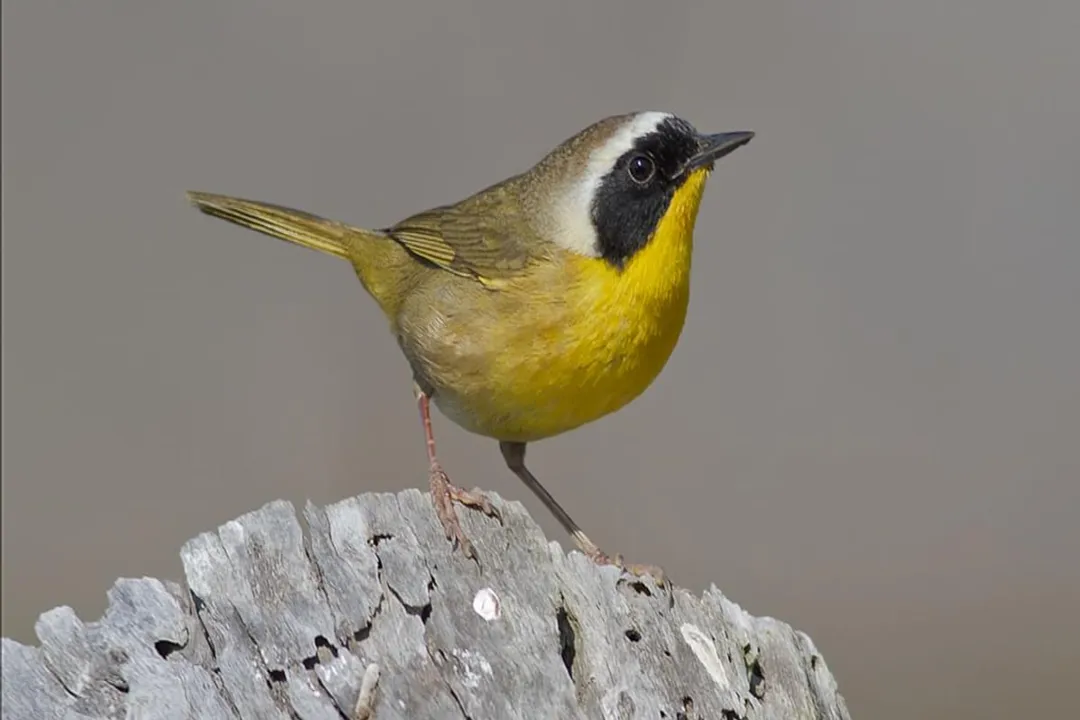
Despite its current conservation status of Least Concern due to overall population size and range, the Yellowthroat faces specific localized threats tied directly to its dependence on particular structures. Successful breeding requires the continuity of dense, low cover. Therefore, human activities that simplify or eliminate this structure—such as the drainage of wetlands, the clearing of dense brush buffers along streams (riparian thickets) for development, or the aggressive clean-up of field edges through intensive agriculture—directly eliminate essential breeding habitat. Maintaining these 'untidy' brushy buffers is crucial for supporting local populations.
Related Questions
What feature instantly recognizes the male Common Yellowthroat?What descriptive phrase often characterizes the Yellowthroat's signature song cadence?What ecological niche does the Yellowthroat strongly favor regarding vegetation structure?How does the female Common Yellowthroat's plumage contrast with the male's masked appearance?To which genus, known for favoring marshy habitats, does the Yellowthroat belong?Which major geographical area is excluded from the Common Yellowthroat's vast breeding range across the US?What management activity poses a direct threat to successful Yellowthroat breeding success?How high above the base of shrubbery or reeds does the Yellowthroat typically forage?What primary traits differ among the recognized Common Yellowthroat subspecies?Which adaptation is described as arguably more critical for the long-term success of the lineage?