Yellowthroat Evolution
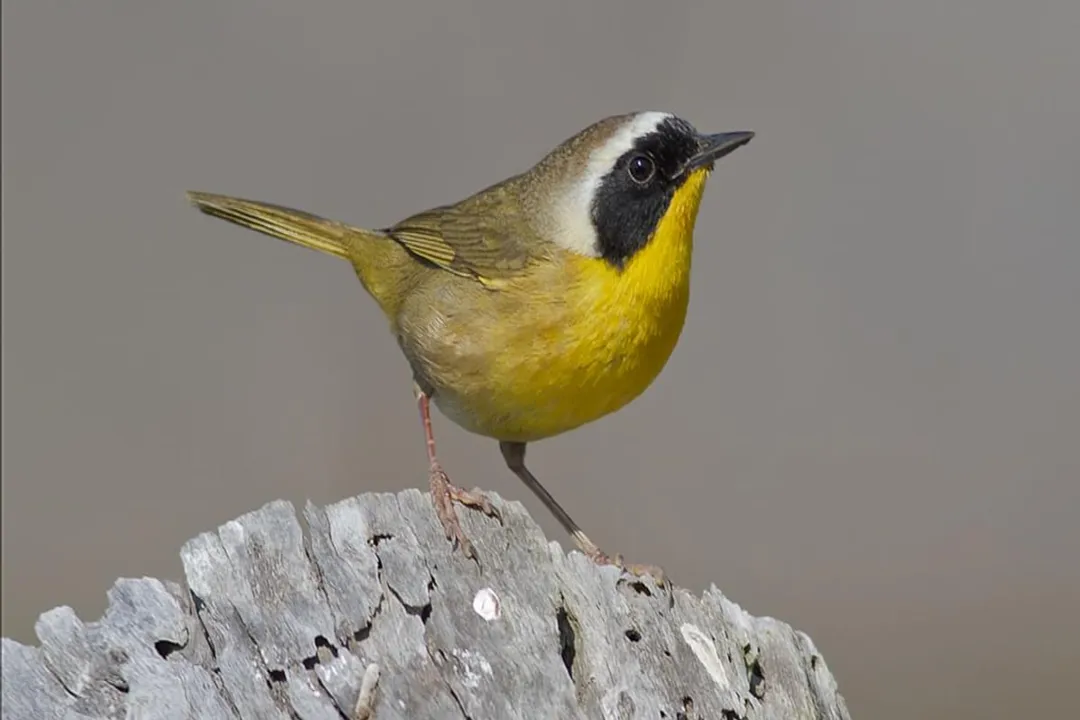
The small, energetic warbler known widely as the Common Yellowthroat presents a study in adaptive success across diverse North American environments. Distinguishing this species is often easier than seeing it, thanks to its loud, unmistakable vocalizations and the male’s striking facial marking. While the term "evolution" suggests deep time and branching lineages, observing the Yellowthroat’s current specialized habits—its preference for dense, wet thickets and its contrasting sexual plumage—offers tangible evidence of pressures shaping its form and behavior over recent time scales. [1][2] It belongs to the genus Geothlypis, a group of New World warblers known for often favoring marshy or scrubby habitats, setting them apart from many of their canopy-dwelling relatives. [2]
# Masked Appearance
The male Common Yellowthroat is instantly recognizable. He sports a bold, black "mask" covering his face, which contrasts sharply with the bright yellow throat and chest plumage. [5][6][8] This prominent feature gives the bird its name and serves as a clear visual signal within the dense vegetation where it spends much of its time. [2] The rest of the male’s upperparts are generally olive-green or grayish-olive, while the belly is whitish. [6][9]
The female, by contrast, lacks the dramatic black mask entirely. [2][6] She is far more subdued, exhibiting drabber olive-green to brownish tones above and a paler throat and breast, though a faint yellowish wash might still be present on the throat or flanks, hinting at her lineage. [4][6] This pronounced sexual dimorphism—where males are brightly marked for display and females are cryptically colored for camouflage—is a classic evolutionary outcome driven by sexual selection in many bird species, balancing the need for attraction with the necessity of safety during nesting. [7]
# Signature Song
If you cannot spot the male, you are almost certain to hear him. The Yellowthroat’s song is one of the most frequently noted aspects of the species, often described as a rapid, emphatic “witchity-witchity-witchity” or “whiskey-whiskey-whiskey”. [1][4][10] This repetitive, energetic call is crucial for territorial defense and mate attraction during the breeding season. [1] Males often sing from slightly elevated perches within their thicket territories, though they frequently drop back into cover immediately after delivering a phrase. [4][10] Listening for this specific cadence can be a reliable method for confirming the bird's presence, even when the vegetation is too thick for visual confirmation. [4]

# Habitat Niche
The Yellowthroat is strongly associated with wet, dense, low-lying vegetation, making it a specialist in a particular ecological niche. [1][4] They thrive in marshy areas, overgrown ditches, swamps, and the brushy edges of fields or woodlands. [6][8] This preference for dense cover appears to be an adaptation that mitigates predation risk, as the thick tangles provide excellent concealment from aerial and ground predators, especially when nesting. [1] Where other warblers might ascend to the mid-canopy or higher branches of trees, the Yellowthroat typically forages and sings close to the ground, rarely moving more than a few feet up from the base of the shrubbery or reeds. [4][9] A bird that commits so thoroughly to this dense, often damp habitat suggests a long co-evolutionary relationship with these specific vegetative structures, influencing everything from nest placement to foraging technique. [3] For instance, in regions like Illinois, they are often found in cattails or tall weeds bordering water bodies, perfectly illustrating this specialization. [5]
# Geographic Spread
Common Yellowthroats are incredibly widespread breeders across North America, spanning from southern Canada down into Mexico and Central America. [2][8] Their breeding range covers nearly all of the United States, excluding the most arid western regions. [6][9] This vast distribution results in significant migratory patterns. Birds breeding in the northern reaches of their range undertake long-distance migrations south for the winter, often reaching the southern US, Mexico, Central America, and occasionally the northern parts of South America. [1][2][6]
Within this massive range, there is observable variation, leading to the recognition of several distinct subspecies, primarily differing in the extent of the male’s facial mask and the darkness of the upperparts. [2] For example, the nominate subspecies, G. t. trichas, is common across much of the eastern US, while coastal or island populations might show subtle variations reflecting local genetic isolation and adaptation to slightly different local climatic or vegetative pressures. [2] The sheer geographic breadth suggests a high degree of phenotypic plasticity or perhaps an evolutionary history that involved rapid colonization of newly available habitats following glacial retreat.
# Status Trends
Overall, the Common Yellowthroat is currently listed as a species of Least Concern by conservation bodies, reflecting its large population size and extensive range. [7] However, tracking population trends across such a wide area reveals a more nuanced picture. [7] While some populations remain stable or are even increasing slightly, others have experienced documented declines. [7]
One significant factor influencing local populations relates directly back to their specialized habitat needs. The drainage of wetlands, the removal of dense riparian thickets for development, or intensive agricultural management that cleans up field edges can eliminate the precise structure required for successful breeding. [7] When you consider the trade-off between the male’s need for a visible perch to sing from and the entire family’s need for dense concealment near the ground, any large-scale habitat simplification becomes an immediate threat. A practical tip for birding enthusiasts hoping to support local Yellowthroats is to advocate for maintaining unmowed, brushy buffers along creeks or ponds; this small patch of "untidiness" is actually a crucial, high-value resource for this species compared to manicured parkland. [5] Furthermore, while the male’s striking appearance might seem advantageous for attracting mates, it is also a potential vulnerability, making the cryptic female’s nest camouflage an arguably more critical adaptation for the long-term success of the lineage. The species' survival hinges on the continuity of dense, low cover throughout its breeding cycle. [1][3]
Related Questions
#Citations
Common Yellowthroat Life History - All About Birds
Yellowthroat - Wikipedia
Common Yellowthroat - Bird Genoscape Project
COMMON YELLOWTHROAT - The Texas Breeding Bird Atlas
Bird of the Month: Common Yellowthroat
Common Yellowthroat - Wisconsin All-Bird Conservation Plan
Common Yellowthroat - NH Audubon
Common yellowthroat - National Zoo
Common Yellowthroat - Montana Field Guide
Bird of the Week- Common Yellowthroat - St. Louis Audubon Society