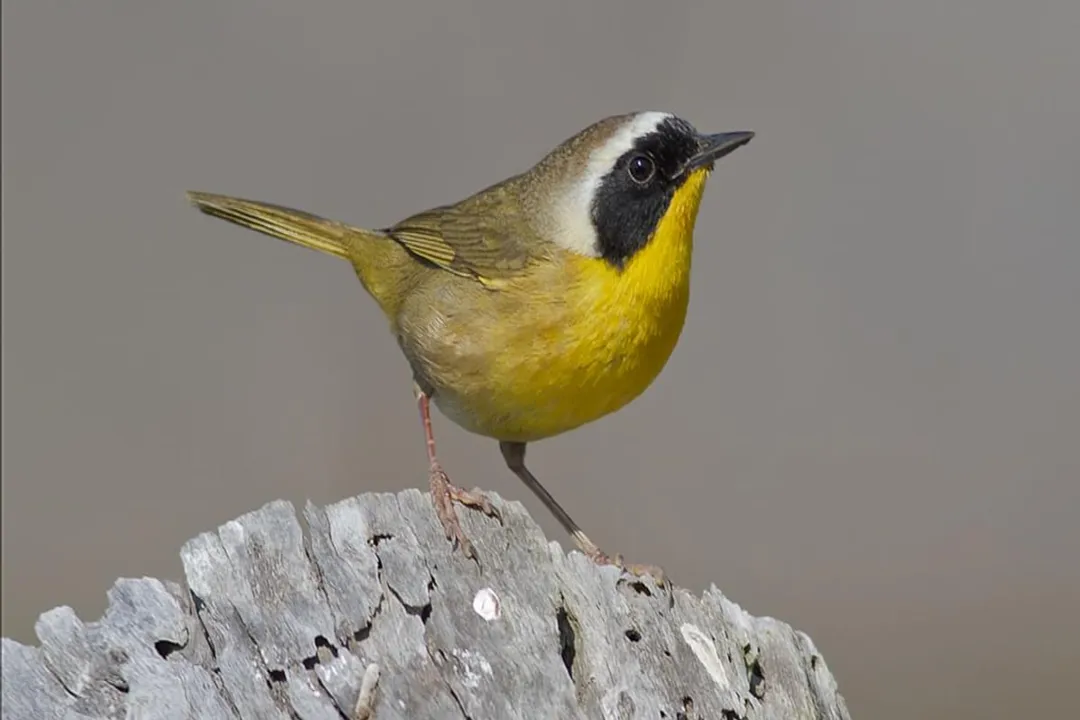
What ecological niche does the Yellowthroat strongly favor regarding vegetation structure?
Dense, wet, low-lying vegetation like marshy areas
The Common Yellowthroat is known as a habitat specialist, exhibiting a strong preference for environments characterized by thick, dense, and often damp cover near the ground. This ecological niche includes marshy areas, overgrown ditches, and the brushy peripheries of fields or woodlands. This commitment to dense cover is fundamentally an adaptation to mitigate the risk posed by both aerial and ground-based predators, offering superb concealment, particularly crucial when the birds are nesting. Unlike many other warblers that utilize higher layers of the forest, the Yellowthroat generally restricts its foraging and singing activities close to the base of the reeds or shrubbery, rarely venturing more than a few feet vertically from the ground level.