What makes identifying Naja nigricincta in the field challenging for herpetologists?
Answer
The highly varied and striking coloration/patterning
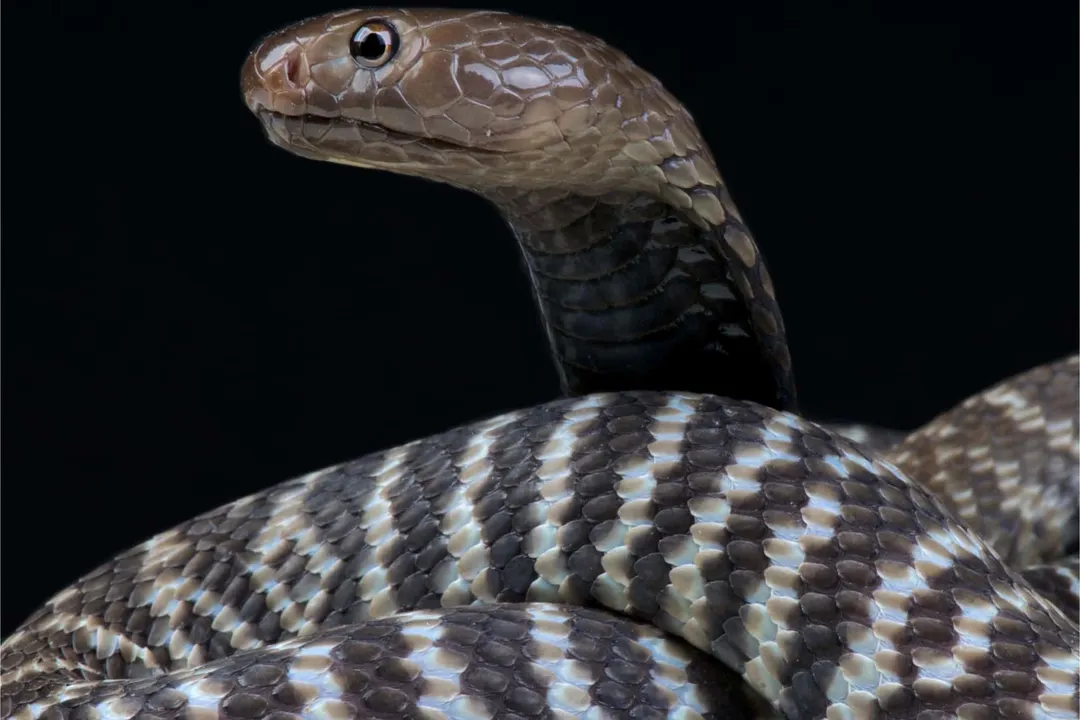
Despite its common name suggesting a simple striped pattern, the actual appearance of *Naja nigricincta* is remarkably diverse across its range. The pattern, which gives rise to the name 'Zebra Snake,' involves alternating dark and light crossbands, but the width, contrast, and specific colors of these bands vary significantly. This high degree of visual variability, compounded by instances of melanism resulting in entirely black individuals, means that field identification is genuinely complicated, often posing difficulties even for seasoned herpetologists trying to distinguish it from closely related species.
Related Questions
What tissue is the primary target of the venom expelled when Naja nigricincta spits?What causes the appearance variation resulting in the "Black Zebra Cobra" form?What is the maximum reported length for specimens of the Zebra Snake?Which Central African nation is explicitly listed as part of the Naja nigricincta distribution range?What characterizes the maternal care provided by the female Naja nigricincta after laying eggs?What primary effect does the venom delivered via a bite from the Zebra Spitting Cobra have on the victim's system?Which habitats are commonly inhabited by the adaptable Naja nigricincta?What is the first likely sign of distress exhibited by a Zebra Snake encountering a perceived threat?To which venomous snake family, housing medically significant reptiles, does Naja nigricincta belong?What makes identifying Naja nigricincta in the field challenging for herpetologists?