What are some fun facts about water snakes?
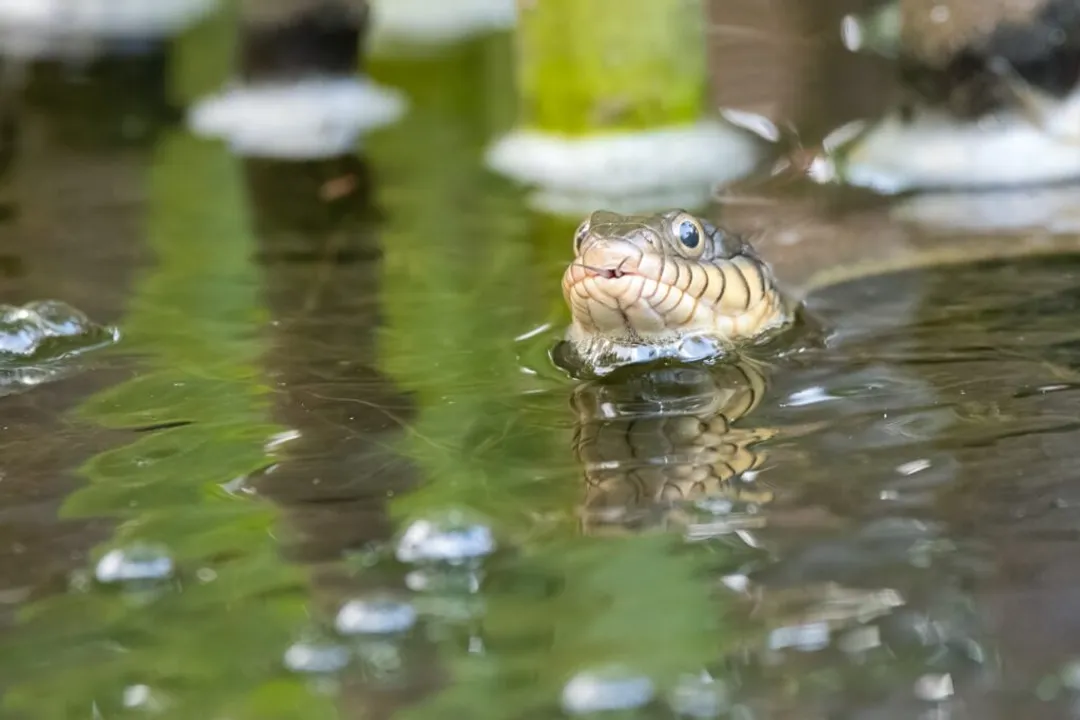
Water snakes are among the most commonly encountered reptiles near North American wetlands, yet they frequently suffer from a bad reputation based more on mistaken identity than on their actual behavior. These semiaquatic serpents, members of the massive Colubridae family, spend their lives in and around freshwater bodies like streams, ponds, rivers, and marshes across the eastern and central United States, extending into Canadian provinces like Ontario. While many people see their thick bodies and proximity to water and immediately jump to conclusions, learning a few key facts reveals creatures far more fascinating than their defensive antics suggest.
# Naming Origins
Even the scientific classification offers a hint about their nature. The genus name, Nerodia, derives from Greek words meaning “flowing” or “liquid,” perfectly describing their aquatic lifestyle. The species name for the widely known Northern Water Snake, sipedon, comes from a Greek word meaning “a serpent whose bite causes mortification”. This etymology might seem alarming, but it speaks more to the severity of their defensive bite—which, importantly, is not venomous—than any actual lasting danger they pose to humans. It is crucial to remember they are not sea snakes, which belong to a different family and are venomous; water snakes cannot survive long-term in the ocean.
# Appearance Contrasts
Water snakes generally possess thick, streamlined bodies covered in protective, keeled, overlapping scales. Their appearance changes noticeably as they age and depending on whether they are wet or dry. Juveniles often display vivid markings, such as reddish-brown saddles or bands against a lighter tan, brown, or gray background. As they mature, the dark bands that run down their neck and back often merge, causing adults to appear almost uniformly brown or black, especially when dry. This darkening effect means that an observer might see a starkly different-looking snake depending on the time of day or location. Underneath, their bellies are typically pale, frequently marked with dark, half-moon-shaped spots or crescents of red or brownish-orange. In terms of size, they are moderately large; many adults reach between 3 and 5 feet in length, though some species can exceed 6 feet. A physical trait often noted is that females tend to be larger than males.

# Habitat Needs
Water snakes are intrinsically tied to aquatic environments. They are found near the borders of almost every type of wetland, from mountain streams to salt marshes. They gravitate toward areas with relatively still water, such as ponds and vernal pools, though they can navigate fast-moving creeks as well. Their need for warmth is just as pronounced as their need for water, meaning they are frequently spotted sunning themselves—or basking—on exposed surfaces near the shoreline. These preferred basking spots include rocks, logs, fallen limbs, bridge abutments, docks, and even beaver lodges. When they are not actively foraging or basking, they seek cover beneath flat rocks, logs, or root systems along the riparian zone. This reliance on both sun and water makes spotting them predictable if you know where to look along waterways during warmer months.
# Aquatic Movement
As their name implies, water snakes are accomplished swimmers, capable of maneuvering both above and below the water's surface. When hunting or escaping, they utilize their sleek bodies to move through the water efficiently. A common misconception involves relating swimming style to venom status, suggesting that snakes swimming with their entire body afloat are venomous, while those that swim submerged or with only their head above water are harmless. While this can be a trend in the eastern U.S.—venomous vipers are wider and float more easily, while colubrids are sleeker—it is not a reliable rule for identification and should never be depended upon for safety. Water snakes are certainly capable of diving and remaining submerged for extended periods; they can stay down for a few minutes initially, but if seriously threatened, they might remain hidden underwater for as long as an hour and a half.
# Defensive Display
If a water snake feels harassed, cornered, or attacked, it will engage in a thorough and unpleasant defensive routine. Their initial reaction when approached might be to dive, but if the perceived threat persists, they become aggressive. They defend themselves vigorously by flattening their jaws and bodies, then striking and biting repeatedly. What makes these bites particularly memorable is that the snake’s saliva contains an anticoagulant, causing the wound to bleed profusely. Beyond physical defense, they deploy chemical deterrents: they will emit a strong, foul-smelling musk and often defecate copiously. Furthermore, if they have recently eaten and are severely agitated, they may even regurgitate their last meal. This intense sequence of reactions suggests an evolutionary pressure that favors overwhelming deterrence over simple flight once physical contact is made.
It is worth noting that while native water snakes are beneficial, invasive populations, such as those found in places like California, pose a genuine threat to native reptile species they compete with or prey upon.
# Reproductive Cycle
Water snakes exhibit a reproductive strategy known as ovoviviparity. This means the eggs develop and mature inside the female’s body, and she gives birth to live, miniature versions of herself rather than laying shelled eggs. Mating typically occurs in the spring, generally between April and June, often near their overwintering sites. After a gestation period lasting three to five months, the young emerge between late July and early October. The mother provides protection only until birth; once the young break free of the thin membrane surrounding them, parental care ceases immediately, and the babies must fend for themselves. Litter sizes are variable, ranging from small clutches of four to very large broods nearing one hundred offspring. Because the juveniles are newly independent and still small, this stage represents the most vulnerable time in their life cycle, with high mortality rates often attributed to predation by larger fish like bass.

# Ecology Role
Despite the unwarranted fear they often inspire, water snakes are vital components of healthy aquatic ecosystems. They function as important predators, helping to control the populations of their prey, which primarily consists of fish and amphibians. An especially beneficial aspect of their diet is their tendency to target sick, weak, or slow-moving fish. By consuming these individuals, water snakes effectively help reduce the spread of disease within fish populations and manage situations where overpopulation could lead to stunted growth among game fish. This natural "cleanup crew" behavior actually supports the overall health of the local fishery. Their diet is broad, however, also including crayfish, leeches, insects, small birds, and small mammals like mice. When observing them near the water, you might notice them herding fish or tadpoles toward the shallows for easier capture.
# Identification Tips
The necessity of distinguishing a harmless water snake from a venomous viper, such as a cottonmouth or copperhead, is paramount for safety. Water snakes, being Colubrids, lack the telltale signs of the Viper family:
- Head Shape: Vipers possess distinctly blocky or triangular heads that contrast sharply with a thinner neck. Water snakes have rounder, sleeker heads that blend more smoothly into their bodies.
- Pits: Venomous pit vipers have visible heat-sensing pits located between their eyes and nostrils; water snakes do not have these pits.
- Pupils: Slit-shaped pupils characterize the eyes of copperheads and cottonmouths, whereas water snakes have rounder, more oval pupils.
- Patterning: While both can have bands, vipers often exhibit distinct hourglass or bulb shapes, whereas water snakes have more irregular blotches or straighter bands.
It is helpful to remember that in regions like Massachusetts, cottonmouths are absent, meaning any native water snake encountered there is Nerodia sipedon, which, while defensive, is nonvenomous. If you encounter one of these interesting reptiles while out near a creek or pond, the best course of action is admiration from a respectful distance; do not attempt to handle them, and simply let them continue their valuable work in balance with their environment.
Related Questions
#Citations
water snake - Britannica Kids
Water Snakes: Everything You Need To Know - NAUI Worldwide
Northern Water Snake | National Wildlife Federation
Northern Water Snake - BioKIDS - University of Michigan
Learn about northern watersnakes | Mass.gov
Watersnakes | Good Natured - Hickory Knolls Discovery Center
Northern Water Snake | Chester County, PA - Official Website