What are the facts about sand snakes?
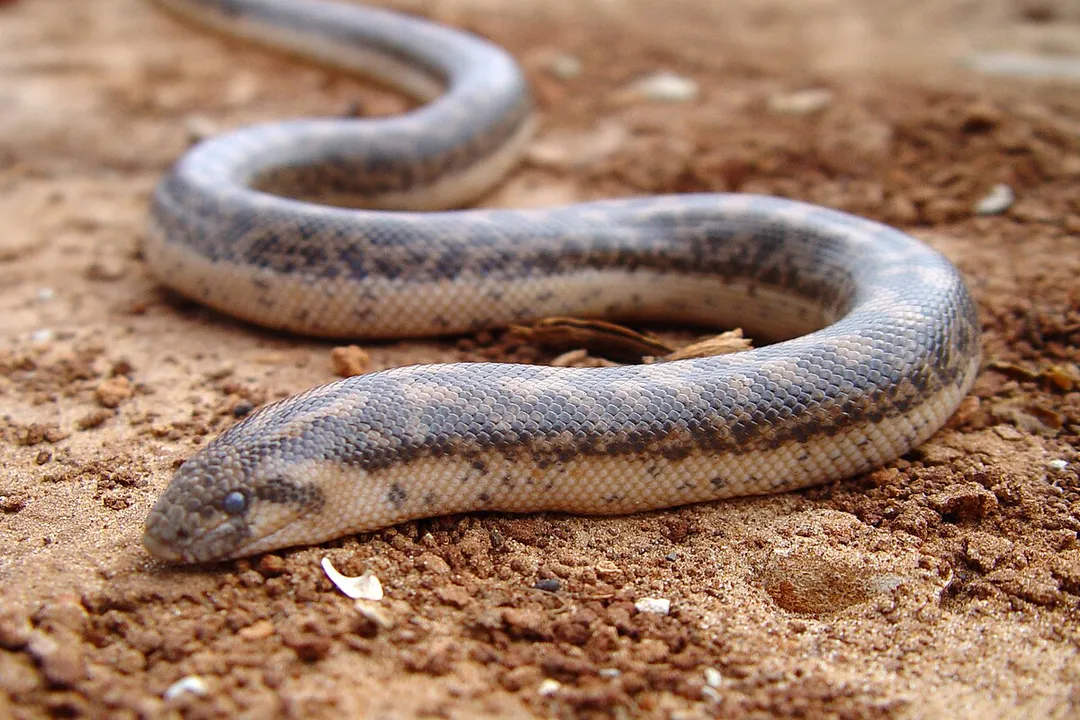
The term "sand snake" often brings to mind images of reptiles swiftly gliding across desert dunes, yet the reality for many species commonly referred to by this name is far more focused on digging and concealment than surface travel. These snakes belong to the subfamily Erycinae, a grouping of non-venomous constrictors known for their specialized, terrestrial, and often secretive lifestyles. [8] While the name suggests one singular type of snake, much of the accessible information concentrates on a particularly popular example: the Kenyan Sand Boa (Eryx colubrinus). [1][7][9] Understanding these snakes requires looking past the desert stereotype to appreciate their adaptations for life beneath the surface.
# Digging Adaptation
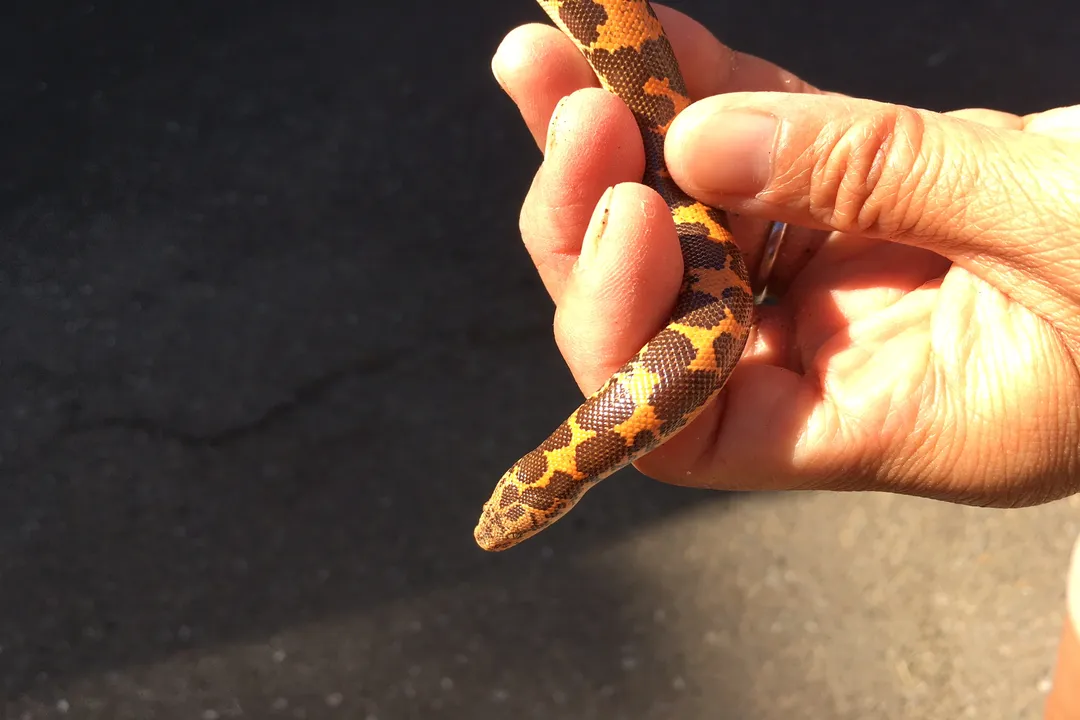
The defining characteristic shared by many sand boas is their adaptation to a fossorial existence—a life spent mostly underground or hidden within substrate like sand or loose soil. [8] They are not fast-moving desert runners; instead, they are built for burrowing. Their bodies are typically short, thick, and somewhat conical, which aids in moving through substrate rather than over it. [4] This contrasts sharply with many other snake families where length equals speed. An interesting observation when looking at these thick-bodied snakes is how deceiving their build can be; they often appear heavier or more densely muscled for their length compared to an equally long but slender colubrid, suggesting their musculature is optimized for pushing soil rather than aerial pursuit. [4]
Unlike snakes that rely on broad belly scales for friction against hard ground, sand boas possess adaptations that help them wedge into and move through loose material. [8] This inherent preference for being hidden means that even in captivity, they spend significant amounts of time partially or completely submerged in their substrate. [1][9] This isn't a sign of sickness or fear, but a deeply ingrained behavior; for a sand boa, being out in the open is the exception, not the rule. [9] If you are observing a sand boa, sometimes the only indication of its presence is the slight shifting of the sand or substrate above where it rests, waiting patiently. [1]
# Physical Traits
When considering the Kenyan Sand Boa specifically, their appearance is quite distinct. They are relatively small snakes. [4][7] Females generally reach lengths of around 2 feet, though some can occasionally grow a bit larger, sometimes reported up to 3 feet, while males are typically smaller. [4][7][9] Their heads are relatively small and wedge-shaped, an important feature that helps them push soil aside as they burrow. [4]
Coloration in sand boas is variable, which often plays into their ability to camouflage within their native environment. [4] The Kenyan Sand Boa, for instance, displays a range of patterns, frequently featuring shades of brown, tan, or orange, often marked with darker blotches or saddles. [1][7] This variation is so pronounced that keepers often focus on the specific patterns, sometimes referring to them by specific names that describe the markings, such as "stripes" or "anerythristic" (lacking red pigment) morphs. [3][4] It is important to note that while these color variations are striking to human eyes, they all serve the fundamental purpose of blending into their natural, often arid or semi-arid, habitats. [4]
A unique feature noted in some descriptions of sand boas is the presence of vestigial hind limbs, appearing as small claws or spurs located on either side of the cloaca. [4][8] These external remnants are a fascinating evolutionary throwback, remnants of their reptilian ancestors, though they are generally too small to serve a functional purpose in modern life, perhaps being used minimally during mating rituals. [4]
# Reproduction Cycles
One significant biological fact that sets many sand boas apart from numerous other snake species is their method of reproduction. Sand boas, including the Kenyan variety, are generally considered ovoviviparous. [4][9] This means that instead of laying eggs that need to incubate externally, the young develop inside the mother, nourished by their yolk sacs, and are then born live. [4][9]
For the Kenyan Sand Boa, this typically results in small litters, often containing between 2 and 14 neonates. [4] Gestation periods can vary, but the result is the emergence of fully formed, miniature versions of the adults, ready to begin their secretive lives immediately. [4][9] This strategy is highly beneficial in environments where finding a safe, consistently warm, and moist place to lay and incubate eggs might be difficult or dangerous, as the mother provides a stable internal environment until the young are ready to fend for themselves. [4]
# Habitat and Range
The species name Eryx colubrinus points directly to the snake's origin: Kenya in East Africa. [1][7] Their natural range is localized, primarily centered in Kenya, though they might also be found in adjacent areas. [1][9] The environment they thrive in aligns with their fossorial nature—areas with relatively loose soil, sand, or areas providing easy cover. [1][4]
While the Kenyan Sand Boa is geographically specific, the broader Sand Boa subfamily (Erycinae) is distributed across wider areas, including parts of North Africa, the Middle East, and South Asia. [8] This global distribution under one subfamily umbrella highlights the success of the burrowing body plan across various arid and semi-arid regions worldwide. [8] It is important for any keeper or enthusiast to understand the difference between the general subfamily and the specific species, as habitat requirements, while similar, can have nuanced differences. [4][8]
# Feeding Habits
As constrictors, sand boas subdue their prey through constriction before swallowing it whole. [1][4] In their natural environment, their diet consists primarily of small mammals, such as rodents, and occasionally small lizards. [1][4] Because they are ambush predators, their hunting style is characterized by patience and sudden bursts of activity. They often lie partially buried, waiting for an unsuspecting meal to pass close enough for a lightning-fast strike. [1][9]
This ambush strategy has implications for care. In captivity, their diet is typically composed of appropriately sized, pre-killed or fuzzy mice. [1][4] A common point of discussion among those who keep them relates to feeding frequency. Given their generally slow metabolism and tendency to conserve energy while waiting for prey, they do not need to eat as frequently as more active, daily-hunting species. Feeding once every 7 to 14 days is often sufficient for an adult, though younger, growing snakes may require more regular meals. [4]
# Temperament and Interaction
One of the reasons the Kenyan Sand Boa has become a favored snake among hobbyists is its typically docile nature. [1][7] They are not generally aggressive and, when handled properly, tend to tolerate human interaction well. [7] This mild temperament, combined with their manageable size and relatively straightforward care needs, makes them a good entry point into snake keeping, provided the owner respects their natural needs. [1][4]
However, their secretive, burrowing instinct remains paramount. This means that while they are docile, they are not typically snakes that enjoy constant handling or being kept out of their substrate for long periods. [9] When an owner attempts to handle a sand boa that is not ready, or one that is simply trying to retreat to safety, they might confuse a normal reaction to being disturbed with aggression. A healthy sand boa's primary defense when startled on the surface is to immediately try and burrow away—a behavior that can sometimes be mistaken for striking if the handler is too slow to react to the sudden movement. [9] A helpful tip for interaction is to allow the snake to wake up naturally and offer it a choice to leave its enclosure by presenting your hand calmly, rather than grabbing it from beneath the surface where it feels most secure. [9]
# Subfamily Diversity and Variables
While the Eryx genus, exemplified by the Kenyan species, dominates the discussion, the Erycinae subfamily encompasses several genera, illustrating the success of this body plan across different continents. [8] The snakes in this group are united by their heavy bodies, small heads, and burrowing habits. [8]
Within the captive trade, discussion around sand boas frequently touches upon morphs and genetic variables. [3] Since their natural coloration varies, breeders have selectively bred for specific traits, leading to a variety of visual presentations beyond the standard wild type. [3] These variables, which relate to pigment distribution—such as the absence or presence of dark markings—are a significant aspect of the pet trade for this species. [3] For instance, one might find discussions centering on how different environmental factors or genetic backgrounds influence shedding schedules or feeding responses, which can be a point of comparison across different captive lines. [3] When working with any snake, understanding these variables is key, as a snake's ancestry can sometimes influence its overall health profile or disposition, even if the basic species requirements remain the same. [3]
The adaptations seen in sand boas—the short, thick body, the head shape, and the live birth strategy—represent a very successful evolutionary solution for surviving in environments where resources are patchy and cover is essential. [4][8] They demonstrate that being a "snake" doesn't require being long and fast; it can also mean being stout and unseen, patiently waiting for the world to come to you. [1]
#Videos
What are Some Snake Facts? - Sand Boa Snakes - YouTube
Related Questions
#Citations
Kenyan Sand Boa | Oakland Zoo
What are Some Snake Facts? - Sand Boa Snakes - YouTube
Variable Sand Snake - Snake Snap
[PDF] Kenyan Sand Boa fact sheet - the Racine Zoo
Facts about the Common Sand boa - Facebook
sand boa - Students | Britannica Kids | Homework Help
Kenyan Sand Boa | Sacramento Zoo
Erycinae - Wikipedia
Kenyan Sand Boa - Saginaw Children's Zoo