What is the first likely sign of distress exhibited by a Zebra Snake encountering a perceived threat?
Answer
Flaring of the hood, potentially with hissing
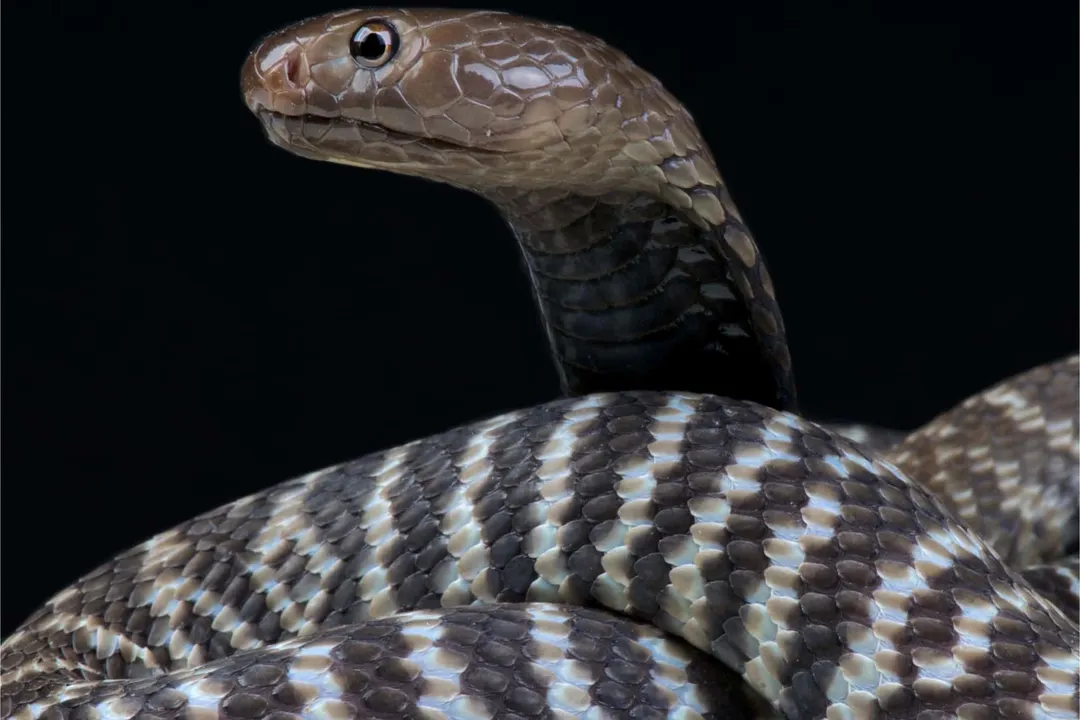
When a Zebra Snake perceives a threat and begins to feel distressed, its initial defensive response is usually a conspicuous visual and auditory warning signal. This involves the immediate flaring and flattening of its neck into the characteristic cobra hood, which serves to make the snake appear significantly larger and more intimidating. This posture is often accompanied by audible hissing sounds. Only if this initial warning—the hooding and hissing—is ignored or the threat persists or escalates, will the snake typically proceed to its next defense: the specialized act of spitting venom.
Related Questions
What tissue is the primary target of the venom expelled when Naja nigricincta spits?What causes the appearance variation resulting in the "Black Zebra Cobra" form?What is the maximum reported length for specimens of the Zebra Snake?Which Central African nation is explicitly listed as part of the Naja nigricincta distribution range?What characterizes the maternal care provided by the female Naja nigricincta after laying eggs?What primary effect does the venom delivered via a bite from the Zebra Spitting Cobra have on the victim's system?Which habitats are commonly inhabited by the adaptable Naja nigricincta?What is the first likely sign of distress exhibited by a Zebra Snake encountering a perceived threat?To which venomous snake family, housing medically significant reptiles, does Naja nigricincta belong?What makes identifying Naja nigricincta in the field challenging for herpetologists?