What are some interesting facts about the northern water snake?
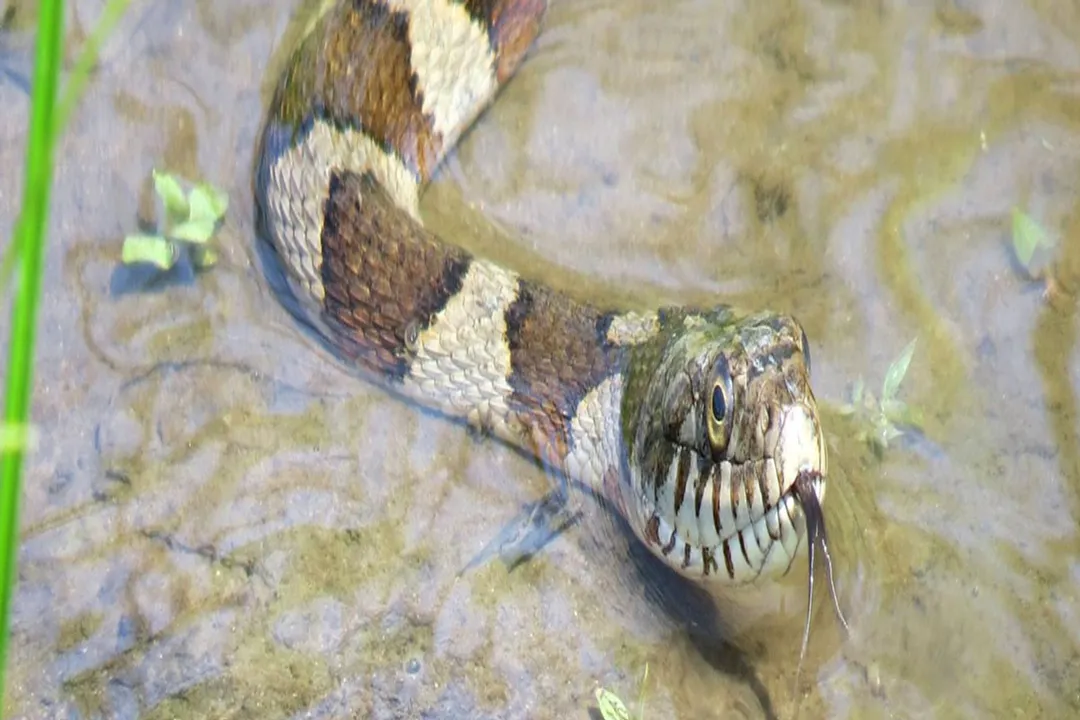
The northern water snake, scientifically known as Nerodia sipedon, is one of the most frequently encountered reptiles near water bodies throughout much of North America. [3] Despite their commonality, they often generate unnecessary concern because of their intimidating defensive behaviors and unfortunate resemblance to venomous species, such as the Cottonmouth (Water Moccasin). [2][4][7] One of the most fundamental facts to establish right away is that these snakes are entirely non-venomous. [1][2][5][7] They pose no threat to humans beyond the possibility of a defensive bite if handled or harassed. [1][6]
# Physical Traits
Adult northern water snakes typically range in length from about two to five feet. [1][4][8] Their bodies are generally thick, and their scales are keeled, meaning each scale has a ridge running down the center, giving the skin a somewhat rough texture rather than being smooth. [3][8]
The appearance of an adult can vary significantly depending on age, location, and whether the snake is wet. Young snakes often display a clearer pattern of dark, wide crossbands or blotches against a lighter background color. [3][8] As they mature, these patterns tend to darken and become less distinct, sometimes making older adults appear almost uniformly black. [3][6] This darkening effect is particularly pronounced when the snake is wet, which can lead casual observers to mistake a harmless water snake for a darker, venomous relative, a point of confusion that is worth noting for anyone living near their habitat. [2][6]
A subtle but reliable characteristic when observing a specimen is the pattern on the belly. While not always visible, the underside is often whitish or yellowish, marked with dark, solid blotches or sometimes alternating dark bands, which can be a useful identifier for experienced observers when the dorsal pattern is obscured. [2]
# Where Found
As their name suggests, northern water snakes are strongly associated with aquatic environments. [1][6] Their preferred homes include lakes, ponds, streams, marshes, and slow-moving rivers. [1][5] They thrive in areas where they can easily access both water for hunting and land surfaces for basking and regulating their body temperature. [4] Their geographic distribution covers a large portion of the eastern and midwestern United States, extending up into parts of Canada. [3][7]
If you are near a body of fresh water in the regions where they are native, spotting a northern water snake warming itself on a rock, log, or low-hanging branch over the water is a common sight. [4] Their presence is generally a sign of a relatively healthy aquatic ecosystem, as they rely on abundant prey populations. [5]

# What Eaten
The diet of the northern water snake is exclusively carnivorous and aquatic-focused. [7] Their primary food sources are fish, which they actively hunt in the water. [1][5][8] Beyond fish, they readily consume amphibians, particularly frogs and salamanders. [1][5][8] Some sources also note that they will take advantage of other available aquatic fare, such as crayfish and even leeches, indicating an opportunistic feeding strategy within their watery domain. [7][8]
# Temperament
While not venomous, northern water snakes are well-equipped with an arsenal of defense mechanisms they deploy when threatened or captured. [1] Their initial reaction, when feeling cornered or directly handled, is rarely to flee immediately. Instead, they tend to flatten their heads, making them look broader and more triangular, which unfortunately mimics the head shape of pit vipers. [2][6]
If this display does not deter the perceived threat, they will often hiss loudly. [1] Should the observer persist, the snake may vibrate its tail rapidly. [6] This "tail rattling" is not the true, species-specific rattle of a rattlesnake, but rather an imitation created by vibrating the tail against dry leaves or vegetation, producing a buzzing sound that can startle predators or humans. [6]
The final line of defense, if all else fails, is the bite. [5] Because they do not possess fangs for injecting venom, any bite will be purely mechanical—a strong grip—but it can result in several painful punctures and potential skin lacerations. [1] Furthermore, they have a reputation for releasing a foul-smelling, brownish liquid from their cloaca, known as musking, as a chemical deterrent. [2][5] This unpleasant odor often accompanies their more visual and auditory warnings. [1] Considering how often these snakes are found near human activity, their willingness to stand their ground and employ such a theatrical defense suggests they have evolved a behavior pattern that maximizes perceived danger, perhaps outweighing the energy cost of attempting an immediate escape in every scenario. [7]

# Birth Process
Unlike many other snake species that lay eggs, the northern water snake gives birth to live young. [2] This reproductive strategy is described as ovoviviparous, meaning the embryos develop inside the mother, nourished by the egg yolk, until they hatch internally or shortly after being laid. [2] Females typically give birth to litters ranging from about 8 to over 40 young snakes in late summer or early fall. [2] The high number of offspring might be an adaptation to the risks they face, ensuring that some survive to maturity despite predation pressures on the newborns. [1]
# Misidentification Risks
The constant confusion between Nerodia sipedon and venomous snakes like the Eastern Cottonmouth or the Copperhead is a significant factor in the unnecessary harm inflicted upon water snakes. [2][7] While the cottonmouth has strongly contrasting bands when young and often appears dark as an adult, the key visual differences—such as the lack of keeled scales on the cottonmouth, the pit organ between the eye and nostril, and the distinct facial markings—are often missed in the field. [2] Because water snakes are so common and often encountered in mixed habitats, understanding that an aquatic snake exhibiting an aggressive bluff (flattened head, hissing, tail vibration) is almost certainly a harmless water snake is crucial for responsible wildlife observation. [4][7]
#Videos
The Northern Water Snake: Everything You Need To Know! - YouTube
Related Questions
#Citations
Northern Water Snake | National Wildlife Federation
Learn about northern watersnakes | Mass.gov
Northern Water Snake - BioKIDS - University of Michigan
Northern Water Snake Characteristics and Behavior - Facebook
Northern Water Snake | Chester County, PA - Official Website
Northern Water Snake | Minnesota DNR
Creature Feature: Northern Water Snake - Raritan Headwaters
Northern Watersnake | State of Tennessee, Wildlife Resources Agency
The Northern Water Snake: Everything You Need To Know! - YouTube