What major evolutionary trade-off results from the great reduction of ventral scales on *H. platurus*?
Answer
Terrestrial locomotion is sacrificed entirely
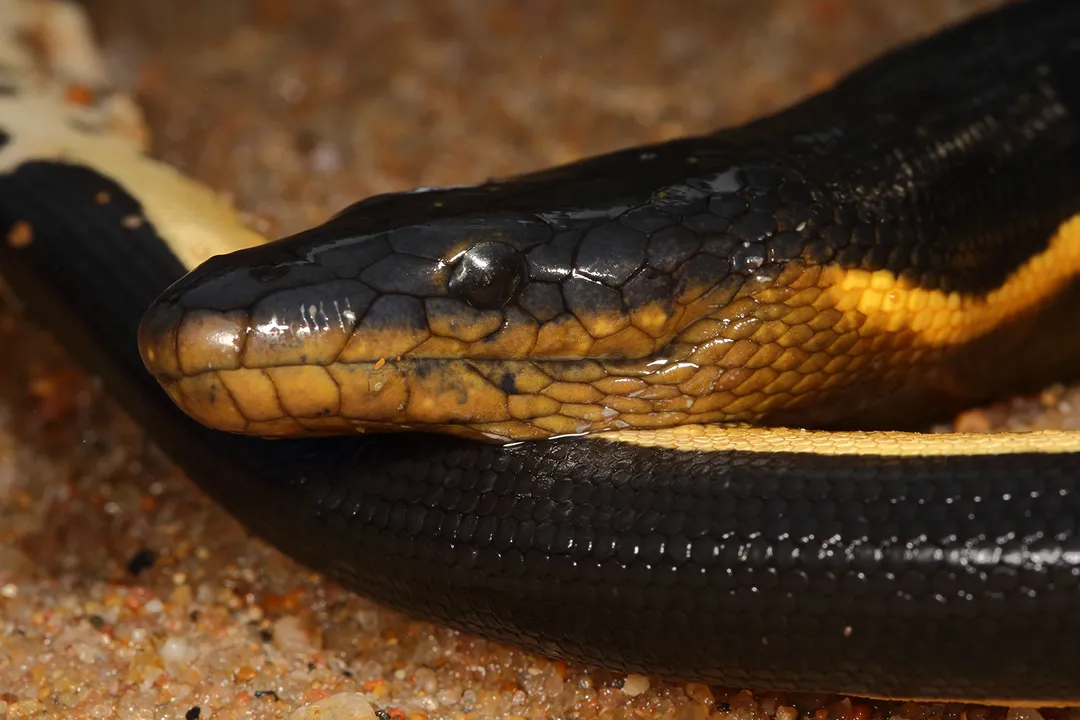
The large ventral scales found on terrestrial snakes are essential for gripping the ground and enabling effective crawling locomotion. In the yellow-bellied sea snake, these scales are significantly reduced. This reduction serves an evolutionary advantage in the water by minimizing hydrodynamic drag, thereby increasing swimming efficiency. However, this modification comes at a severe cost: the snake loses the ability to move effectively on land. Should the snake be stranded ashore by currents, this structural deficit renders it essentially helpless, reinforcing its commitment to an exclusively aquatic existence.
Related Questions
What is the current scientific genus for the yellow-bellied sea snake besides the historical *Pelamis*?What structural modification of the tail serves as the primary propeller for the yellow-bellied sea snake?Where are the specialized glands located that allow the yellow-bellied sea snake to actively excrete excess salt?What camouflage pattern is exhibited by the yellow-bellied sea snake's coloration, featuring a dark top and bright bottom?What major evolutionary trade-off results from the great reduction of ventral scales on *H. platurus*?What geological event is identified as the barrier preventing the spread of *P. platurus* populations into the Atlantic Ocean?What key characteristic distinguishes the reproductive cycle of the yellow-bellied sea snake from many coastal sea snakes?To what purpose is the highly potent, neurotoxic venom of *Pelamis platurus* primarily evolved?How does the lifestyle of the yellow-bellied sea snake contrast with sea kraits (*Laticauda* species) regarding their interaction with land?What term specifically defines the yellow-bellied sea snake's existence living permanently away from coastlines in the open ocean?