Yellow-Bellied Sea Snake Diet
The yellow-bellied sea snake, Hydrophis platurus (historically Pelamis platurus), occupies a niche in the marine world few other reptiles can claim, living almost entirely in the open ocean. This pelagic existence, far from coasts and the seafloor, dictates a highly specialized relationship with its food source. Fundamentally, this snake is a dedicated carnivore and, more specifically, a piscivore. Its diet is overwhelmingly dominated by fish.
# Exclusive Menu
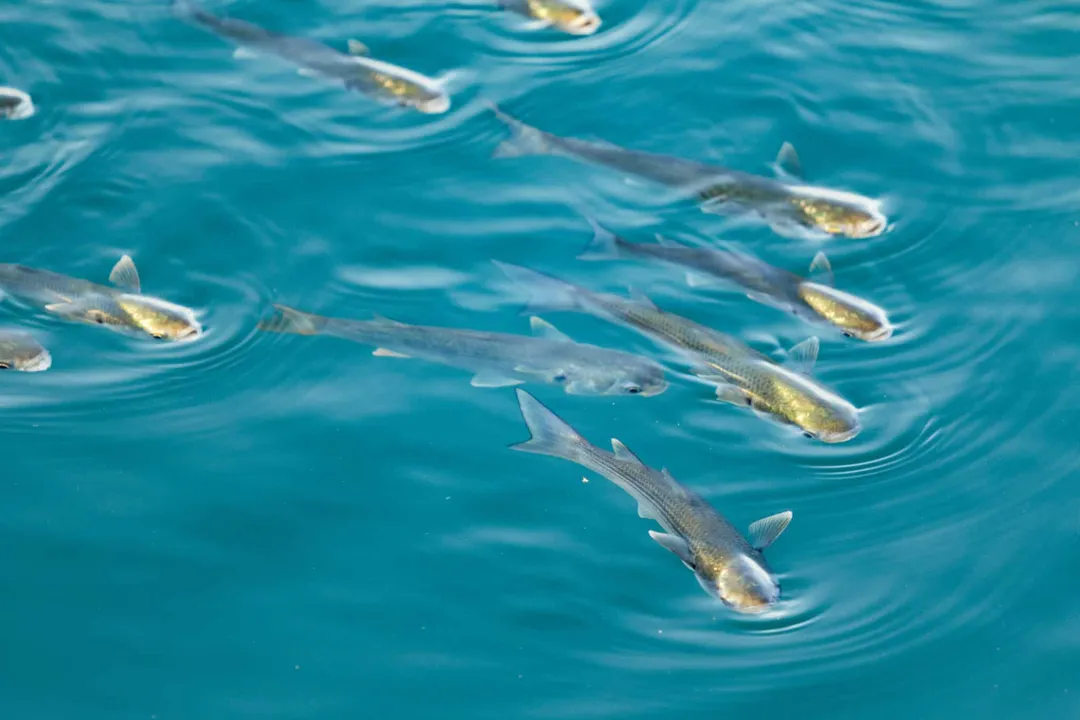
The commitment of the yellow-bellied sea snake to a fish-only diet in the wild is strict. This creature does not spend its life investigating crevices or hunting slow-moving invertebrates; instead, its entire predatory strategy is geared toward readily available, small, mobile aquatic life. The most frequently cited components of this diet include small schooling fish such as mullet, jacks, anchovies, and damselfish. Juvenile mahimahi are also noted as part of the typical intake. While eels are sometimes mentioned in the context of sea snake prey, it is important to note that this snake relies on different tactics than those used for securing difficult prey like eels hiding in reefs. The overall prey profile suggests a strong preference for species that travel in open water formations.
This reliance on pelagic fish has a necessary physiological consequence. Living in the ocean and consuming saltwater fish means constant salt intake, which the snake manages through specialized glands located in its mouth that excrete excess salt. If the diet shifted significantly away from marine fish, the function of this adaptation would be compromised.
# Pelagic Ambush
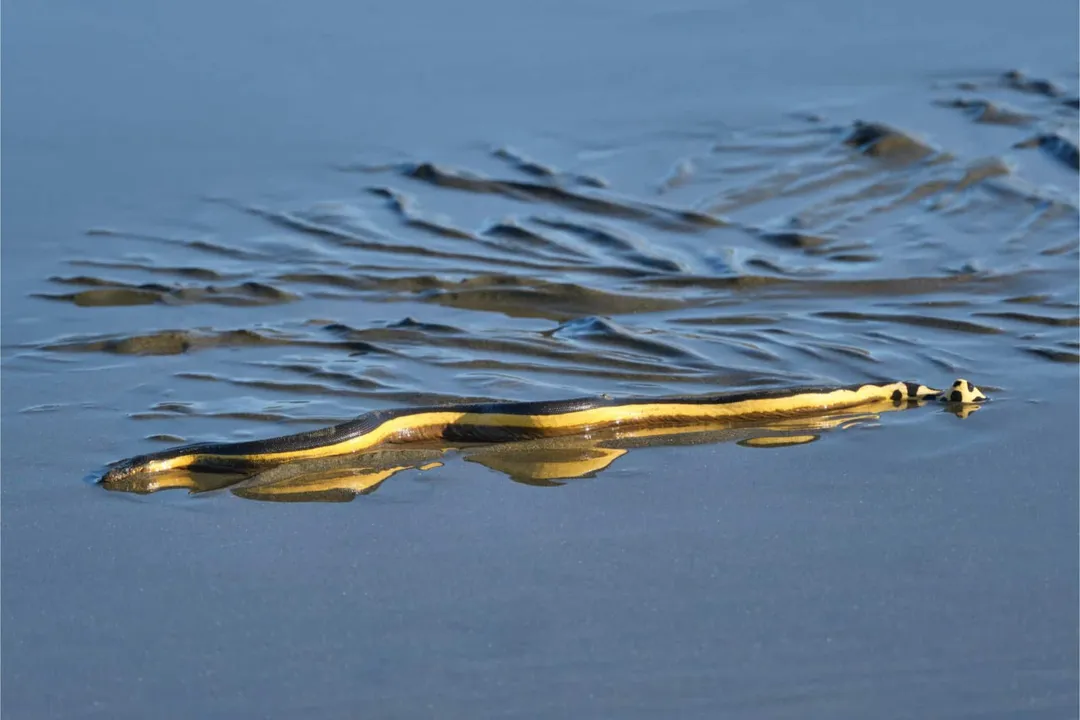
What truly distinguishes the feeding habits of H. platurus is the method employed to secure its meal, which contrasts sharply with the active pursuit seen in many other predators. The yellow-bellied sea snake employs a slow, stealthy approach or waits absolutely motionless at the water’s surface. This "float-and-wait" strategy is directly linked to its physical adaptations and habitat.
Drifting on the surface, often associated with oceanic debris lines or "slicks" where currents converge, the snake essentially becomes a piece of floating flotsam. Small fish are naturally attracted to such floating objects, perhaps perceiving them as shelter or a resting spot. By remaining still, the snake conserves precious energy while effectively creating a localized feeding opportunity. The young, born capable of feeding immediately, benefit from this strategy by simply joining the aggregation and waiting for prey, although they possess fat reserves inherited from the mother to sustain them initially.
The actual capture is a lightning-fast execution of specialized movements. Once prey is within range, the snake strikes with a rapid sideways swipe of its open mouth. Furthermore, this species exhibits the somewhat unusual ability to swim backward to maneuver fish into position behind its head before striking.
# Venom Deployment
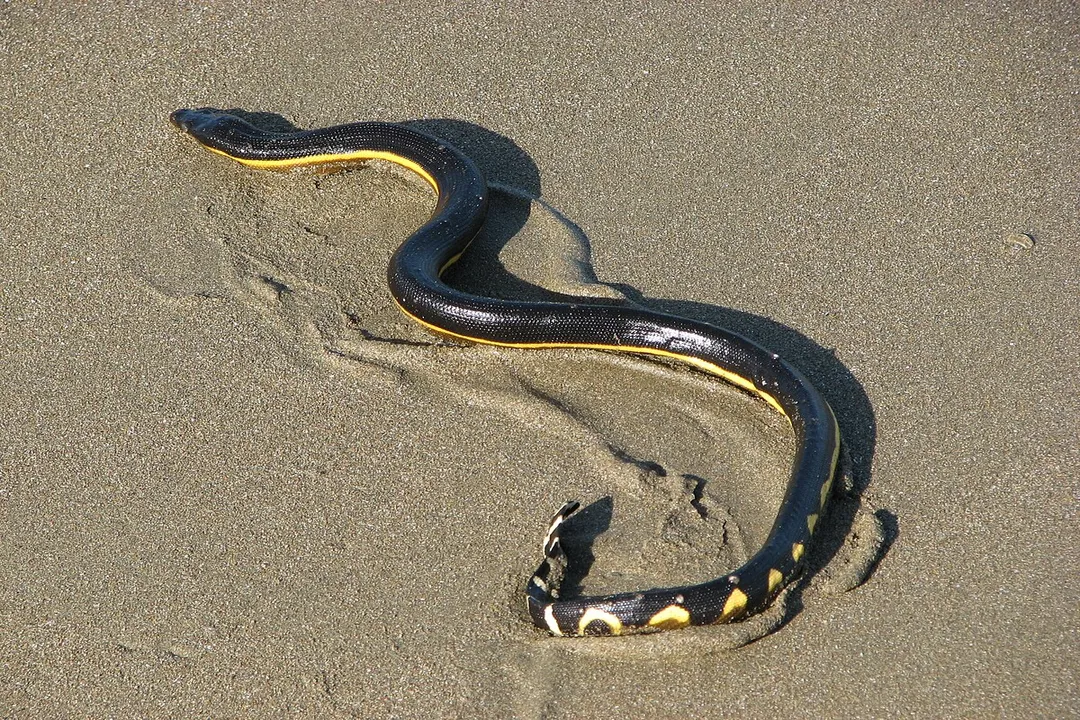
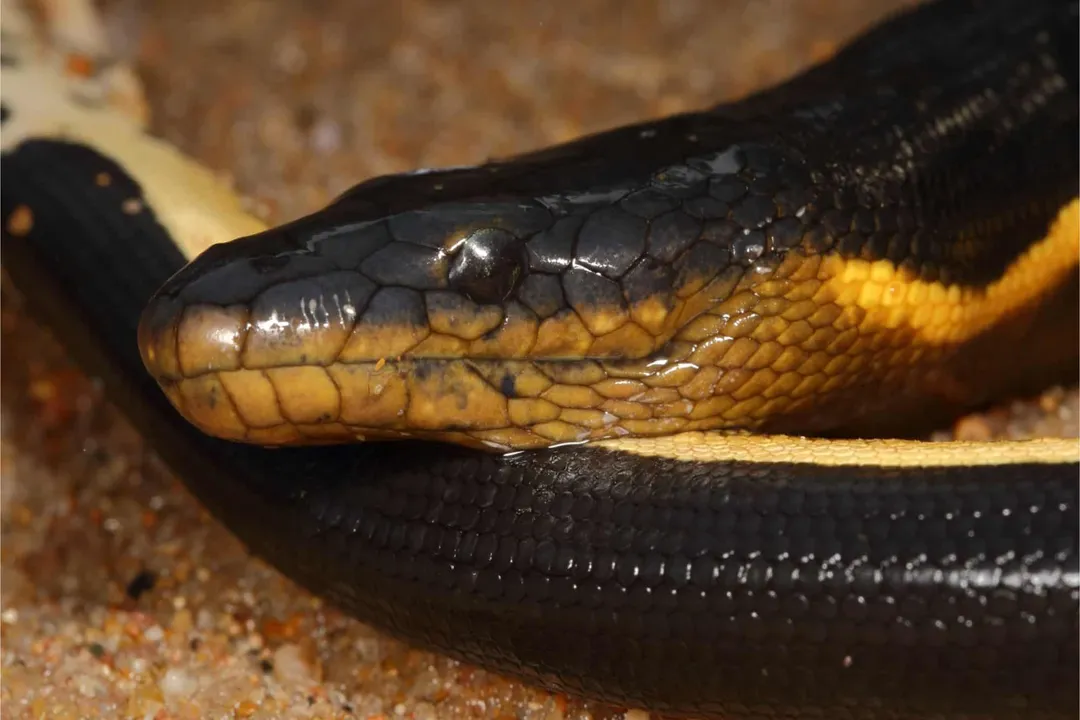
The effectiveness of this ambush hinges on the immediate immobilization of the fish. The yellow-bellied sea snake possesses highly potent venom, a complex cocktail of neurotoxins and isotoxins. This venom is injected via short, fixed fangs. The potent nature of the toxin is essential to ensure that the paralyzed fish does not dart away before the snake can secure it and swallow it whole.
It is a compelling observation that sea snakes often exercise control over their venom injection, especially in defensive situations where "dry bites" (bites without venom) are common. For a pelagic hunter, venom is a finite resource that requires energy to produce, making its efficient use in feeding paramount. Targeting entire schools of small fish, rather than chasing down scattered individuals, might represent a behavioral adaptation to maximize the return on venom expenditure in a way that suits its energy-conserving, ambush lifestyle.
# Captive Versus Wild Sustenance
When removed from the open ocean and placed in controlled environments, the dietary flexibility—or lack thereof—of H. platurus becomes apparent. In captivity, snakes readily accept dead or cut-up fish, suggesting that the structure of the prey (whole vs. piece) is less critical than the chemical composition. More surprisingly, they have been known to accept frogs. This acceptance is purely situational; the snake lineage has likely not encountered amphibians as prey for millions of years. This highlights that while the snake is biologically wired as a piscivore, its immediate carnivorous instinct can be satisfied by readily available protein sources when in human care, provided the prey is correctly presented (e.g., whole or in pieces).
# Foraging and Oceanic Aggregations
The association of yellow-bellied sea snakes with floating debris lines is more than just a chance occurrence; it's an integral part of their feeding ecology. These drift lines, composed of foam, scum, and other marine debris, concentrate small, surface-oriented fish looking for shade or cover. While it is still debated whether the snakes actively swim toward these slicks or are passively carried into them, the outcome is clear: the slicks become concentrated feeding grounds. In areas like the Gulf of Panama, these slicks can stretch for many kilometers, aggregating thousands of snakes. This congregation aids in feeding but also likely facilitates mating, as finding conspecifics in the vast emptiness of the open ocean would otherwise be extremely challenging. The sheer number of individuals using these current-driven pathways suggests that the availability and distribution of these floating habitats directly control where the snakes can successfully forage and reproduce across the tropical Pacific and Indian Oceans.
Considering the snake's adaptations—the compressed body providing stability like a boat's keel, and the skin aiding respiration for dives up to 90 minutes—one can appreciate how this creature is perfectly engineered for its unusual diet. It is designed to remain buoyant, breathe efficiently, and strike swiftly at the small, silvery flashes that gather beneath the floating camouflage it presents to the sunlit ocean surface. Unlike bottom-dwellers, its entire metabolic and physical existence revolves around the surface layer where its primary food source congregates. This specialization defines its life, making it highly successful in the pelagic zone but effectively helpless should it be cast ashore. It is a testament to evolutionary specialization that a snake, a terrestrial animal by origin, has tailored its very feeding behavior to the whims of ocean currents and the predictable behavior of small, schooling fish. A detailed look at their diet confirms that the yellow-bellied sea snake is not just a sea snake; it is the ocean’s most dedicated surface fisher. The efficiency of its hunting method—wait, attract, paralyze—is mirrored by the consistency of its menu, showing little tolerance for deviation from its primary piscivorous niche.
# Juvenile Onset
The immediate capability of newborn yellow-bellied sea snakes to begin hunting is a significant factor in the species’ success across its massive range. The young are born large enough (around 25 cm) and equipped with sufficient internal fat reserves to survive their first few days, but they do not linger on those reserves. Being able to start feeding on day one means that newly independent juveniles can quickly tap into the immediate food supply—the small fish schools congregating near the surface or associated with drift lines—allowing them to grow rapidly and become independent predators without a vulnerable dependency period. This rapid integration into the food web helps ensure high recruitment rates into the wild population, despite the dangers of the open ocean.
# Diet and Specialized Excretion
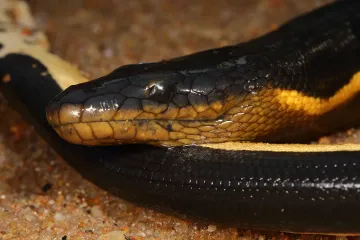
The physiological connection between diet and survival is further cemented by the salt excretion process. Consuming a constant diet of saltwater fish necessitates a high-output mechanism for dealing with the resulting hypernatremia. The specialized salt glands located in the lower jaw actively process and excrete this excess sodium chloride, which is obtained directly from their diet and the seawater they incidentally ingest while feeding or drinking surface rain. If the snake were to subsist primarily on freshwater prey (which is not observed in the wild), this complex system would be regulating an entirely different electrolyte balance, underscoring how critical the high-salt marine diet is to maintaining proper internal homeostasis. The entire feeding apparatus, from the ambush strategy that attracts the prey to the venom that secures it, and finally to the glands that process its chemical remnants, operates as a tightly integrated, pelagic-specific system.
Related Questions
#Citations
Yellow-bellied Sea Snake - The Australian Museum
Pelamis platura (Yellowbelly Sea Snake ... - Animal Diversity Web
Yellow-Bellied Sea Snake - Facts, Diet, Habitat & Pictures ... - Animalia
Yellow-Bellied Sea Snake - Waikiki Aquarium
Yellow-bellied Sea Snake
[PDF] Yellow-bellied sea snake
Yellow-bellied sea snake - Wikipedia
The Yellow-bellied Sea Snake Slithers in the Open Ocean
Yellow-Bellied Sea Snake - Facts, Distribution, Diet, Pictures
Yellow-Bellied Sea Snake - Hydrophis platurus - A-Z Animals