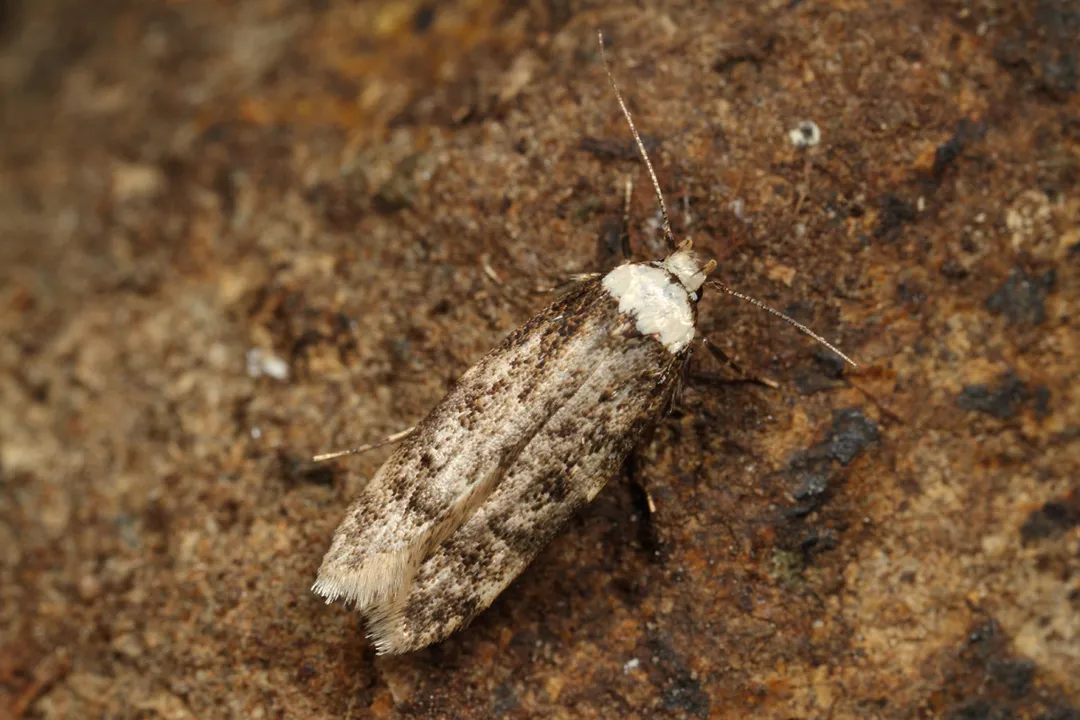
What is the adaptation seen in the E. sarcitrella pupal case construction?
It spins a cocoon composed of silk mixed with particles of the surrounding material (grain dust, foodstuffs).
Pupation for *Endrosis sarcitrella* involves spinning a protective cocoon, but the adaptation lies in the material composition of this casing. The silk used is mixed extensively with particles gathered from the immediate environment—whether that environment is composed of grain dust, dry foodstuffs, or cloth fibers. This incorporation of surrounding debris results in a cocoon that is highly camouflaged and blended into the infestation site. This adaptation is highly significant in unpredictable indoor settings where typical outdoor substrates like bark or leaf litter are absent, allowing the moth to securely hide its vulnerable pupal stage directly within the infested commodity.