White-Eyed Vireo Evolution
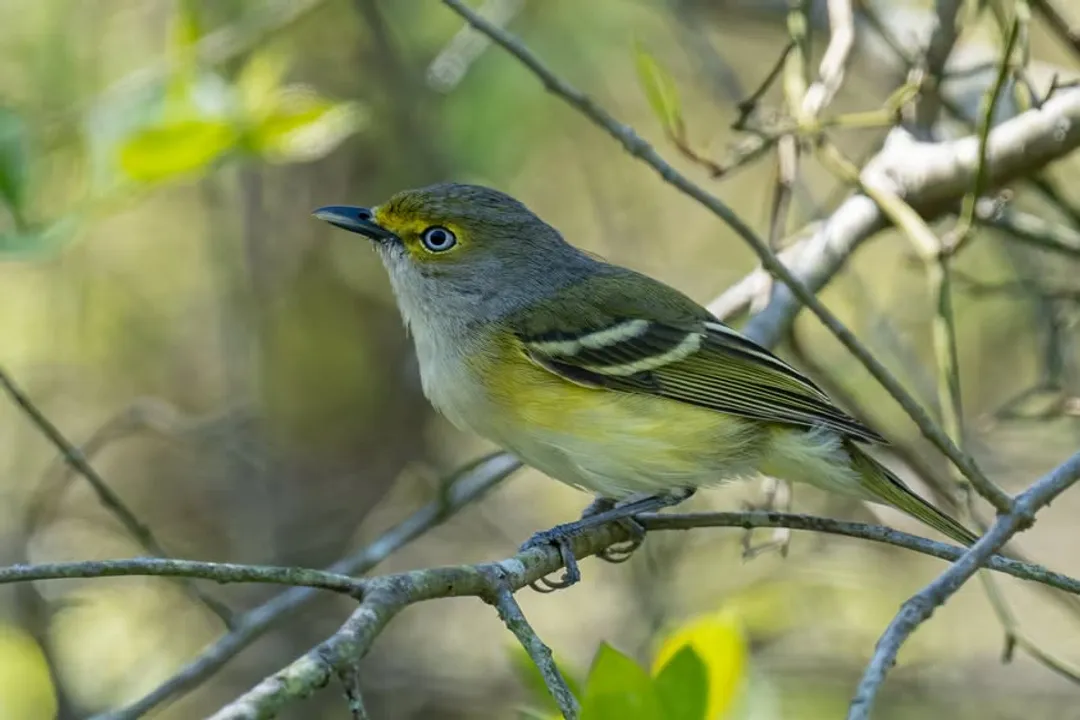
The White-eyed Vireo, scientifically designated Vireo griseus, carries its history in its striking gaze. This small songbird, known for its bright white irises, inhabits dense thickets across the eastern United States, migrating south for the winter. [1][4] Its story is one intrinsically linked to the wooded landscapes it occupies, a narrative best understood by examining its placement within the Vireo family and the subtle yet distinct variations found across its broad breeding range. [2][3] While a complete fossil record detailing every step of its development remains elusive, the modern classification and geographic distribution offer significant clues into the evolutionary processes that have shaped this species over time. [3]
# Genus Placement
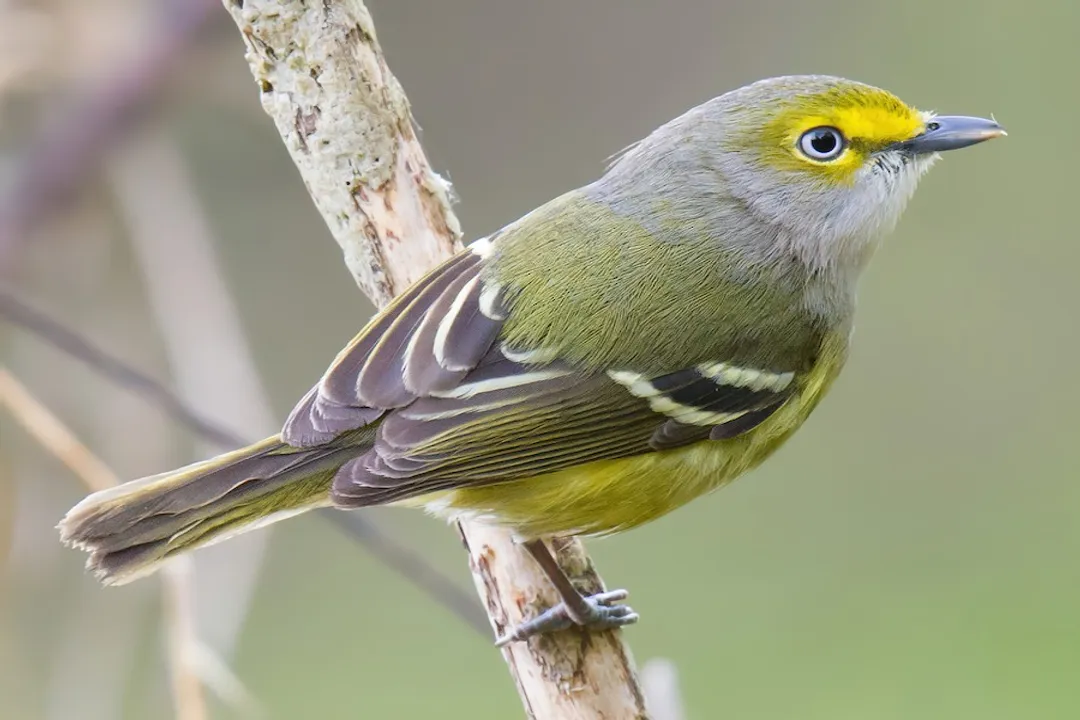
The genus Vireo encompasses a group of small, typically greenish or olive-colored songbirds found primarily in the New World. [2] The White-eyed Vireo belongs to the Vireonidae family, a lineage that represents a distinct branch among passerines. [3] Systematically, Vireo griseus is closely allied with other members of its genus, though the exact relationships within Vireo are subject to ongoing refinement based on genetic analyses. [3]
The close relatives of the White-eyed Vireo often share similar ecological niches, foraging in the understory and lower to mid-canopy layers of forests and shrubby habitats. [1][4] Within the family, the White-eyed Vireo is often considered basal or early diverging relative to some of the more western or Mexican species of vireos, suggesting a deep evolutionary separation from those groups. [3] Its distinctive white eye, a feature shared by very few other birds, stands out against the yellow-green plumage and the spectacles formed by the yellow lores and spectacles in some subspecies, potentially serving as a critical element in mate recognition or territorial signaling—traits that would have been under strong selective pressure during speciation events. [1][2] The bird's general structure and behavior—its deliberate, systematic foraging style—aligns well with the characteristics defining the Vireo group, suggesting a common ancestor adapted to gleaning insects from foliage. [1]
This deep taxonomic positioning implies that the Vireo griseus lineage has persisted through significant climatic shifts, adapting to varied forest compositions across eastern North America and the Caribbean basin. [2][6] The persistence of this lineage suggests successful adaptation to the dynamic environments encountered over millennia. [4]
# Subspecies Variation
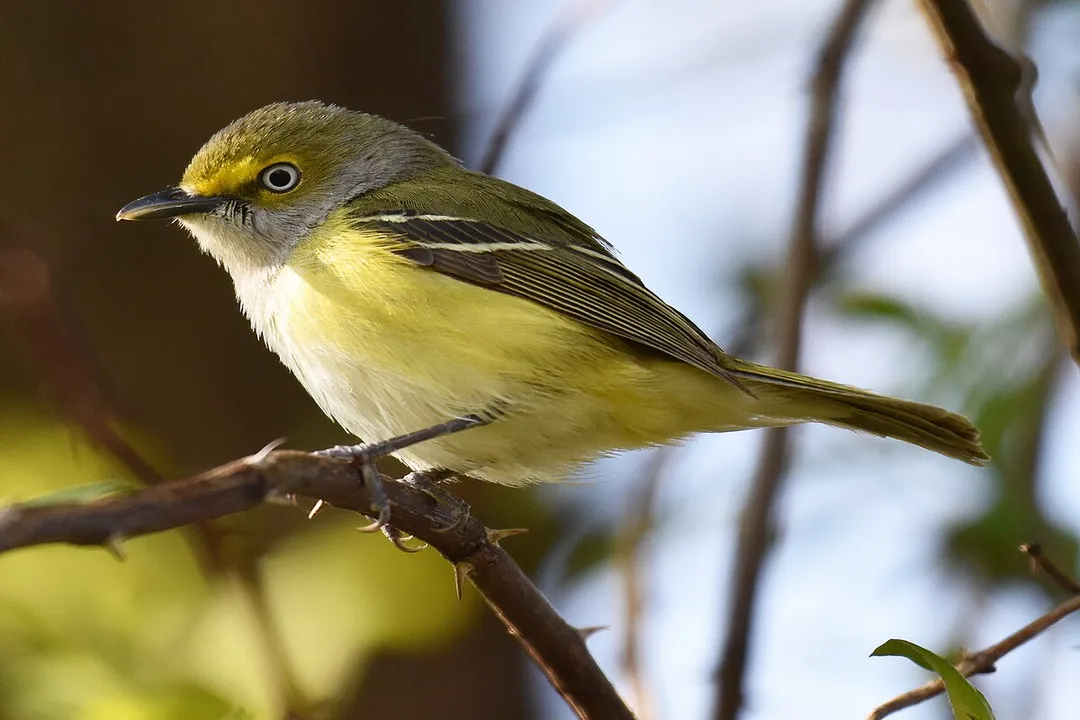
Evolutionary change is often most evident in the patterns of geographic variation within a species, which manifest as subspecies. The White-eyed Vireo is recognized as having several distinct subspecies, reflecting periods where populations were geographically isolated, leading to differentiation in morphology, song, and potentially behavior. [2][3]
The species generally divides into populations across the northern breeding range and those found predominantly in the southern or insular areas. [6] The nominate subspecies, Vireo griseus griseus, covers the eastern and central United States, extending up to southern New England. [3][6] This widely distributed group is characteristic of the standard description: yellow-green above, white below, with clear white eyes. [1]
Contrast this with island or southern populations. For example, the Florida Keys subspecies, Vireo griseus maynardi, is often noted for its slightly duller coloration compared to its mainland cousins. [3] Similarly, the populations found in the Greater Antilles—Cuba, Hispaniola, and the Bahamas—have developed their own distinct forms, such as Vireo griseus alleni (Bahama Vireo) and Vireo griseus bonhotei (Hispaniolan Vireo). [2][3] These insular populations have been separated from the mainland populations for long enough, perhaps since periods of lower sea levels or through founder effects following colonization, to establish consistent, diagnosable differences. [3]
| Subspecies Group | Typical Range Area | Noteworthy Trait Summary |
|---|---|---|
| griseus | Eastern/Central US, North | Standard plumage, vigorous song |
| maynardi | Florida Peninsula | Slightly duller coloration |
| alleni / bonhotei | Caribbean Islands | Significant isolation, potentially complex song differences |
The recognition of these subspecies is critical because it documents microevolutionary events. If a population is isolated in an island environment or a distinct geographical pocket, selection pressures—such as differing predator profiles, resource availability, or even local genetic drift—will begin to push that population away from the mainland norm. [3] This process provides a living laboratory demonstrating how evolutionary divergence begins.
# Trait Selection
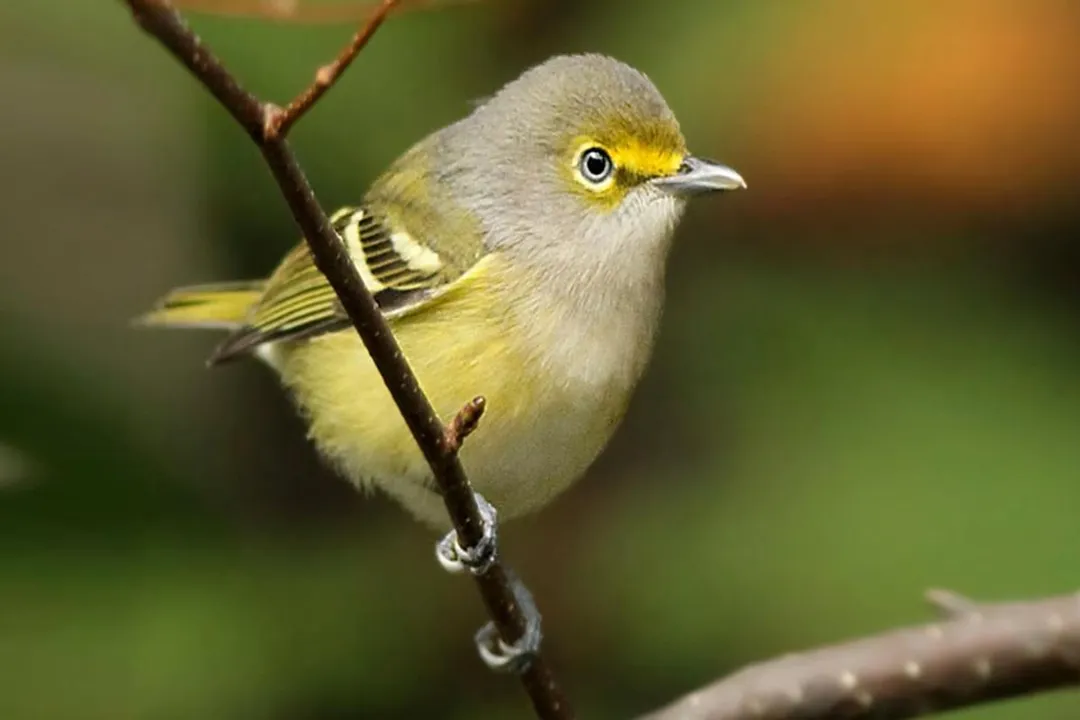
Several key characteristics of the White-eyed Vireo point toward strong selective forces shaping its current form.
# Eye Coloration
The most obvious feature, the bright white iris, is a powerful indicator in close-range visual communication, especially given the bird’s preference for dense cover. [1][9] In the dim light of thickets and vine tangles where these birds often forage, a starkly contrasting color like pure white would be highly visible to conspecifics, perhaps serving as an "all-clear" or "here I am" signal within the foliage, which is often too dense for long-distance visual contact. This contrasts with other vireos whose eyes might be darker or brown, suggesting that the visual signaling environment of the White-eyed Vireo’s preferred habitat exerted a strong, unique selection pressure favoring high contrast. [1]
# Song Complexity
The vocalizations of Vireo griseus are notably rich and varied, a trait common among many species that rely heavily on song for territory defense and mate attraction in visually obscured environments. [1] The song is often described as highly variable, incorporating a wide repertoire of notes, whistles, and jumbles. [1][8] It is known to mimic other birds, a behavior called vocal mimicry, which can add complexity to territorial displays. [1] Evolutionary studies in passerines often link complex, learned vocal repertoires to intense sexual selection pressures; the ability to master a broader song array might signal superior fitness or learning capability to a potential mate. [1] For instance, observations suggest that males often sing incessantly when establishing territory, indicating the song's fundamental role in securing resources. [6]
# Habitat Niche
The bird’s consistent preference for dense, shrubby undergrowth, thickets, and the lower strata of woods reveals an adaptation to a specific light and structural niche. [1][6][9] This preference may have solidified during periods when larger predators or competing insectivores dominated the mid-canopy or open areas. By specializing in the dense shrub layer, the White-eyed Vireo minimized competition and avoided visual predators more easily. [4] This specialization in habitat preference is, in itself, an evolutionary outcome tied to resource partitioning within the broader avian community of the East. [1]
# Analyzing Divergence Pressures
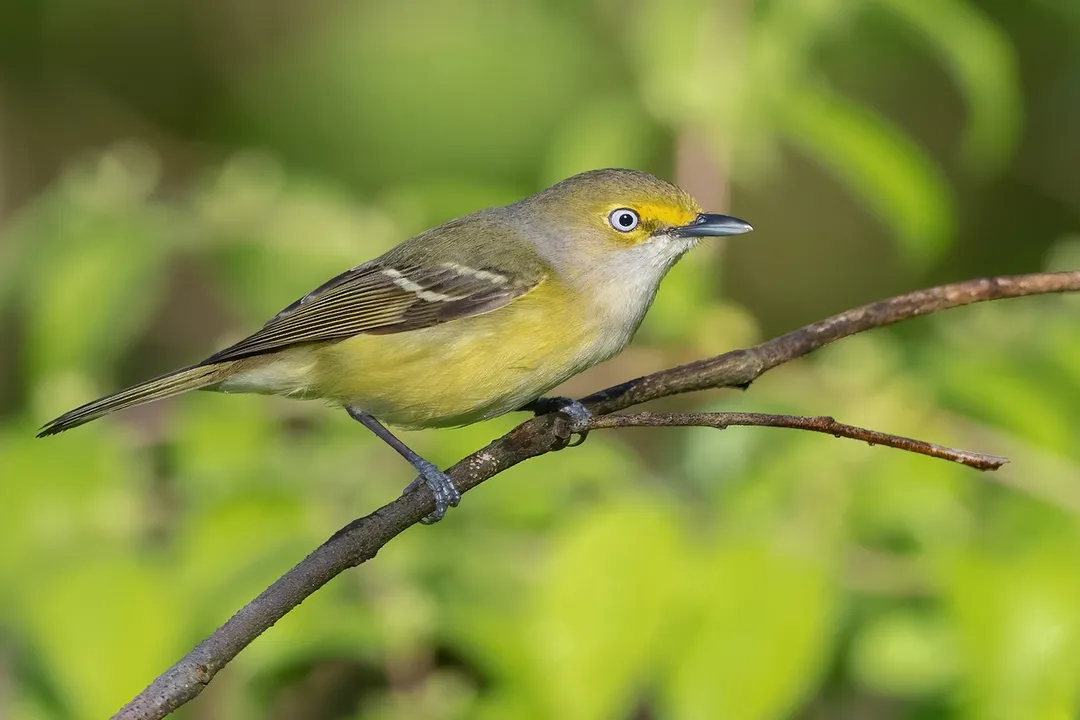
Examining the regional variations, one can infer the differing evolutionary paths taken by isolated groups. Consider the difference in climate and vegetation between the northern breeding grounds—which experience harsh, freezing winters requiring long-distance migration—and the stationary, subtropical environments of the Antillean subspecies. [2][6]
The northern V. g. griseus population has evolved the behavioral machinery necessary for long, arduous migrations to Central American or Caribbean wintering grounds. [1][5] This entire suite of migratory physiology—fat deposition, directional sense, and timing—is a massive evolutionary commitment, distinct from the needs of the resident, Bahamian populations. [3] The existence of strong migratory behavior in the northern group, contrasted with the more resident nature of southern groups, highlights how broad-scale environmental shifts, such as Pleistocene glacial cycles that repeatedly fragmented and reformed suitable forested corridors, would have profoundly shaped the species’ evolutionary trajectory, favoring migratory success in the north and local persistence in the south. [6] The resilience required to navigate these cycles suggests a long, plastic evolutionary history for the species as a whole. [4]
Furthermore, looking at the subtle plumage differences noted by ornithologists between subspecies—even slight variations in the brightness of the yellow or the saturation of the olive—can sometimes be traced back to local adaptations in camouflage. In areas with deep shade and dark, decaying leaf litter year-round (like some Caribbean islands), a slightly duller green-gray might offer superior crypsis compared to the brighter bird needed to blend into the vibrant, sun-dappled new growth of a North Carolina thicket. [3] While the sources confirm the variations exist, the implication is that the local visual landscape dictates the finely tuned coloration that successfully passes the test of survival against local predators. [1]
# Historical Range Stability
The current breeding range of the White-eyed Vireo stretches from the southern edge of New England and the central US south through Florida and west to Texas, with populations extending into Mexico and the Caribbean. [5][6] This distribution suggests that the species is highly successful within warm-temperate to subtropical deciduous and scrub habitats. [4]
The bird’s presence in the Caribbean Islands as distinct subspecies is a strong marker of ancient biogeographic connections, likely predating the final rise of sea levels following the last Ice Age, which would have isolated those populations on their respective landmasses. [3] To maintain distinct subspecies on islands like Cuba or Hispaniola implies that the colonization event that established these populations happened long enough ago for genetic drift and local adaptation to solidify into recognizable forms, a process taking thousands of years. [2]
An interesting point arises when considering population dynamics across the core North American range. While the species is common, it is often described as locally abundant rather than universally distributed, favoring specific edge habitats. [1][6] This local patchiness, rather than a continuous broad distribution, might reflect an adaptation to a historical environment characterized by mosaic landscapes—areas of dense scrub interspersed with drier or more open forest—suggesting that the ancestral niche was not deep, unbroken primary forest, but rather transitional zones which have persisted throughout the bird's evolutionary history. [9] The successful persistence across such varied densities, from coastal thickets in Delaware [7] to inland scrub, speaks to a deep evolutionary flexibility in habitat selection, despite the strong current preference for dense cover. [1] This inherent flexibility is likely what allowed them to recolonize northern areas rapidly after glacial retreat, unlike some species more strictly tied to climax forest types. [5] The White-eyed Vireo, therefore, represents an evolutionary success story built on adaptability to edge environments.
Related Questions
#Citations
White-eyed Vireo Life History
White-eyed vireo
Systematics - White-eyed Vireo - Vireo griseus
Vireo griseus (white-eyed vireo) | INFORMATION
White-eyed Vireo Vireo griseus
WHITE-EYED VIREO | The Texas Breeding Bird Atlas
White Eyed Vireo in Kent County on 4/17. First ...
White-eyed Vireo Vireo griseus
White-eyed vireo