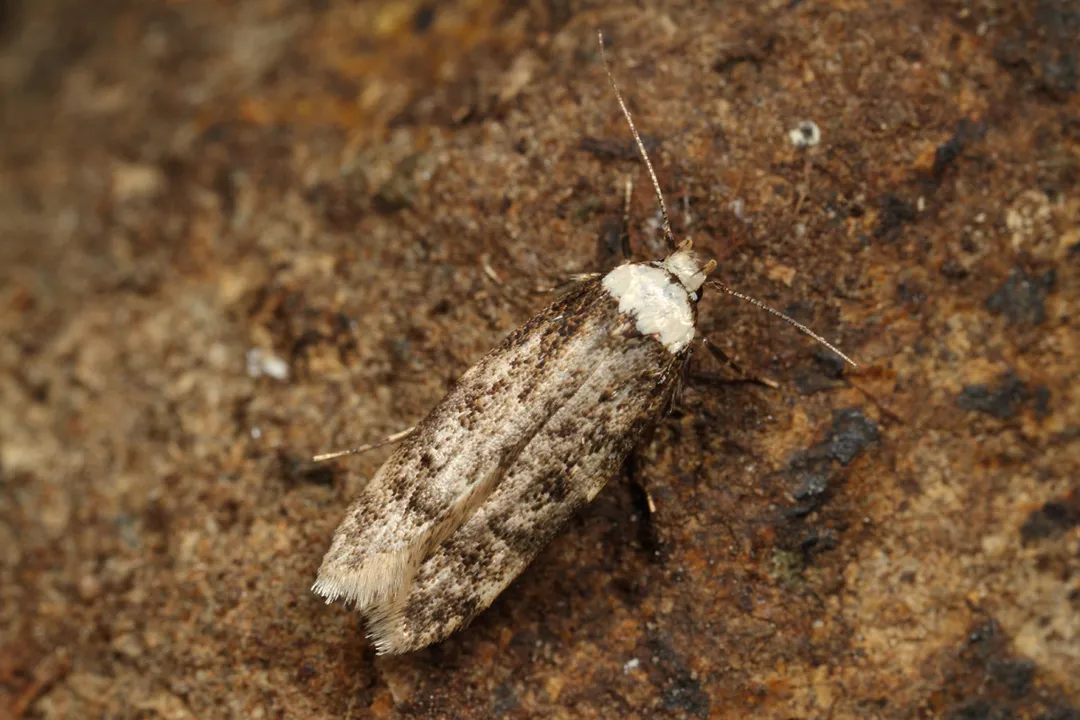
What evolutionary pressure is cited as driving E. sarcitrella's success in human-modified habitats?
Resource specialization under anthropogenic conditions.
The text specifically identifies the primary evolutionary driver for the success of *Endrosis sarcitrella* in human structures as 'resource specialization under anthropogenic conditions.' This phrase refers to the moth evolving to efficiently utilize the stable, abundant, and often homogenous food sources created by human agriculture and storage practices, such as grains and dried fruits. Unlike generalist feeders that might struggle with monocultures, *E. sarcitrella* optimized its ability to digest these specific dried plant matters. This specialization provided a significant selective advantage in environments where these resources are consistently available over long periods, essentially exploiting a niche created entirely by human activity.