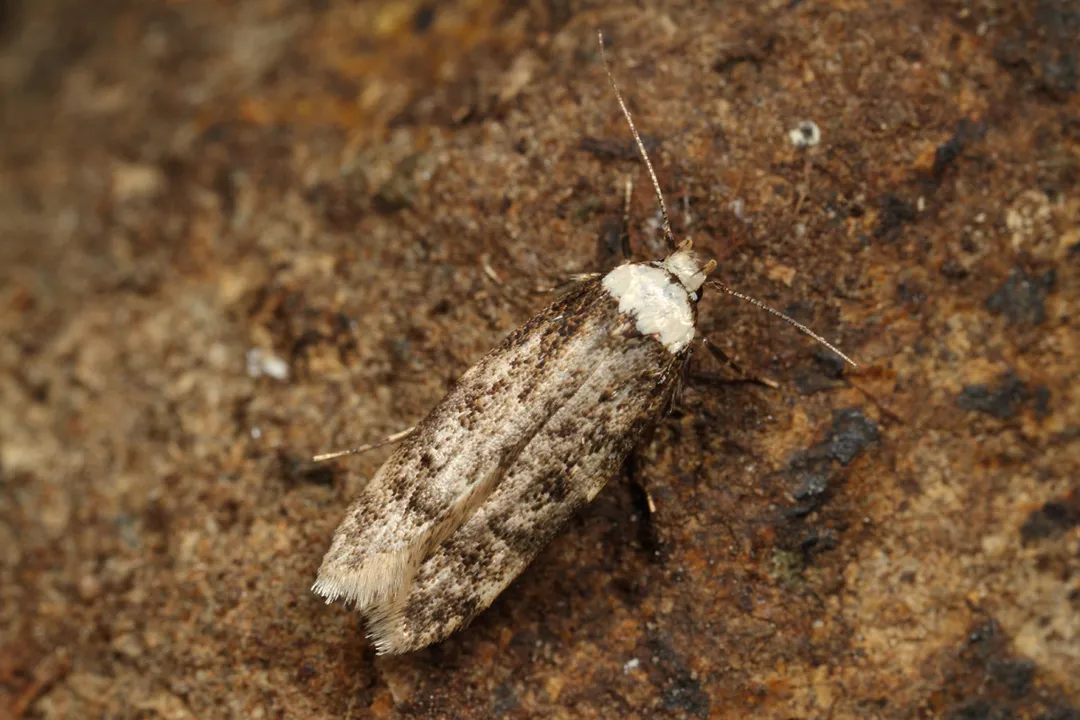
How can temperature fluctuation act as a control method against E. sarcitrella populations?
Generations unable to survive cold periods, like winter freezes, are culled, potentially selecting for shorter larval periods.
Effective non-chemical management strategies against the White-shouldered House Moth often involve exploiting the moth's environmental constraints, particularly temperature. If a storage facility experiences regular, significant annual temperature cycling, such as prolonged periods dropping below freezing during winter months, any moth generation that has not successfully completed its development before the cold sets in will be eliminated. This regular culling acts as a selective pressure. Over time, this environmental stress can favor the survival of biotypes within that region that exhibit phenotypic plasticity, specifically those that have evolved shorter larval periods, enabling them to mature quickly enough to survive the harsh seasonal constraints.