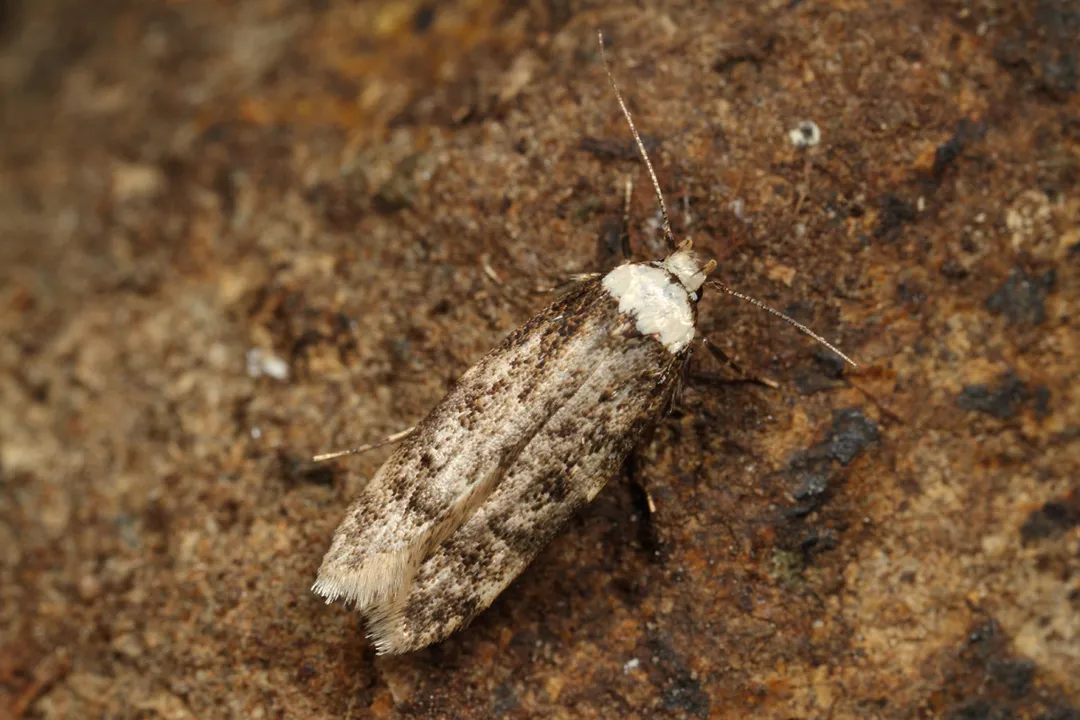
How does the E. sarcitrella diet contrast with the specialization of clothes moths (Tineidae)?
E. sarcitrella focuses on carbohydrates and starches from vegetable matter; clothes moths are adapted to keratin.
A key element in understanding the niche partitioning of household pests is recognizing their specialized diets, which represent evolutionary divergences. Clothes moths, particularly species like *Tineola bisselliella*, have evolved to specialize in keratinous materials derived from animal sources, such as wool or hair. In stark contrast, the White-shouldered House Moth (*E. sarcitrella*) has specialized primarily in vegetable matter, focusing its larval feeding efforts on carbohydrates and starches found in stored commodities like grains, seeds, and dried fruit. This divergence in preferred macronutrients—animal proteins versus plant carbohydrates—allows both groups to coexist as pests in human dwellings without directly competing for the exact same resources.