White-shouldered House Moth Facts
The White-shouldered House Moth, known scientifically as Endrosis sarcitrella, [7] presents a picture of deceptive mundanity, often being mistaken for more common household fliers. However, its presence indoors, particularly concerning stored goods and textiles, shifts it from a simple nuisance to a subject warranting closer inspection. [1][6] This small lepidopteran belongs to the family Oecophoridae and while it is found across many parts of the world, its reputation as a persistent pantry and fabric pest means that recognizing its signs is important for those concerned with preserving household items. [2][4] Understanding this moth requires a look not just at the adult insect fluttering near a light source, but much more critically, at the often-hidden activities of its larval stage. [1]
# Physical Traits
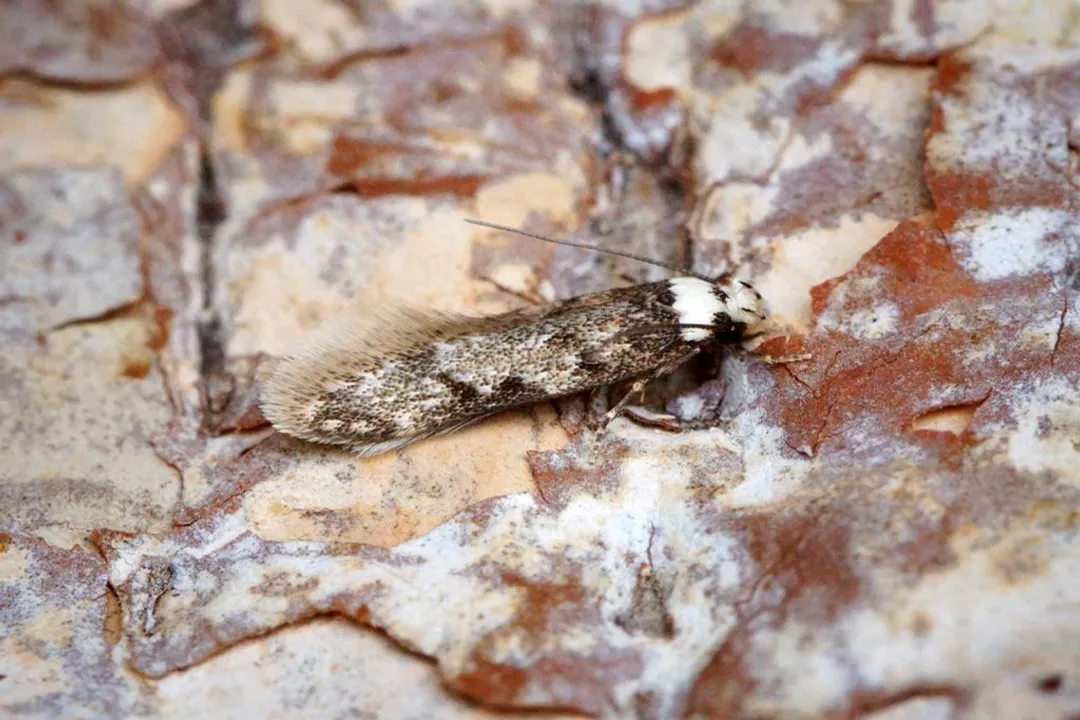
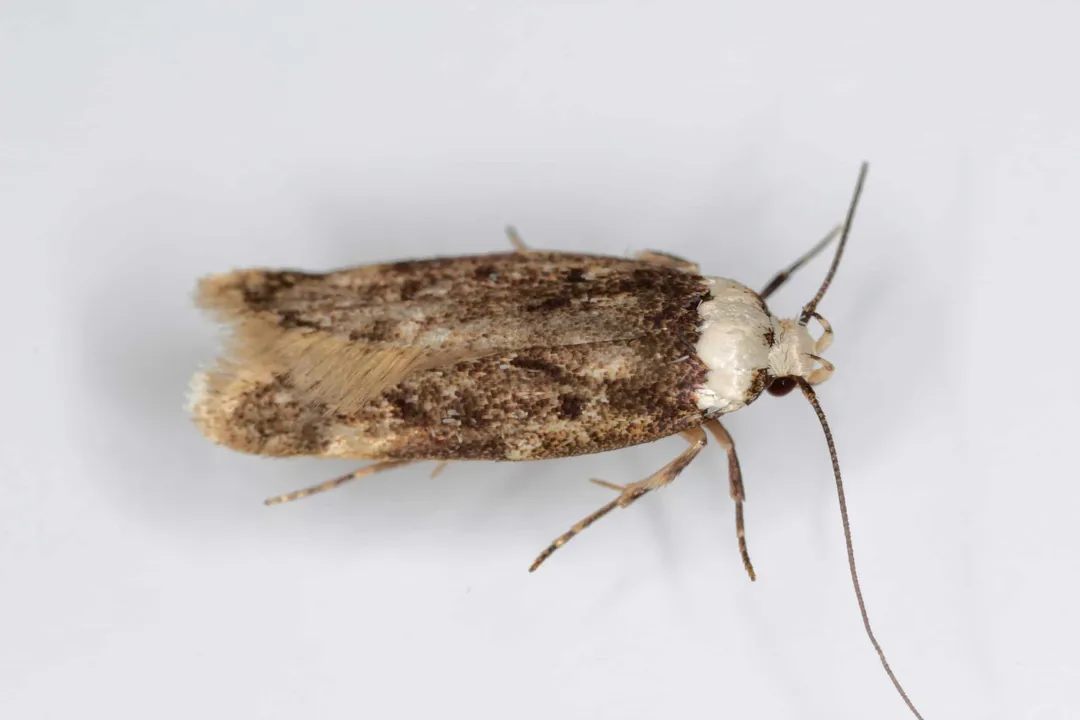
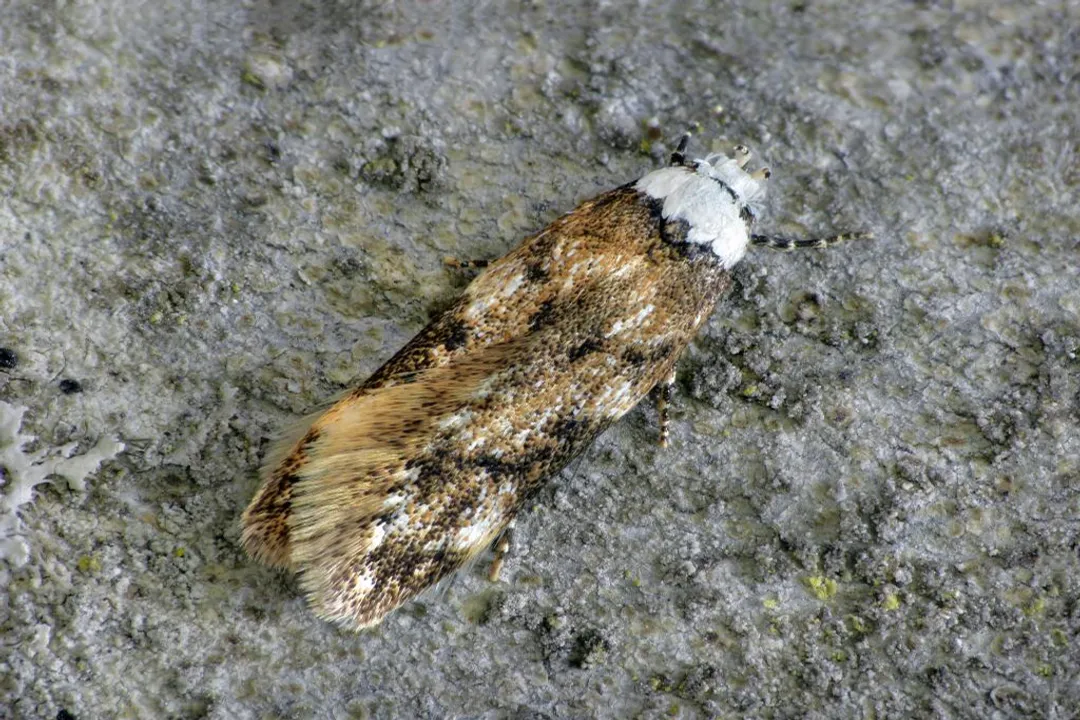
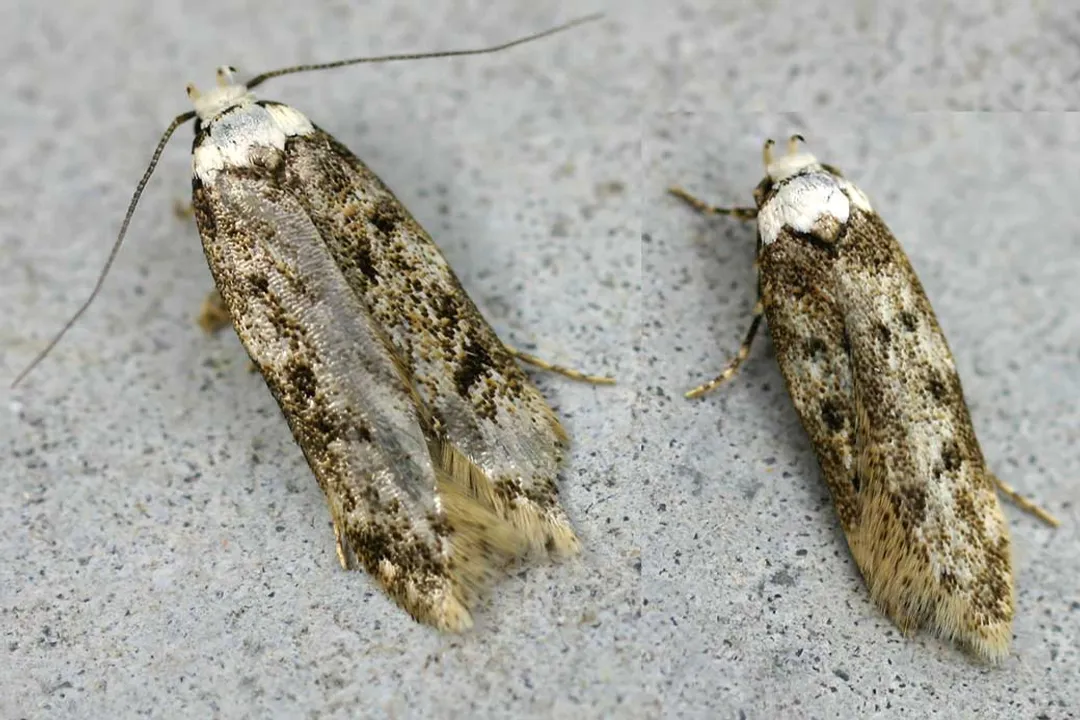
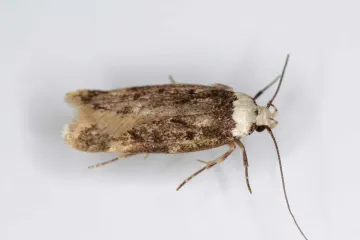
The moth is relatively small, generally possessing a wingspan that measures between 13 to 17 millimeters. [3] When resting, the wings are held tent-like over the body. [9] The common name itself offers the best clue to its identification: the moth features whitish or pale grey forewings which are prominently marked with darker, often brownish or blackish, speckles or streaks. [1][3] A key diagnostic feature is the distinct white patch or shoulder marking from which it derives its name, usually visible near the leading edge of the wing base. [2][5]
In contrast to some textile pests that are uniformly drab brown, the coloration of E. sarcitrella is slightly variable, which can sometimes lead to misidentification if only a quick glance is taken. [1] The markings are crucial for identification; for example, one common description notes a dark spot near the center of the forewing, with the base color being pale cream to grayish-brown, mottled with darker scales. [3] Observing a specimen under magnification or good light often confirms the specific pattern of pale and dark scales that distinguish it from other small, similar-looking moths. [2]
# Life Cycle
The complete metamorphosis of the White-shouldered House Moth involves four distinct stages: egg, larva, pupa, and adult. [6] The lifecycle duration is highly dependent on environmental conditions, especially temperature and food availability. [1] In heated indoor environments, this moth can continue breeding year-round, which contributes significantly to its status as a persistent pest. [6]
The adult moths are nocturnal, meaning they are most active during the night. [9] Their primary role, once fully developed, is reproduction. [1] After mating, the female deposits her tiny eggs, typically singly or in small clusters, onto suitable food sources or in crevices near where feeding will occur. [2]
The most ecologically and economically significant stage is the larva, or caterpillar. [1] Larvae are small, creamy-white, and possess a brownish head capsule. [3] They are the destructive feeders of the species. [1] Once hatched, the larva seeks out organic material to consume, often spinning silken threads as it moves or feeds. [3] The length of this larval feeding period can vary widely, sometimes lasting several months depending on the quality and accessibility of the food supply. [1] When fully grown, the larva prepares to pupate, often creating a silken cocoon spun between stored items or in cracks and corners of storage areas. [3] The entire process from egg to adult can be completed relatively quickly under favorable conditions, perhaps in as little as eight weeks. [1]
# Feeding Habits
The diet of the White-shouldered House Moth larva is quite broad, which contributes to its ability to survive in various domestic and commercial settings. [2][8] They are generally categorized as stored product pests. [8] Their primary interest lies in dried organic matter, especially materials that are slightly damp or have begun to deteriorate. [1]
Specific foodstuffs that serve as larval hosts include dried fruits, grains, seeds, and even processed food items like biscuits and crackers. [2][8] Beyond pantry staples, they are also known to attack textile materials. [1] This includes wool, fur, feathers, and various other natural fibers. [2]
It is interesting to note that the larvae seem particularly attracted to materials that have already been damaged or contaminated by molds or fungi. [1] This preference suggests that they are not only consuming the base material but are likely supplementing their diet with microbial growth found on that material. [3] For example, if a sack of grain has a slight moisture intrusion causing localized mold, the moth larvae will congregate there, chewing through the grain itself while benefiting from the associated fungi. [1] This behavior contrasts with some pests that require perfectly dry, pristine stock, positioning the White-shouldered House Moth as a secondary colonizer of already stressed or compromised materials. [3]
# Distribution Range
The White-shouldered House Moth has a cosmopolitan distribution, meaning it is found throughout much of the world. [4][7] While it is a common species in many urban and domestic settings globally, it is frequently noted in temperate climates. [5] In the United Kingdom, for instance, it is a well-recognized species. [5]
Their presence is strongly linked to human activity, as they thrive wherever stored goods are kept, whether in homes, museums, warehouses, or food processing plants. [6] They are often found in attics, basements, and pantries where temperature fluctuations are less extreme than outdoors, providing a more stable environment for development. [1] Because they are transported easily through commerce—hitching rides in infested dried goods or textiles—they can establish populations far from their native range. [4]
# Infestation Signs
Detecting an infestation early relies on recognizing subtle signs, as the adult moths are small and often remain hidden during the day. [9] Finding the small, dusty white or pale grey moths flying near windows or lights, especially at night in areas where food or textiles are stored, is a primary indicator. [2]
More definitive evidence comes from inspecting the stored materials themselves. Look for fine webbing or silken threads spun by the larvae, often binding together items like bags of dried beans or stored woolens. [3] Another key sign is the presence of frass, which is the larval excrement. This appears as fine, granular dust mixed with silk near the feeding site. [1] In severe cases of textile infestation, one might observe irregular holes in fabrics, particularly those made of natural fibers like wool or felt. [2] If you are examining stored dried food, look for clumping, stickiness, or visible larvae tunneling within the product. [8]
One practical tip for homeowners dealing with older storage spaces—like seldom-used attics or under-stair cupboards—is to periodically inspect the undisturbed corners where dust and debris accumulate. Because these moths prefer materials that are slightly compromised, areas with minor condensation or slight dampness that encourage mold growth become prime real estate for this species, even if perfectly sealed packaged foods are nearby. [3]
# Management Tactics
Controlling the White-shouldered House Moth requires a multi-pronged approach that focuses heavily on sanitation and breaking the life cycle, as treating only the adults is insufficient. [6][8]
# Sanitation Focus
The foundation of control is eliminating the food source. [1]
- Inspect Thoroughly: Carefully examine all stored dry goods, cereals, pet food, dried fruits, and nuts. Any packaging showing signs of damage, clumping, or visible larvae should be immediately removed. [8]
- Discard Heavily Infested Items: Any product with clear signs of larval activity—webbing or frass—should be sealed in a plastic bag and discarded promptly in an outdoor waste bin. [1]
- Clean Storage Areas: Vacuum all shelves, cracks, crevices, and corners in pantries or storage units. Pay special attention to wall/floor joints where pupae might hide. [3] Dispose of the vacuum bag immediately after use.
# Temperature Treatment
Since temperature significantly impacts development time, altering the environment can be a powerful tool, particularly for smaller quantities of materials or susceptible textiles. [1]
For food items that cannot be easily discarded, or for smaller batches of fabrics, temperature manipulation can be employed as a non-chemical solution. [6] Freezing items for about 72 hours is generally effective at killing all active stages, including eggs and larvae. [1] Conversely, heating infested materials in a dry oven at a low temperature (around 140°F or 60°C for a few hours) can also terminate the infestation, though care must be taken not to damage heat-sensitive materials. [6] Always ensure items are completely cool before returning them to storage. [1]
# Chemical and Physical Barriers
For large-scale storage or persistent issues, chemical intervention may be considered, though physical barriers and monitoring are often safer first steps. [2] Pheromone traps are useful not for control, but for monitoring the adult population density, providing an early warning system for businesses or large storage facilities. [6] Ensure all newly purchased susceptible items are stored in airtight, rigid plastic or glass containers rather than their original paper or cardboard packaging, creating a physical barrier the larvae cannot breach. [8] For serious commercial infestations, professional pest control operators may apply residual insecticides to wall voids and structural cracks where the moths pupate, aiming to target the hidden stages. [2][3]
A helpful strategy, especially for museum collections or valuable textiles, involves creating a defined "clean zone" for storage. After all items have been treated (e.g., frozen), they should only be returned to storage containers that have been thoroughly cleaned and sealed with new, airtight liners. This practice of isolation minimizes the chance of re-infestation from adjacent, untreated materials, which is a common source of recurrence when dealing with general storage areas. [1] Endrosis sarcitrella is an opportunistic feeder; removing opportunity is the most reliable long-term defense. [3]
Related Questions
#Citations
The White Shouldered House Moth - A Homeowners Guide
White-Shouldered House Moth | Pest Solutions
[PDF] Whiteshouldered House Moth Endrosis sarcitrella (Linnaeus)
White-shouldered House Moth - Endrosis sarcitrella - A-Z Animals
White-shouldered House-moth | Butterfly Conservation
White-Shouldered House Moth - Veseris
White-shouldered House Moth (Endrosis sarcitrella) - iNaturalist
[PDF] White Shouldered House Moth.pdf - Insect Factsheet
White-shouldered House Moth Facts & Photos | Wowzerful