White-shouldered House Moth Physical Characteristics
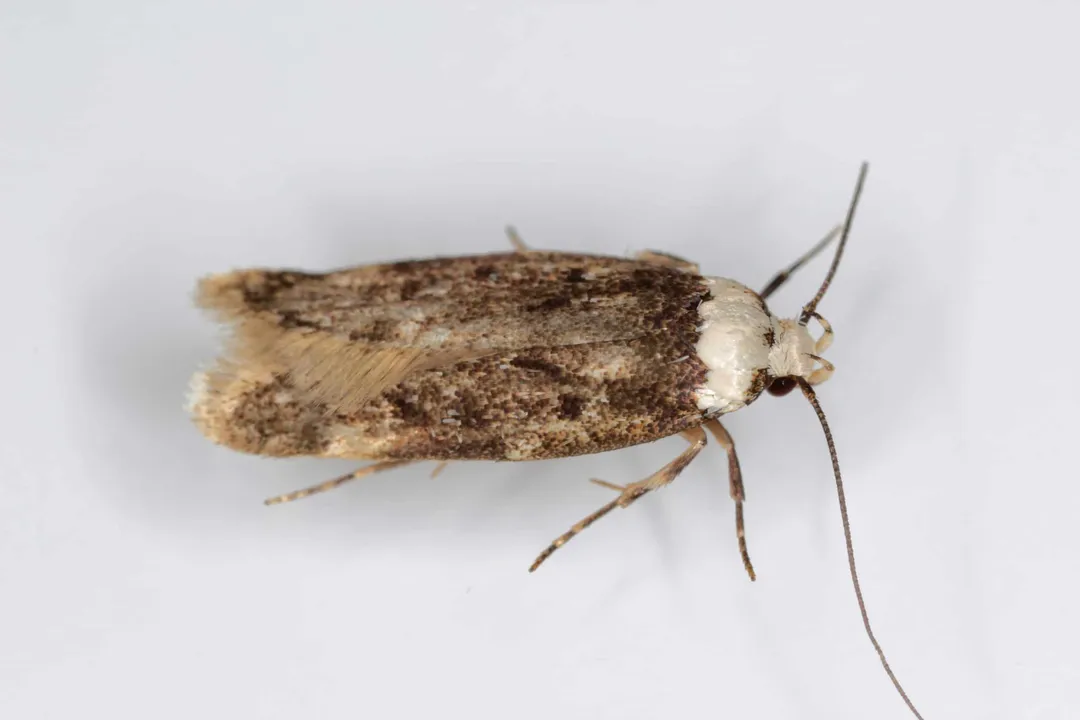
The White-shouldered House Moth, scientifically cataloged as Endrosis sarcitrella, is a small insect often encountered indoors, making its precise physical description quite important for accurate identification when it appears in domestic or storage settings. [1][5] While it shares the "house moth" moniker with pests like the Clothes Moth, its physical signature sets it apart for those familiar with its details. [9] Understanding its morphology helps distinguish it from other small, drab moths that might frequent pantries or wool storage areas. [4]
# Size Range
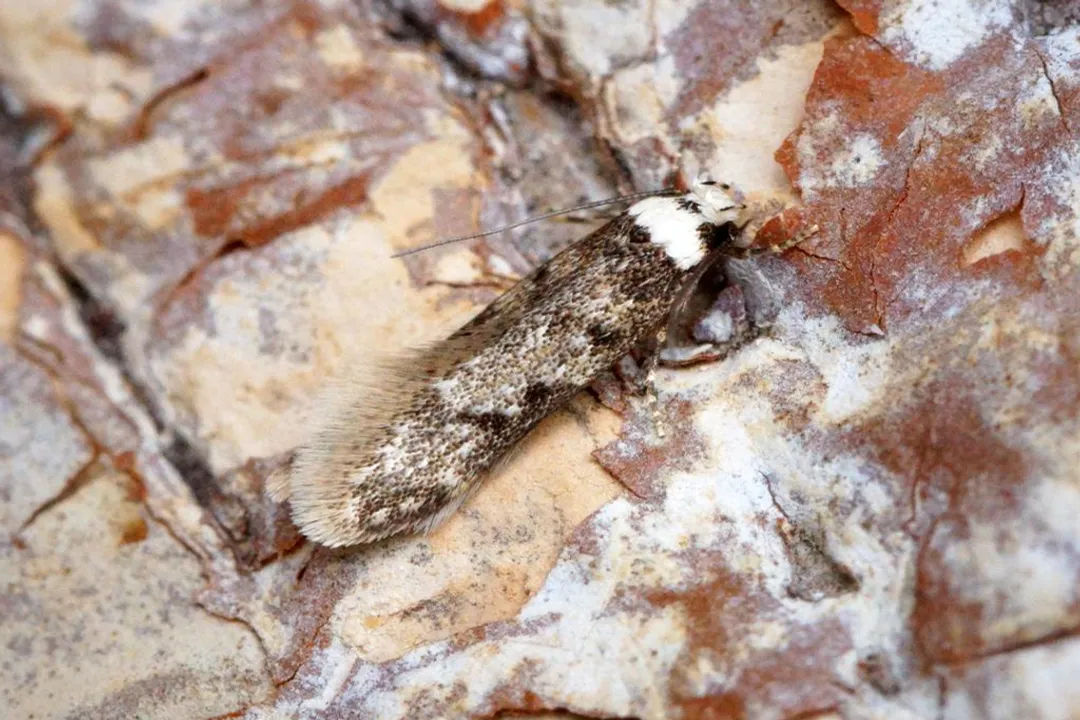
When observing an adult White-shouldered House Moth, its modest size is often the first feature noted. [2] The wingspan, which measures the distance between the tips of the outstretched forewings, typically falls in the range of 13 to 16 millimeters. [2][9] In practical terms, this is just over half an inch, making it quite small, though still noticeably larger than some of the minute pantry moths it might be confused with. [1] Some sources specify the wing length alone, placing it around 6 to 7 millimeters. [7] This compact stature contributes to its ability to go unnoticed until a localized population becomes established. [4]
# Wing Detail
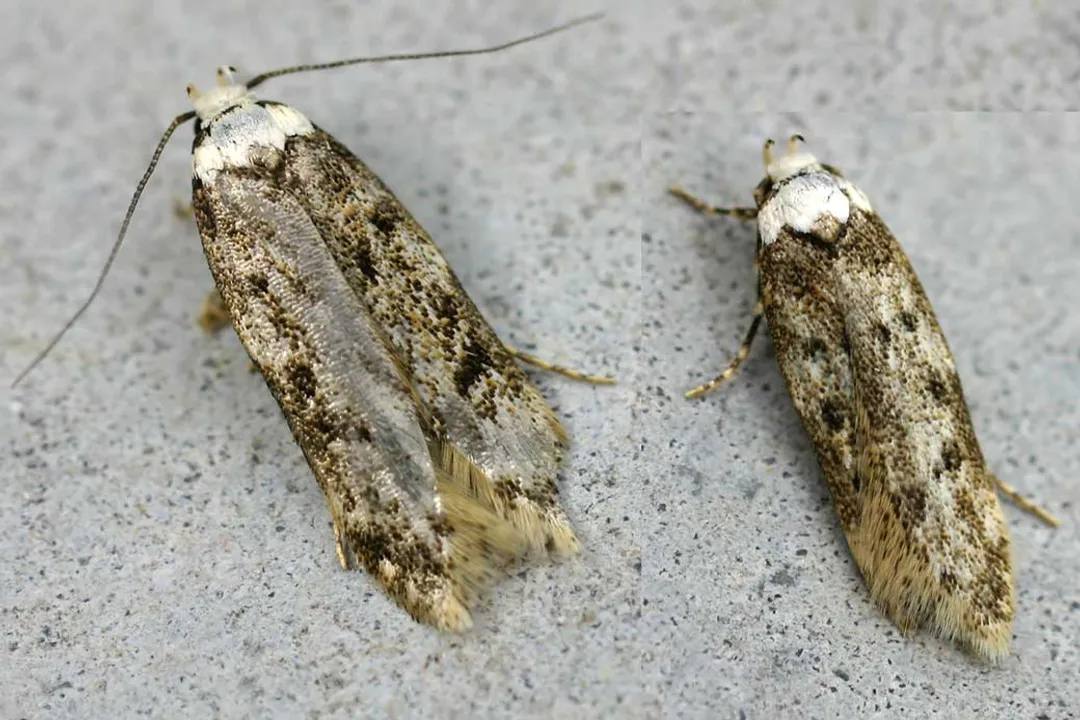
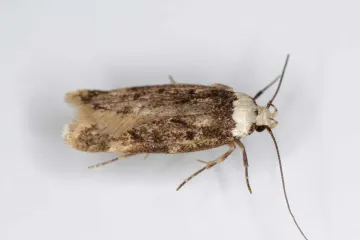
The wings are perhaps the most distinguishing feature of the adult moth, characterized by a pale base color overlaid with distinct markings. [3] The general appearance of the forewings is a pale, dirty white or creamy color, sometimes described as buff or grayish-white. [7][2] This pale ground color is interrupted by a pattern of dark, transverse markings or spots. [3]
Specifically, the markings usually consist of several darker, often brownish or blackish, patches or streaks arranged across the wing surface. [7] A key characteristic is often the presence of two darker bands that run across the wing, though their distinctness can vary significantly between individuals. [2] The hindwings, which are often hidden when the moth is at rest, are generally plainer, typically appearing paler and sometimes grayish or translucent. [7] When the moth is perched, the way the wings are held—usually tent-like over the body—further affects the visual presentation of these markings. [2] It is worth noting that the wing edges, or termen, often possess a fringe of pale scales. [7]

# Body Structure
Beyond the wings, the moth's body offers further clues to its identity, particularly the head and thorax region, which gives the moth its common name. The head and the posterior part of the thorax display a noticeable white or pale yellowish-white coloration. [3][7] This bright area contrasts subtly with the rest of the body and wings, hinting at the common name, the White-shouldered House Moth. [2]
The antennae are relatively long, extending nearly the length of the forewings, and are often held swept backward over the body when the moth is resting. [7] The moth's overall resting posture is often described as somewhat elongated or pointed, especially when viewed from the side, due to the way the wings are folded. [2] While the abdomen is generally less conspicuous than the wings or shoulders, it completes the slender profile of the resting insect. [7]
# Larval Form
While the adult is the stage most likely to be seen flying, the destructive stage, the larva or caterpillar, possesses its own set of physical traits. [6] The larvae are generally creamy-white or pale in coloration, lacking the bold patterns seen in the adults. [5] They are relatively small worms, often found within the materials they are consuming, such as stored products or textiles. [6] A key feature is the presence of a brownish or darker head capsule, which contrasts with the pale body. [5] These larvae spin silken threads as they move and feed, often creating small webs or tubes within the infested material, which can be a telltale sign of infestation even if the larva itself is hidden. [6]
# Visual Identification
Distinguishing E. sarcitrella from other small brown or pale moths, such as the common Clothes Moth (Tineola bisselliella) or the Case-bearing Clothes Moth (Tinea pellionella), requires a close look at those wing markings. [9] While the Clothes Moths are often a uniform, dull gold or plain light brown with little to no pattern, the White-shouldered House Moth has those characteristic dark transverse streaks or patches on its creamy wings. [9] Furthermore, observing the moth resting can be informative; E. sarcitrella tends to rest with its wings held somewhat roof-like, often exposing that pale shoulder area. [2] An interesting observation is how the wing pattern, though generally consistent, shows significant individual variation; no two specimens appear precisely identical in the arrangement of their darker spots, a characteristic that underscores the need for a general impression combined with checking for the presence of any dark transverse banding against a pale background. [3] If you observe a moth with a wingspan under that displays clear, dark striping or blotching across a pale, creamy-white background, you are likely looking at Endrosis sarcitrella rather than a uniform golden-brown species. [2][7]
When considering how these moths are often found indoors, we can draw a small analytical conclusion about their appearance relative to environment. The pale, creamy-to-dirty-white coloration, interspersed with brownish marks, makes them surprisingly adept at blending in with dusty skirting boards, aged paper, or light-colored fabric debris often found under furniture or in seldom-used cupboards. [1][4] This muted, somewhat inconspicuous appearance is likely an evolutionary advantage, even in an indoor setting where heavy predation is rare, as it aids in remaining hidden from birds or other accidental predators entering through open windows or doors. [4]
# Observation Tip
For those learning to differentiate these moths, paying attention to flight style can be a helpful secondary characteristic. While not strictly a physical trait, it relates to how the physical form interacts with the air. Adults of E. sarcitrella are often described as weak fliers, exhibiting fluttery, erratic movements when disturbed, rather than strong, direct flight paths. [8] If you disturb a moth in a dark corner and it launches itself with a brief, confused hop before settling quickly nearby, its physical structure suggests a poor design for sustained flight, further supporting an identification towards this species over a more active indoor moth. [8]
Another practical tip stems from comparing the thorax color to the wing pattern. If you see a very small moth with a distinctly bright, clean white 'collar' or shoulder area directly contrasting with wings that are mostly pale but carry those specific transverse dark markings, focus on the wing pattern first. [3][7] If the wings are uniformly plain, regardless of the shoulder color, it is highly unlikely to be the White-shouldered House Moth. The pattern, not just the pale shoulder, is the defining characteristic that separates it from species like the Brown House Moth, whose markings are less defined and more washed out. [9] This comparative assessment is key when you cannot capture the specimen for minute inspection.
# Life Cycle Appearance
The entire life cycle contributes to the overall physical profile of the species, though the appearance of the moth is the primary concern for identification. [6] The tiny, pale eggs are rarely seen, laid singly or in small clusters on the host material. [5] The subsequent larval stage, as mentioned, is pale with a darker head. [5] Once pupation occurs, the silken cocoon, often incorporating debris from the feeding area, is the stage that bridges the larval existence to the winged adult we have described in detail. [6]
In summary, the White-shouldered House Moth is recognizable by its small size (wingspan up to ), its creamy or dirty-white wings distinctly marked with darker, irregular transverse bands, and its pale, whitish thorax and head area, setting it apart from its uniformly colored indoor relatives. [2][7]
Related Questions
#Citations
White-shouldered House Moth - Endrosis sarcitrella - A-Z Animals
White-shouldered house moth - Wikipedia
White-shouldered House-moth | Butterfly Conservation
The White Shouldered House Moth - A Homeowners Guide
White-Shouldered House Moth Guide | Presto-X Pest Control
White-Shouldered House Moth - Veseris
White-shouldered House-moth Endrosis sarcitrella - UKMoths
White-shouldered House Moth Facts & Photos | Wowzerful
White-Shouldered House Moth | Pest Solutions