White-shouldered House Moth Scientific Classification
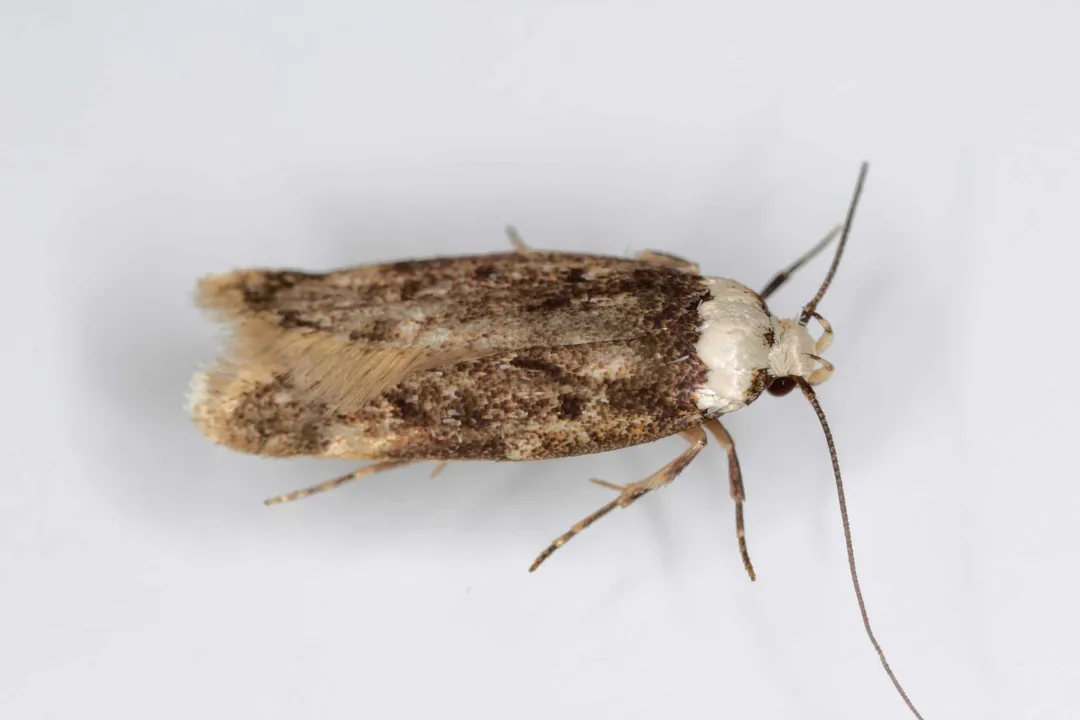
Pinpointing the exact scientific identity of a common insect like the White-shouldered House Moth requires looking beyond the descriptive name we use every day. While we might recognize this small pest by its pale wing markings, its true place in the vast tree of life is defined by a precise, hierarchical system of classification, starting from the broadest groupings and narrowing down to its unique specific epithet, sarcitrella. [1][2] Understanding this structure helps entomologists and pest managers alike connect it to its relatives and understand its fundamental biology. [5]
# Kingdom Animalia
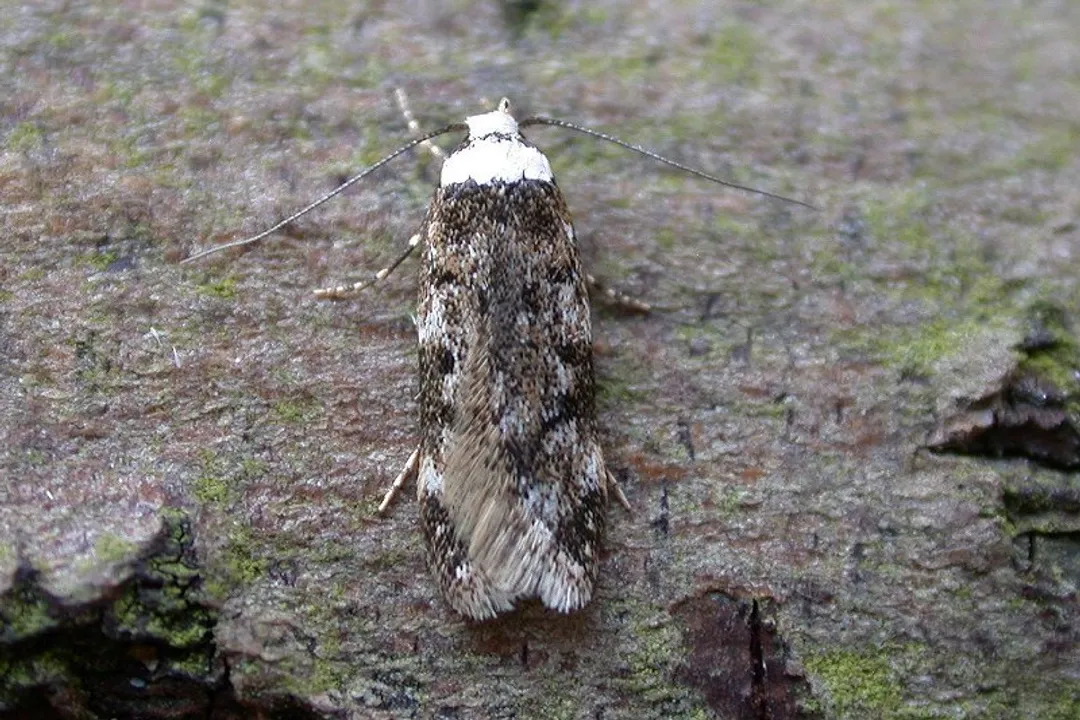
The journey begins at the highest level, the Kingdom, where the White-shouldered House Moth is placed squarely within Animalia. [1] This designation immediately tells us that this organism is a multicellular, heterotrophic creature, meaning it cannot produce its own food and must consume organic material, distinguishing it from plants, fungi, and bacteria. [1] As an animal, it possesses specialized cells and exhibits a degree of mobility during at least one stage of its life cycle, characteristics common to the entire animal kingdom. [1]
# Phylum Arthropoda
Moving down one rank, the moth belongs to the Phylum Arthropoda. [1] This is a massive phylum that encompasses insects, spiders, crustaceans, and myriapods. The defining traits of arthropods are an exoskeleton—a hard outer casing—a segmented body, and jointed appendages, which explains the presence of legs and antennae on the moth. [1] For anyone who has observed an insect shedding its skin during metamorphosis, they have witnessed a key arthropod characteristic in action.
# Class Insecta
Within Arthropoda, the White-shouldered House Moth is sorted into the Class Insecta. [1] This classification narrows the field considerably, placing it among creatures with three distinct body parts—head, thorax, and abdomen—and typically three pairs of legs attached to the thorax. [1] This group also includes the characteristic insect wing structure, usually two pairs, though they are modified or lost in some forms. [1] This class contains the greatest diversity of life on Earth, underscoring the moth's success in establishing itself globally. [4]
# Order Lepidoptera
The Order Lepidoptera is perhaps the most recognizable grouping for the casual observer, as it includes all butterflies and moths. [1][5] Organisms in this order are universally characterized by wings covered in minute, overlapping scales, which give them their color and texture. [5] They also undergo complete metamorphosis, cycling through egg, larva (caterpillar), pupa, and adult stages. [1] The presence of Endrosis sarcitrella in this order confirms its identity as a scaled-wing insect, distinguishing it from beetles (Coleoptera) or flies (Diptera). [5]

# Family Placement Debate
The classification at the Family level often reveals more about an insect's specific evolutionary trajectory and morphology. For the White-shouldered House Moth, sources indicate placement within Tineidae or Hofmannophilidae. [1][4][6][9] In older or broader classifications, many smaller moths were grouped under the large Tineidae family, often referred to as the fungus moths or fungus feeders. [6][9] However, more modern taxonomic revisions sometimes separate these groups. For instance, some authorities place Endrosis specifically within Hofmannophilidae. [1] This variance in family assignment highlights a dynamic area of entomological study, where researchers continually refine relationships based on newer genetic or morphological evidence. For practical identification, particularly in fields like stored product management, understanding its association with other "waste materials" feeders common in the Tineoidea superfamily is quite useful, regardless of the exact family designation assigned this year. [7]
It is interesting to note how taxonomy dictates pest management approaches. If a pest is classified strictly within the Tineidae family, one might initially look for control strategies known to work on related common clothes moths, which feed on keratinous materials. However, if its true placement leans toward a family associated with grain or dry vegetable matter, the focus shifts to sanitation and dry storage practices, which align perfectly with the known habitat of E. sarcitrella feeding on dry debris, seeds, or stored products. [7] This subtle difference in classification can influence the initial investigative steps taken by a professional entering a structure infested with this pest.
# Genus Endrosis
The next step down is the Genus, Endrosis. [1][5][6][9] This level groups species that share a very close common ancestry and distinct morphological features that separate them from other genera within the same family. [5] The genus Endrosis currently contains only a few recognized species, with E. sarcitrella being the most widely known, particularly as a household pest in many parts of the world. [5] Belonging to this genus means it shares key structural features, likely in its wing venation or genitalic structure, with its few relatives. [6]
# The Species sarcitrella
The binomial nomenclature, Endrosis sarcitrella, is the unique identifier, the Linnaean name that designates this specific creature. [1] The specific epithet, sarcitrella, combined with the genus, creates a name that, ideally, refers only to this moth. [1] This species is recognized globally, showing up in North America, Europe, and elsewhere. [4][5]
This species is often described by its physical characteristics. The adult moth is small, possessing a wingspan typically ranging between 14 and 17 millimeters. [3][5] Its forewings present as pale greyish-brown or slightly ochreous-brown, often exhibiting darker patterns. [5] The feature that gives it its common name—the "white-shouldered" aspect—is a noticeable pale or white patch located near the base of the forewings, often referred to as the shoulder area. [2][3] The hindwings are generally paler and narrower than the forewings. [5] While the adult moth is the final stage, the larval stage is what often causes concern, as caterpillars feed on dry, discarded organic materials, grains, seeds, and general debris found in dry indoor environments or stored food areas. [7][6]
# Nomenclature and Common Identity
The common name, White-shouldered House Moth, directly reflects the most striking visible feature of the adult, contrasting sharply with its darker wing surface. [2] This moth is considered a secondary pest, meaning it thrives in environments where initial damage has already occurred or where significant amounts of refuse have accumulated, rather than being a primary attacker of sound, stored products. [7] It is also known by names such as the White Shoulder Moth [3] or even the White-shouldered Drywood Moth. [7] These common names, while useful for immediate recognition by homeowners or pest control technicians, lack the precision of the scientific classification. For instance, while it is a "House Moth," this is a behavioral descriptor, not a taxonomic one, as many unrelated moth species might find their way indoors.
Considering the global distribution, it’s fascinating how frequently E. sarcitrella appears in records across continents. [4][5] The fact that this relatively unassuming, small moth warrants inclusion in regional moth checklists across the United Kingdom [5][9] and is documented by organizations tracking agricultural pests in Canada [7] speaks to its successful adaptation to human-modified environments. It is a classic example of a cosmopolitan species whose biology is intrinsically linked to our storage habits.
# Life Cycle Context
The scientific classification places E. sarcitrella firmly within the Holometabola—insects with complete metamorphosis—a characteristic shared by all members of Lepidoptera. [1] The life cycle ensures that the moth has distinct ecological roles at different stages. The larvae, which might be seen as small, creamy-white caterpillars up to about 10 mm long, are the primary feeding stage. [5] Their non-specific diet, encompassing things like dry seeds, insect debris, and household dust containing organic matter, explains why controlling them often involves meticulous cleaning rather than solely relying on targeted insecticides against the adults. [7][6] The classification as a moth within this system suggests a resting pupal stage, likely concealed within webbing spun by the larva, before the emergence of the winged adult capable of dispersal. [5]
When comparing its structure to other small moths, such as those in the nearby Coleophoridae family sometimes mentioned in literature, the difference in adult wing shape and the specific scale patterns become critical for experts differentiating them under magnification. [5] While an untrained eye might simply label any small, drab moth found indoors as a "clothes moth," the scientific grouping places E. sarcitrella far from pests like Tineola bisselliella (the true clothes moth), which specializes in animal fibers like wool and silk. [8] E. sarcitrella is better known for targeting stored vegetable matter or general detritus, [7] a functional difference rooted in its specific evolutionary path defined by its scientific classification.
In summary, the scientific classification of the White-shouldered House Moth is a precise roadmap: Animalia Arthropoda Insecta Lepidoptera, culminating in the genus Endrosis and the species sarcitrella. [1][5] Each level refines our understanding, moving from the broadest definition of an animal to the specific features that distinguish this common, yet scientifically interesting, indoor resident. [4][2]
Related Questions
#Citations
White-shouldered House Moth (Endrosis sarcitrella) - iNaturalist
White-shouldered House Moth - Endrosis sarcitrella - A-Z Animals
White-shouldered House-moth - Endrosis sarcitrella - NatureSpot
Species Endrosis sarcitrella - White-shouldered House-Moth
White-shouldered House-moth Endrosis sarcitrella | UKmoths
28.009 White-shouldered House-moth Endrosis ... - Hantsmoths
White-shouldered house moth - Canadian Grain Commission
White-Shouldered House Moth | Pest Solutions
Endrosis sarcitrella - Kent Moths